

New Zealand house prices are high and the property market is booming. Should we blame investors? Returning New Zealanders? The government? The central bank? Whatever other forces are at work, inadequate market supply is undoubtedly a fundamental driver. Allowing large sites in more areas to be subdivided and building more medium- and high-density housing is no longer a matter of New Zealanders’ quarter-acre dream: it is an unavoidable trend in the future housing market.
As a result, large sites in Auckland and across New Zealand have become increasingly sought-after and expensive in recent months, for one reason alone: their subdivision and development potential.
However, the land subdivision and development process is complex and demanding, well beyond what ordinary investors and developers can readily handle. YIJU New Zealand therefore joined forces with the New Zealand Chinese Building Industry Association (NZCBIA) to present a seminar series asking: ‘In this golden age of subdivision, can anyone manage a land subdivision project?’
{ad}
From the opening seminar on 31 October to the series finale on 10 December, the tightly scheduled programme aimed to provide timely, practical guidance that would stand up to scrutiny. It helped participants understand the development process, define project objectives, obtain useful information and make effective use of people, materials and other resources, to achieve better returns and avoid potential risks.
All three seminars were chaired by NZCBIA president Frank. Xu. Following the project timeline, the seminars covered the early, middle and final stages of land subdivision respectively. Each featured several experts with many years of experience in their fields, sharing real subdivision cases and the lessons they had learnt. Topics spanned the many areas involved in development, including information research, planning and design, construction, material selection, legal documentation, finance and lending, policy interpretation, urban planning and marketing.
The seminars addressed distinct stages while connecting related fields, combining chronological and cross-disciplinary perspectives to give investors, property professionals and construction industry participants interested in subdivision comprehensive guidance across every stage.
The three seminars attracted a combined attendance of more than 400. With seating limited, some latecomers stood throughout an entire session. Enthusiastic audience questions meant none of the seminars finished on time, and even afterwards many attendees gathered around the speakers for further advice. Some said they had made mistakes and suffered losses during subdivision projects, so had hurried to attend when they heard about the series and had indeed learnt a great deal. Others hoped to build their networks: ‘You cannot develop land on your own. You need good teams across different fields, and there are plenty of resources here.’
Information research

Unlike many property websites in New Zealand, Fangyanwang was created specifically to save property professionals research time. From property searches tailored to developers’ needs and utility maps for designers and contractors to subdivision calculators for cost estimates, professionals across different fields can find the information and tools they need on the platform.
Planning and design
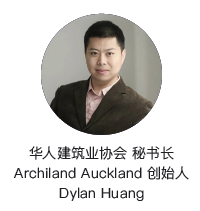
He explained how to identify land suitable for medium- and high-density subdivision through two categories, ‘Basic’ and ‘Bonus’: which features are essential and which add value. He repeatedly emphasised that subdivision and development require specialist expertise and carry risks, making the avoidance of pitfalls a central theme of his presentation.
Practical implementation strategies

Frank Xu . He shared practical strategies for carrying out subdivision works, drawn from his many years in land development:
• Value & Price: For investors, the most important consideration when buying a project is knowing that its price is below its value—in other words, that it offers good value for money;
• Want & Need: Developers cannot focus solely on what they want. They need thorough communication and negotiation with all stakeholders to reach a consensus. A project will progress smoothly only when everyone’s needs are aligned;
• Plan by milestones: Use milestones to plan and effectively manage the project, timing and quality. Applications for different council consents, inspections during construction and the eventual receipt of compliance certificates such as the CCC can all serve as milestones;
•Long leading items: Products that take a long time to manufacture, such as aluminium doors and windows and kitchen fittings, should be planned and manufactured early to ensure they are available when needed.
Legal documentation

Using specific examples, he gave an accessible yet detailed explanation of New Zealand’s land development laws and regulations, covering land purchases, applications for land development consent, construction and consent applications. He also explained development restrictions in different land zones, the relevant regulatory engineering rules, and how planning and design can meet council requirements when site conditions are less than ideal.
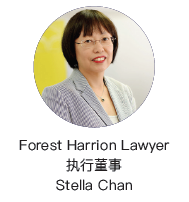
From a lawyer’s perspective, and using practical examples involving different residential title types and site sizes, he explored a range of legal issues arising in land transfers and subdivisions. These included preparing easement documents for settlement, legal requirements for resource and building consents, legal considerations in unit and apartment construction such as property management and common units, managing responsibilities between lawyers and their developer clients, and matters to consider when applying for titles for newly built homes.

He explained how comprehensive legal documentation can prevent and reduce potential disputes and risks in property development partnerships, and how provisions in shareholder agreements, joint venture agreements and limited partnership agreements should be drafted for different forms of collaboration to protect all parties’ interests.
Finance and lending

Through a series of practical examples, he explored the eligibility requirements and application processes for development and construction loans from two perspectives: the type of loan and the borrower’s circumstances. He also offered suggestions on how to secure a larger loan.
Material selection

He gave a detailed introduction to fibre-cement cladding, currently the most popular exterior wall material on the market. As development following subdivision often involves medium- and high-density housing, Meng Zhang focused particularly on how cladding can meet the fire protection and fire resistance requirements of these homes while combining different colours, styles and layers to satisfy market and council expectations for environmental compatibility and appearance.
Marketing

The 4P marketing strategy
• Products: Different types of property serve different markets and therefore call for different marketing approaches;
• Price: How a home is priced directly affects marketing results;
• Place: Understand the channels through which property is sold;
• Promotion: Identify the target customers, then address three questions specifically for them: how to get their attention, how to attract their interest and how to win them over.
Construction

He shared his experience of controlling costs and improving efficiency in earthworks. Materials are key to cost control, so when subcontracting work it is best to retain responsibility for purchasing materials, compare suppliers and select a reliable one for a long-term relationship. This can generate substantial savings. Engaging an experienced engineer early to carry out a thorough site inspection is another effective way to control unplanned costs.

Land development inevitably raises the question of what to do with existing houses, and demolishing old homes inevitably brings the challenge of asbestos management. Alongside a systematic explanation of asbestos removal safety requirements and procedures, he offered thoughtful advice to attendees considering minor DIY repairs at home: avoid drilling into cement sheets wherever possible, and take effective protective measures if drilling is unavoidable.
Understanding policy
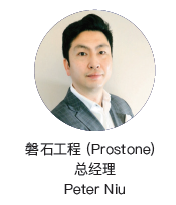
He stressed that the earlier project management becomes involved, the better it can help developers maintain oversight. He noted that the widespread enthusiasm for subdivision partly reflects the government’s desire to provide communities with more and better housing. Developers with medium- or large-scale, high-density projects of more than 20 homes could therefore consider partnering with KiwiBuild to benefit from the government’s major housing development programme.
Over the past two or three years, Auckland’s public transport planning has changed considerably. Measures include restrictions designed to encourage public transport use in the central city, decentralisation through the development of regional satellite centres, and limits on urban expansion alongside encouragement to redevelop existing housing. All these factors affect development potential, making land centred on public transport hubs the most promising future development locations.
The application process

He explained how to maximise development outcomes within council requirements by understanding clients’ needs, conducting thorough feasibility analysis and applying professional experience. He also gave a detailed account of how to handle subsequent consent applications and construction most efficiently after resource consent has been granted, particularly how to prepare applications for the 223 and 224C documents needed to obtain new titles from Land Information New Zealand.