

Apart from the COVID-19 pandemic, the heated housing market and soaring house prices have probably been the most closely watched and widely discussed topics of 2020, now drawing to a close. The New Zealand Government and the Reserve Bank also appear to be considering intervention to curb further price increases.
Rather than relying on government intervention, however, it may be possible to regulate the market more effectively by working with its own economic mechanisms. After all, even if intervention temporarily dampens market sentiment, it does not increase the number of homes and therefore cannot fundamentally address the unmet need caused by housing shortages. The best way to curb rising prices, then, is to increase supply.
A study by Colliers International suggests that the best remedy for New Zealand's property market is to increase the supply of new homes. The Government should lead efforts to expand and accelerate housing construction, encouraging developers and builders to deliver a wider range of homes more quickly and effectively, ease shortages, and curb speculation and price bubbles.
{ad}
Given the extremely high land prices in traditionally sought-after locations, building homes on the city's outskirts could offer a way to address Auckland's house price problem through a strategy of “encircling the city from the countryside”.
Colliers International's latest research shows that Auckland's suburban apartment market has recently performed strongly, outselling the once-dominant CBD. A recent development survey found that the best-selling apartment project was in Albany on the North Shore, potentially illustrating a shift in the housing market.
Risland Albany is a mid-rise apartment development in Albany on the North Shore, with secure basement parking and 141 homes. It is just 2 minutes from Westfield Albany, the bus interchange and the motorway. The first new apartment project in New Zealand to begin construction after lockdown was lifted, it has now become Auckland's best-selling development, with 60 unconditional sales.
This is no isolated example. Colliers International's latest apartment survey covered 58 projects across Auckland, comprising 3733 homes. It found that suburban developments accounted for two-thirds of sales in the first half of 2020. The once-dominant CBD apartment market now accounts for just 12% of total sales, with the city fringe accounting for 21%.
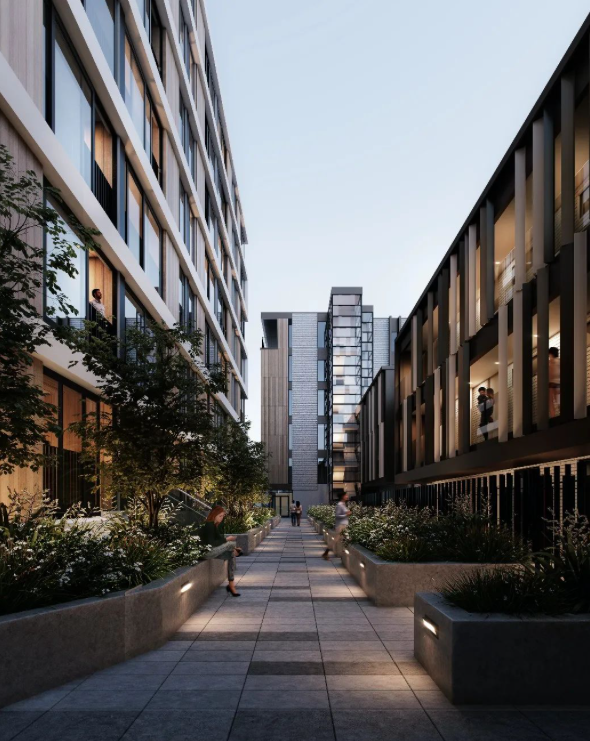
Colliers International residential projects director Pete Evans noted in the report that buyers in developments such as Risland Albany include both first-home buyers and investors. Regardless of buyer type, their purchasing intentions are shaped by a combination of the following factors:
- Low interest rates, with the possibility of further falls, reduce the cost of buying while leaving term deposits offering minimal returns;
- Labour's re-election means investors need not be overly concerned about the prospect of a future capital gains tax;
- An affordable first step onto the property ladder for first-home buyers;
- Excellent design;
- Good transport links and convenient local amenities;
- Freehold ownership, high quality and low maintenance.
Using Risland Albany as an example, Pete Evans examined several aspects of the development itself in detail: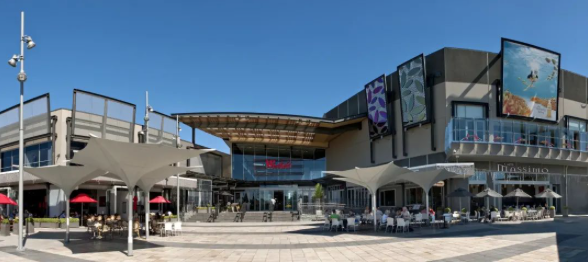
Location
An excellent location, with convenient access to local services, employment, motorways and public transport, combined with the area's rapid economic growth, has been central to Risland Albany's success.
- Lifestyle
Situated in the heart of Albany, Risland Albany enjoys everything the area offers, including a wide choice of shopping, entertainment and dining, as well as first-class sports facilities.
- Transport
The development is only a two-minute drive from the northbound and southbound ramps of State Highway 1, making central Auckland easily accessible by car. For public transport, Albany bus station is a short walk away, giving residents the option of reaching the CBD via the Northern Busway in just 20 minutes.
- Education
Massey University is within walking distance, just 1.6 kilometres away. The development is also zoned for Albany's primary, junior high and senior high schools, as well as Pinehill Intermediate. The well-known private schools Pinehurst and Kristin are also nearby.
- Employment
Auckland Council has identified Albany as a key growth area for the city's future development and positioned it as a northern hub. Albany and its surrounding areas can therefore be expected to become an important employment centre. By 2026, an estimated 200,000 to 300,000 jobs will be available within a 45-minute commute, further increasing local housing demand.
Design
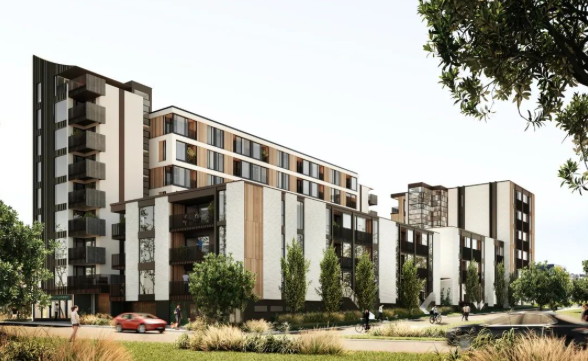
Risland Albany was designed by renowned architecture firm Leuschke Group, which has designed many distinctive New Zealand buildings over the past 30 years. The firm specialises in high-end houses and apartments, as well as boutique commercial projects.
The design arranges three low- to mid-rise buildings at varying heights around a central landscaped courtyard, creating a vertical residential community. It makes full use of the site's natural slope and north–south orientation, allowing every apartment to enjoy sunshine and views to the east or west.
The designers carefully integrated aesthetics, practicality, durability and safety. The colourful exterior skilfully combines the textures of painted brick, rough concrete and panelling with warm materials such as timber and dark bronze. Inside, the apartments pursue a simple, contemporary aesthetic based on neutral monochromatic tones and timber flooring.
Development
Risland Albany is funded and developed by international property developer Risland. The company is committed to providing dynamic, people-focused living solutions, with projects worldwide, including in the United States, the United Kingdom, Australia and across Asia.
Its first New Zealand development, Neo in Auckland's Grafton, is currently under construction and scheduled for completion in 2021. It was also designed by Leuschke Group.
Construction
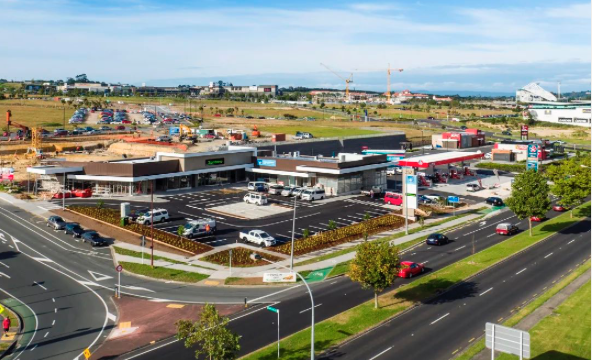
Risland Albany's main contractor is CMP, a highly regarded, privately owned New Zealand construction company with more than 30 years' experience in large residential, commercial and industrial developments. CMP began construction at Risland Albany in August, making it the first new apartment project to start construction after New Zealand's nationwide COVID-19 lockdown.
Marketing
Auckland house prices currently continue to rise, driven by record-low mortgage rates and strong market demand.
Apartments at Risland Albany are expected to deliver annual yields of 4% to 5%. With term deposit rates set to remain at historic lows, this offers buyers the potential for high yields and capital growth.
As a new apartment development, Risland Albany also faces less restrictive overseas investment requirements and lower deposit requirements than typical properties, with deposits of 10% for residents and 20% for non-residents.
Conclusion
Pete Evans selected Risland Albany as a case study in his report for more than its individual sales performance. He believes it points to a way of curbing and stabilising Auckland house prices amid high demand: Develop high-quality housing at scale in outlying areas, providing enough supply to address housing shortages and resolve the market imbalance between supply and demand.