

Ahead of the Reserve Bank's latest OCR announcement: the banks' tactical moves
Banks generally remain silent about interest rate changes in the period leading up to this Wednesday's official cash rate (OCR) review announcement by the Reserve Bank of New Zealand (RBNZ). This time, however, banks have been making a steady stream of tactical moves before the OCR announcement, showing that competition between commercial banks has reached fever pitch. First, ANZ announced an eye-catching cut last week to its special two-year fixed mortgage rate, from 5.8% p.a. to 5.45% p.a. Westpac then joined the battle with a cut comparable to ANZ's, followed swiftly by BNZ, which lowered its two-year rate from 5.69% to 5.39%. Last Friday, ASB also unexpectedly announced a reduction in its one-year fixed mortgage rate to 5.25% p.a.
On Monday, Kiwibank took the initiative further, shifting the battleground to one-year term deposit rates. Its rate rose to an impressive 4% p.a., making it the first “major” commercial bank in this rising-rate cycle to offer 4% p.a. on a one-year term deposit. The last time rates reached 4% was seven years ago, in the year 2015, in July. This increase could undoubtedly put pressure on other major banks. When this writer asked Westpac on Monday whether it could match the rate, the response was that its best one-year rate “at present” was 3.75% p.a. Nevertheless, there is reason to believe other banks will follow soon.
With another Reserve Bank rate rise tomorrow, when will interest rates peak?
Most economists expect tomorrow's OCR announcement to deliver an increase of 0.5 percentage points, and most mortgage lenders have already priced this into the previous round of rate rises. Kiwibank senior economist Jeremy Couchman said:
“We still expect the Reserve Bank of New Zealand to raise the cash rate by 50 basis points to 2.5% on 13 July.” Meanwhile, most economists expect the Reserve Bank of New Zealand to continue raising rates repeatedly this year, even though this is very bad news for the housing market and the New Zealand economy. ASB economist Mike Jones said the Reserve Bank would raise the OCR again on 17 August, by 0.5 percentage points, taking it to an OCR peak of 3.5%. BNZ head of research Stephen Toplis put it bluntly, saying this week was more or less a case of “
hitting the repeat button”. The outlook for the real economy has deteriorated since the Reserve Bank of New Zealand's rate rise in May. He believed that if the bank published a full interest rate track in this report, there would be considerable discussion about the possibility of moderating the pace and scale of the tightening cycle.
Ben Udy of Sydney-based Capital Economics believes the Reserve Bank of New Zealand will aggressively raise the OCR to 3.5% by the end of this year. As the housing market declines and recessionary trends deepen, it will cut rates next year. He noted that median house prices fell by 3.8% in May and were now 7.5% below their peak in November last year. Although falling house prices are not currently the Reserve Bank of New Zealand's primary concern in the face of high inflation, they will become its main concern before long. Independent economist Tony Alexander agrees, noting that this means fixed mortgage rates for terms of 2 to 5 years have now reached, or are close to, their peak for this cycle. In his latest weekly report, he wrote: “I still favour an [OCR] peak of 3.5%, but do not rule out rates actually peaking at my original forecast of 3%.”
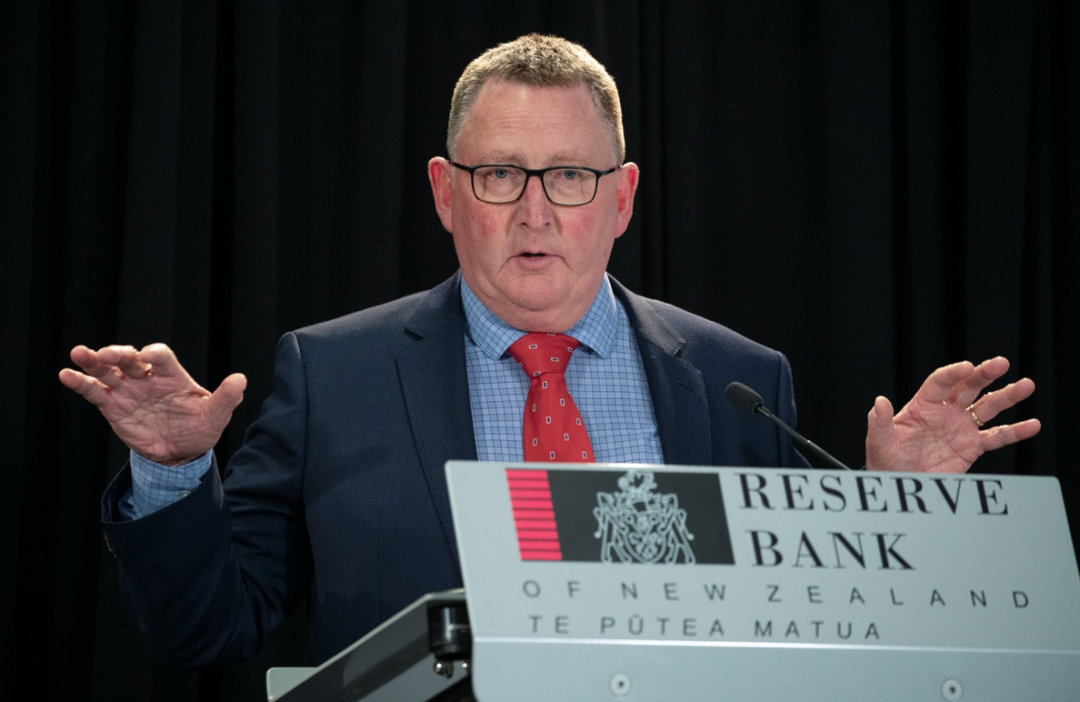
Reserve Bank of New Zealand Governor Adrian Orr
In May this year, the Reserve Bank forecast that the OCR would rise to 3.9% by June next year. However, in a recent interview, Reserve Bank Governor Adrian Orr said the OCR might not rise as high as forecast if the bank brought inflation under control sooner. For homeowners and investors, this means mortgage rates will continue rising, but the upward trend will end next year as long as inflation is brought under control. For now, it would be prudent to prepare for one-year fixed mortgage rates potentially reaching 7%. Orr also said he hoped to bring these rates back down “over time”. No one can say how long that will take.
Reflections on housing and recession
New Zealand is certainly facing many problems: rising interest rates, worsening inflation and a construction sector in difficulty. However, it is not alone; similar problems can be seen in other countries. Australia, for example, has raised interest rates for a third consecutive month, taking them to their current level of 1.35%. In a speech at New Zealand's national property conference a week ago, Reserve Bank of New Zealand chief economist Paul Conway reflected on the bank's work in recent months and the negative effect of the OCR on house prices.
He said the headwinds facing New Zealand's economy appeared difficult to resolve. Despite our low population density and ample land, New Zealand's ability to turn resources into housing that meets essential demand has been severely constrained for years. As Reserve Bank of New Zealand documents show, construction costs top the country's inflation rankings. This is most likely due to overly restrictive local government development rules and a lack of diversity in the construction industry's structure. Builders' current struggle to obtain enough plasterboard is a stark reflection of market conditions. Meanwhile, the supply of new homes has not increased. The result has been, since the late 2000 s, the largest increase in this country's house prices on record.
Like other countries, New Zealand also faces the risk of recession. ASB's economics team, for example, says the risk of a hard landing continues to increase. With recession looming, ensuring inflation eventually stabilises at an acceptable level, around 1–3%, should be the Reserve Bank of New Zealand's top priority. With inflation currently showing little sign of cooling and the economy under considerable pressure, the bank still needs to act swiftly to bring inflation down. ASB expects OCR cuts to begin in 2024, with rates eventually falling to a more “moderate level” of 2–2.5%. Of course, this is not just a problem for New Zealand and Australia. Inflation is even worse in the UK, where it has reached 9.1%, its highest level in 40 years, and is expected to rise to 11% later this year. The Bank of England is expected to raise its base rate, the equivalent of the OCR, to 3% by the end of 2023.