
New Zealand house prices have fallen about 5% since the end of 2021, with declines exceeding 10% in some areas. Although some economists believe further substantial falls are not inevitable, homeowners who bought at the peak in 2021 will be feeling some pressure in the current downturn and should start considering how to avoid the risk of negative equity.
{ad}
What exactly is negative equity?
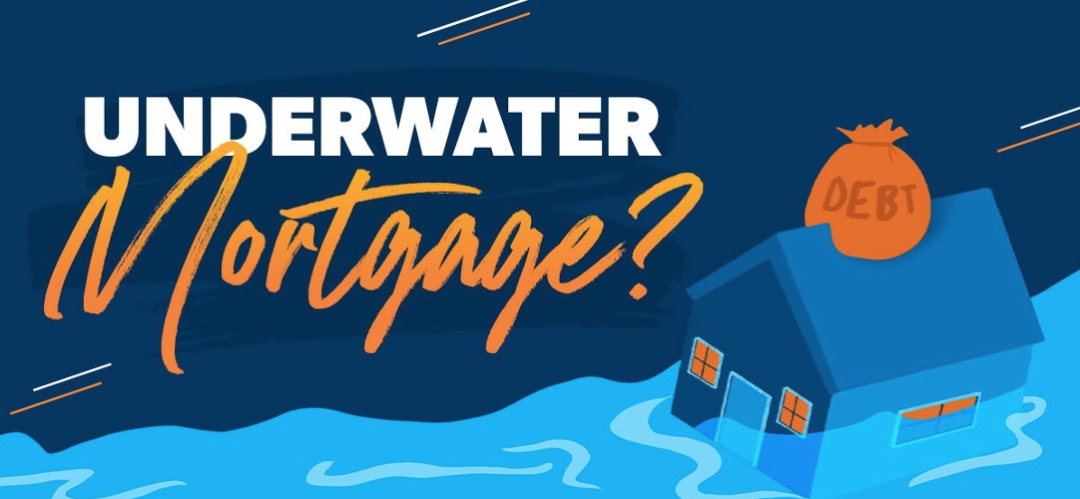
The English term is 'negative equity'. Here, 'equity' can relate not only to property but to anything bought with a loan. When a mortgaged property's market value falls below the total outstanding loan balance, it is also described as being 'underwater', and the associated loan is called an 'underwater mortgage'. The metaphor means the home's value has fallen below the benchmark level.
I first heard the term 'negative equity' around 2000. At the time, Hong Kong property had lost about 70% of its market value in just a few years, much like Japan in the 1980s. In 2008, the US subprime mortgage crisis triggered a global financial storm. Negative equity became a frequent topic, with widespread reporting on the distressing experiences of many Hong Kong residents.
Negative equity=Liabilities exceed assets
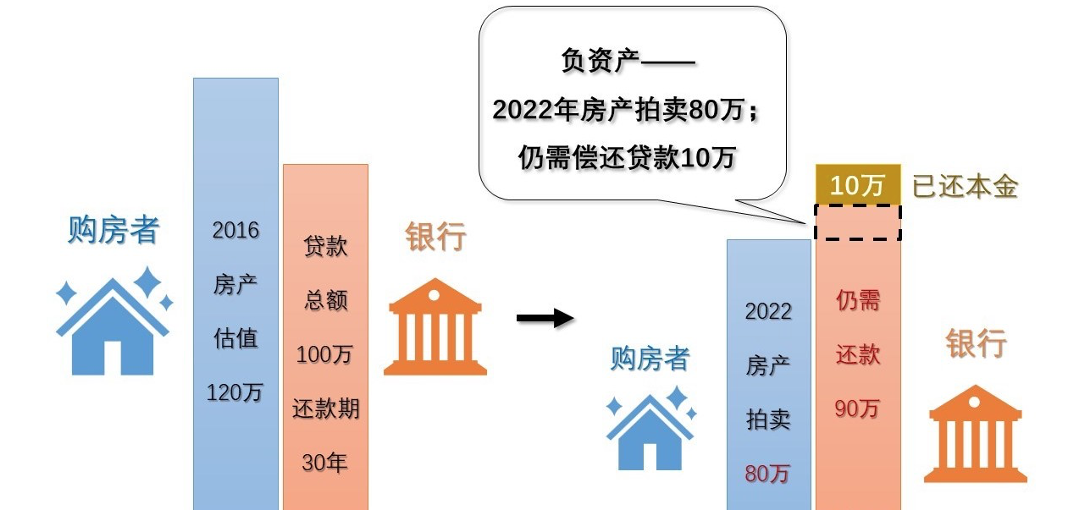
The simple example above makes the concept of negative equity clear. Suppose buyer A took out a NZ$1,000,000 mortgage in 2016, with a 30-year repayment term, to buy a house then worth NZ$1,200,000. Although its value later soared to NZ$1,800,000, A did not sell because it was their home. After six stable years, A had repaid NZ$100,000 of principal on schedule but still owed the bank NZ$900,000. A was made redundant early in 2022, leaving the household without any other income. After several months of missed repayments, the bank repossessed and auctioned the house. The auction recovered only NZ$800,000, so the bank required A to repay the remaining $100,000.
Calculation: total loan 1,000,000 - 100,000 principal repaid - house auction proceeds 800,000 = 100,000 still owing on the loan
Conclusion: A's liabilities exceed their assets. Even after the house is auctioned, they still owe the bank $100,000!
YIJU reminds anyone currently repaying a mortgage to check their property's latest valuation and outstanding mortgage principal, then work out whether they may be in negative equity.
How can you avoid negative equity when house prices are falling?
Homeowners generally have two ways to keep clear of negative equity:
1. Pay off the mortgage
2. Increase the property's value through renovation
Which approach is better? Both have advantages and disadvantages. You can calculate the return on investment (ROI) to determine which best suits your circumstances. Most importantly, whether you renovate or repay debt, the key to avoiding negative equity is ensuring that every dollar you put in delivers more than its value.
Generally, renovating an older home is a quick way to improve the return on investment because the homeowner does not need to pay interest on debt. However, this is not always the case. Consider two examples with different outcomes. Homeowner B plans to repaint the exterior of a house that is in good condition. Suppose this costs about NZ$20,000. If the repaint makes the home more appealing to buyers, they might pay an extra NZ$40,000. In this case, B's renovation narrows the gap between the mortgage and the home's value by NZ$40,000, or adds NZ$40,000 to the property's value. But if B chooses a dreadful colour, the property's value may not rise by NZ$40,000 at all. It could even fall, because the next owner will have to repaint it.

Mortgage Lab founder Rupert Gough says renovating an older home may be the most effective way to provide a short-term boost to equity and avoid negative equity.
The next issue is that the homeowner needs to raise the upfront payment for paint and labour before the house can be repainted. Adding this expense to repayments would mean paying an extra NZ$400 each week over the following year to cover it.
Mortgage Lab founder Rupert Gough suggests that if homeowner B is worried about negative equity, they could consider selling the property in the near future. Once the decision to sell is made, renovation is a good way to provide a short-term equity boost. Talking to a helpful real estate agent about what buyers are looking for and which parts of the property are most worth renovating can provide the information most likely to deliver a good return on investment.
YIJU also suggests that homeowners like B can increase their property's value through the following improvements:
Garage —If you live somewhere like Ponsonby, where parking is extremely tight and street parking is the norm, a double garage could add around NZ$200,000 to your property's value.
Extra room —Adding a bedroom or living room can bring a property into an entirely new range of buyers' searches. The value gained from an extension depends on whether you add floor area or alter the external structure. Carefully consider the construction budget before adding bedrooms, as costs can be prohibitively high. Adding a room or extension may cost NZ$3000 or more per square metre, while adding only NZ$1500 to NZ$2000 per square metre to the property's sale value.
Apartment —Increasing usable space can make rental returns more attractive. Generally, creating more usable space in an apartment can add considerable value. For example, creating a small granny room within an apartment can broaden its appeal to buyers and increase its value, while also clearly improving rental returns for investors.
Decks and patios —Improving decks and patios can add around 30% to a home's value. New Zealanders love being active in summer, and improving decks, patios and indoor-outdoor connections can add considerable value. Hardwood for a deck or patio costs about NZ$5000 to NZ$15000, but the renovation can add around 30% to the value of the whole house, making this one of the most cost-effective renovations available.
Landscaping —Doing it yourself is more cost-effective than paying professionals. Good landscaping can add considerable value to a home. However, doing the work yourself is recommended to save money. Hiring a professional landscaping company can be very expensive, potentially leaving you unable to recoup the cost.
Heating —Homes with heating installed are more appealing to buyers and tenants. New Zealand winters are relatively damp, with frequent rain, making heating essential. A fireplace or heating system may make a property more attractive to buyers or tenants, and installing heating can also increase its value.
If homeowner B does not intend to sell in the short term, the priorities should be repairing neglected parts of the property in order of urgency, then repaying the mortgage, and only then considering renovation. For example, a leaking pipe damaging the walls should take priority because it will lead to higher repair costs later. Once all these issues have been addressed, B can ask their bank how to increase repayments and pay off the mortgage early without incurring additional penalties. Although this is not a quick solution to avoiding negative equity, it is an effective way to shorten the repayment period and reduce interest costs.(For more practical information, we recommend reading YIJU's article from 21 July.)