
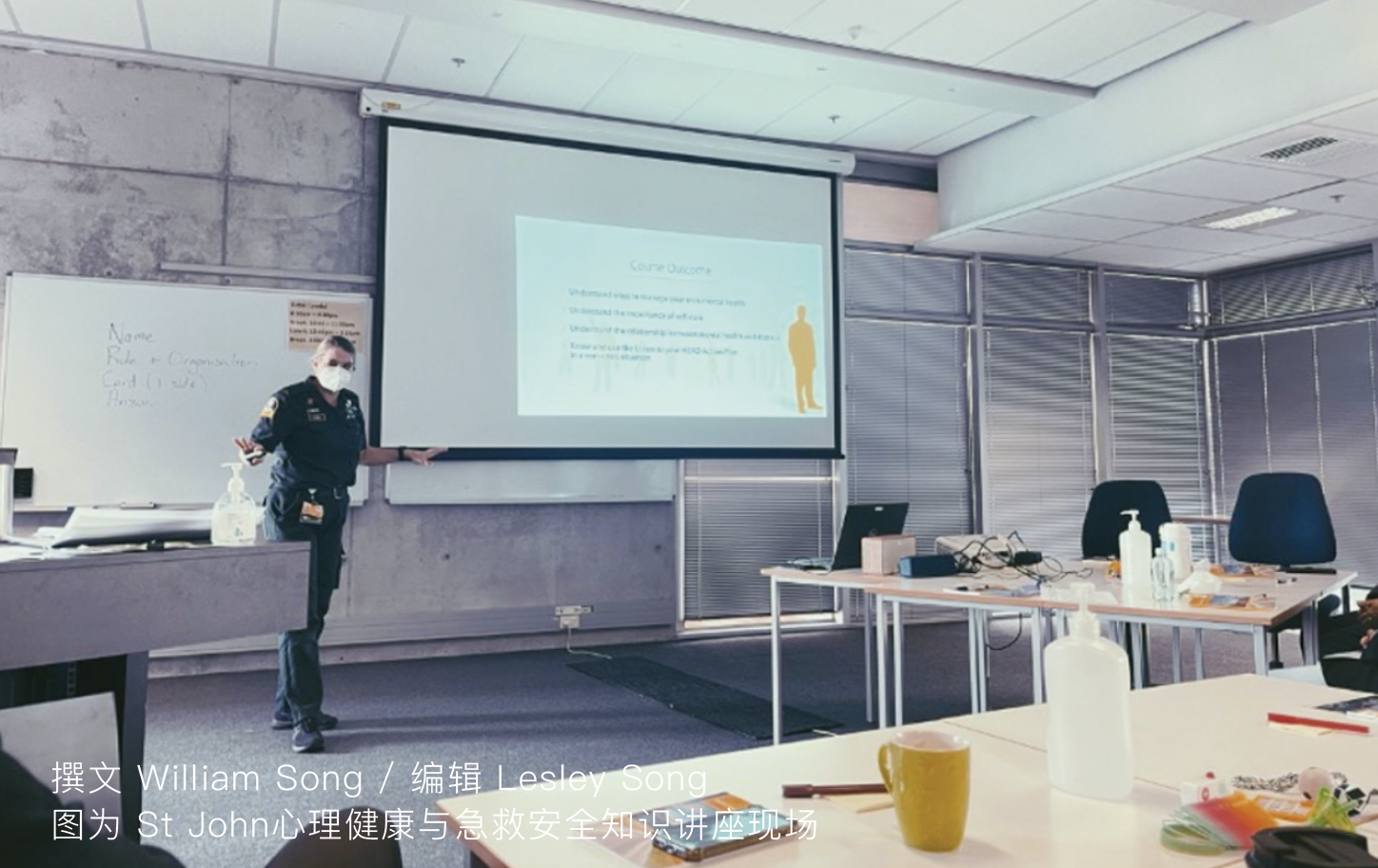
A community event on 'Mental Health and First Aid Safety Knowledge' was recently held successfully in Auckland. It formed part of a series of community training sessions jointly initiated by the New Zealand Chinese Building Industry Association (NZCBIA) and the New Zealand Culture and Arts Foundation (NZCAAF), in partnership with emergency medical service provider St John.
According to New Zealand's 2019 census data, Asians are the fastest-growing ethnic group. By 2043, they are projected to account for 26% of the total population. However, a report found that Asians are the least willing to seek medical help when unwell and have the lowest primary care enrolment rate of all ethnic groups. Official survey data for 2007 to 2020 show that the Asian population has a relatively low suicide rate among New Zealand's ethnic groups. Nevertheless, this remains a social issue that cannot be overlooked, particularly as the COVID pandemic in recent years has exacerbated it. According to data supplied by Asian Family Services, calls to its counselling service increased by approximately 150% during the outbreak, while the number of people diagnosed with mental illness rose by 138%. The report also noted that many Asian New Zealanders regard mental health and suicidal thoughts as relatively private subjects. There are marked cultural differences from other ethnic groups, and many feel their mental health problems are not serious enough to warrant seeking help.
The 'Mental Health and First Aid Safety Knowledge' community event aimed to encourage Asian communities, particularly Chinese people, to pay greater attention to their own health and that of those around them. Maintaining physical and mental wellbeing is vital for everyone, helping us cope with the pressures of life and work.
Because of the pandemic, the mental health and first aid safety seminar originally scheduled for November last year was postponed until June this year. This did nothing to dampen participants' enthusiasm for the training. Through patient explanations from St John mental health educator Lyndal, participants gained a thorough understanding of how to provide immediate, direct help when someone around them shows signs of mental illness at work or in everyday life, or help them access the most professional and effective support through a free 24/7 counselling helpline. Those helping others also need to assess their own mental wellbeing to avoid being affected by the incident, recognise any problems promptly and seek help in good time.
The seminar's content and format were far from dull. Participants learnt how to recognise and respond to mental health emergencies through various games and role-play exercises. Everyone who took the course also received a mental health first aid certificate issued by St John.
St John mental health educator Lyndal warmly praised NZCBIA for successfully organising the event. She said that many people who appear happy and outgoing can also experience mental health problems, which can be devastating for individuals and families when they arise. Her own family's years of suffering from mental illness were precisely why she had committed to St John's mental health education courses alongside her regular job. She was very grateful to the organisers for providing an opportunity for more Chinese people to participate and learn to care for friends who need counselling and support.
NZCBIA president Frank Xu said that awareness of mental health support had traditionally been very limited within Chinese communities and businesses. 'Through this event, we hope to increase attention to mental health issues among Chinese people. Through a series of training sessions, including mental health and workplace first aid courses, we hope our Chinese community and the association's member businesses can gain useful knowledge and apply it in life and at work to save lives and help those who are injured.'
NZCBIA secretary-general Dylan Huang said: 'I took part in the training myself today and gained a great deal. What I learnt today will be very useful in my future work and everyday life. In the past, people placed greater value on material things. In the future, I think we should pay more attention to emotional and psychological issues. Today provided an excellent opportunity for our colleagues in the building industry to understand the importance of mental health.'
On 20 September this year, the New Zealand Chinese Building Industry Association and the New Zealand Culture and Arts Foundation will hold Workplace First Aid Level 1 training. The course is primarily intended for people who need first aid knowledge and skills, such as business owners, company managers, teachers and counsellors. Training will be conducted entirely in English. We encourage everyone to register and take part.
Helpful tips:
New Zealand has many official free helplines available 24/7 for immediate support, information and advice. Many also offer multilingual services. These include:
Call or text 1737 free to seek help from a trained counsellor:
www.depression.org.nz/contact Call 0800 111 757 or text 4202
Healthline: 0800 611 116
www.alcoholdrughelp.org.nz Call 0800 787 797 or text 8681
www.youthline.org.nz Children and young people's helpline: Call 0800 376 633 or text 234