
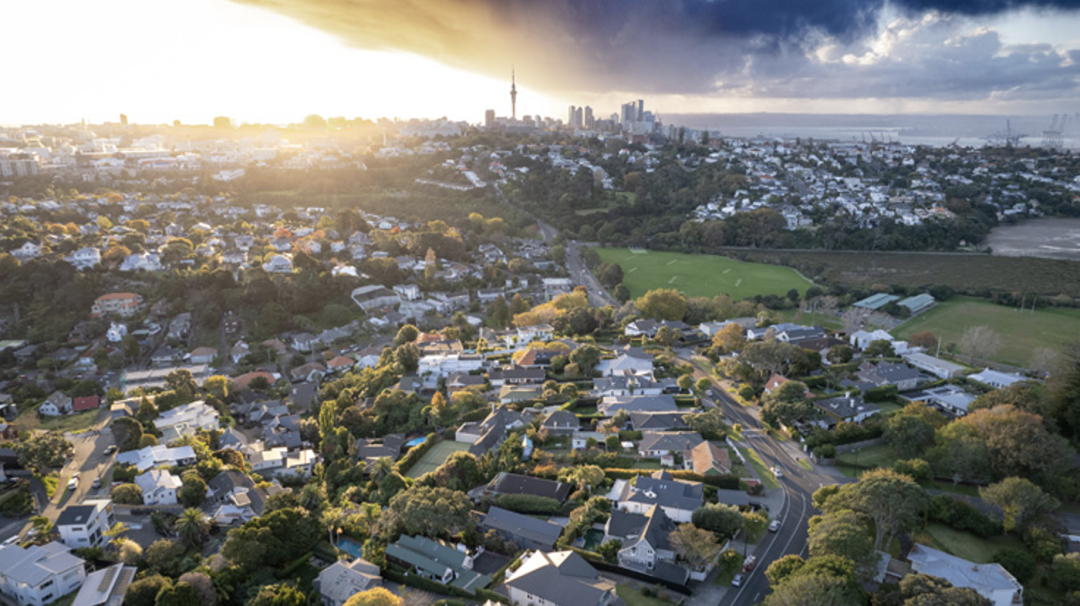
The latest OneRoof Valocity House Value Index shows that property prices are falling faster, with declines now spreading to 15 of the country's 16 regions. Over the past three months, New Zealand's average house value fell 3.7% to NZ$1,043,000, while property sales activity returned to pre-pandemic levels.
{ad}
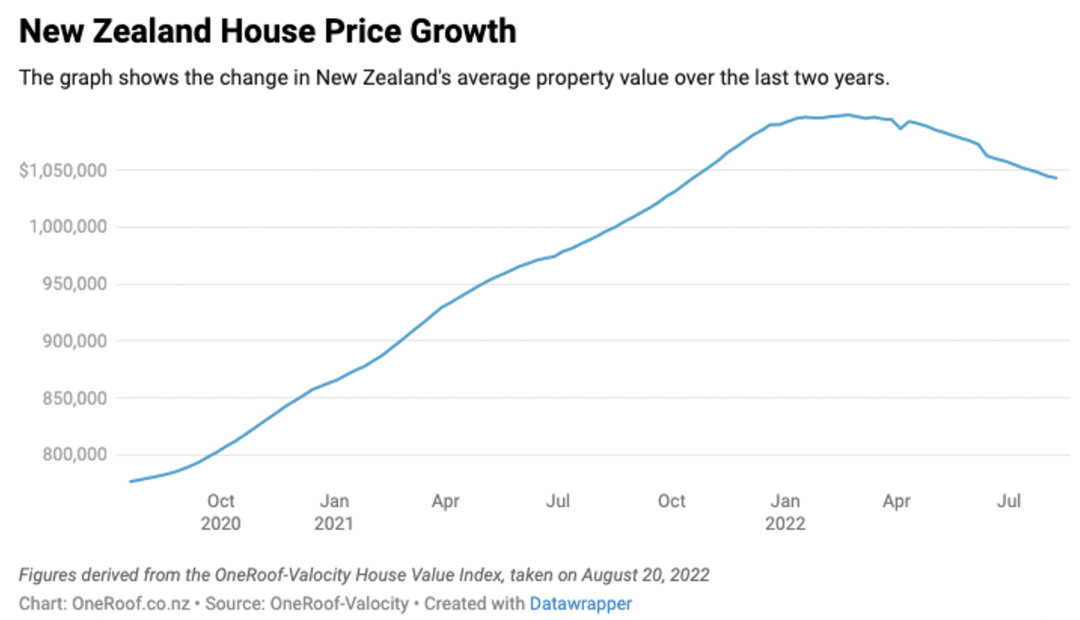
New Zealand house price movements in recent years
The data shows that the West Coast currently has New Zealand's lowest property prices. Its average house value rose 2.5%, or NZ$10,000, over the last quarter to NZ$403,000. Greater Wellington recorded the country's largest decline and was the only region where prices were lower than a year earlier. Its average house value plunged an extraordinary 9.1% this quarter, ending a run of 15 consecutive months above NZ$1,000,000. Nelson recorded the next-largest quarterly decline after Greater Wellington, at 5.9%, followed by Hawke's Bay at 5.2% and Bay of Plenty at 4.4%. In Auckland, New Zealand's largest city, average property values fell 4.3% over the three months to the end of August. This marked the sixth consecutive monthly decline since the end of March, leaving prices just 2.3% higher than a year earlier and almost back to the same level.
House prices generally continued falling nationwide last quarter
James Wilson, head of valuations at OneRoof's data partner Valocity, says half the capital gains homeowners held at the market peak over the past 12 months have already disappeared. The national average property value has fallen 5%, or approximately NZ$55,000, since peaking at the end of February. Wellington's housing market looks particularly vulnerable, with prices recording a year-on-year decline for the second consecutive month. Over the 12 months to the end of August, house prices in the region fell 5.6%, the largest annual decline of the current downturn. Worse still, over the past 6 months, at least 40% of the roughly NZ$350,000 in average post-pandemic capital gains enjoyed by Wellington homeowners has been wiped out. Borrowers who bought at the market peak may already find themselves in negative equity, facing substantial financial losses if forced to sell now.
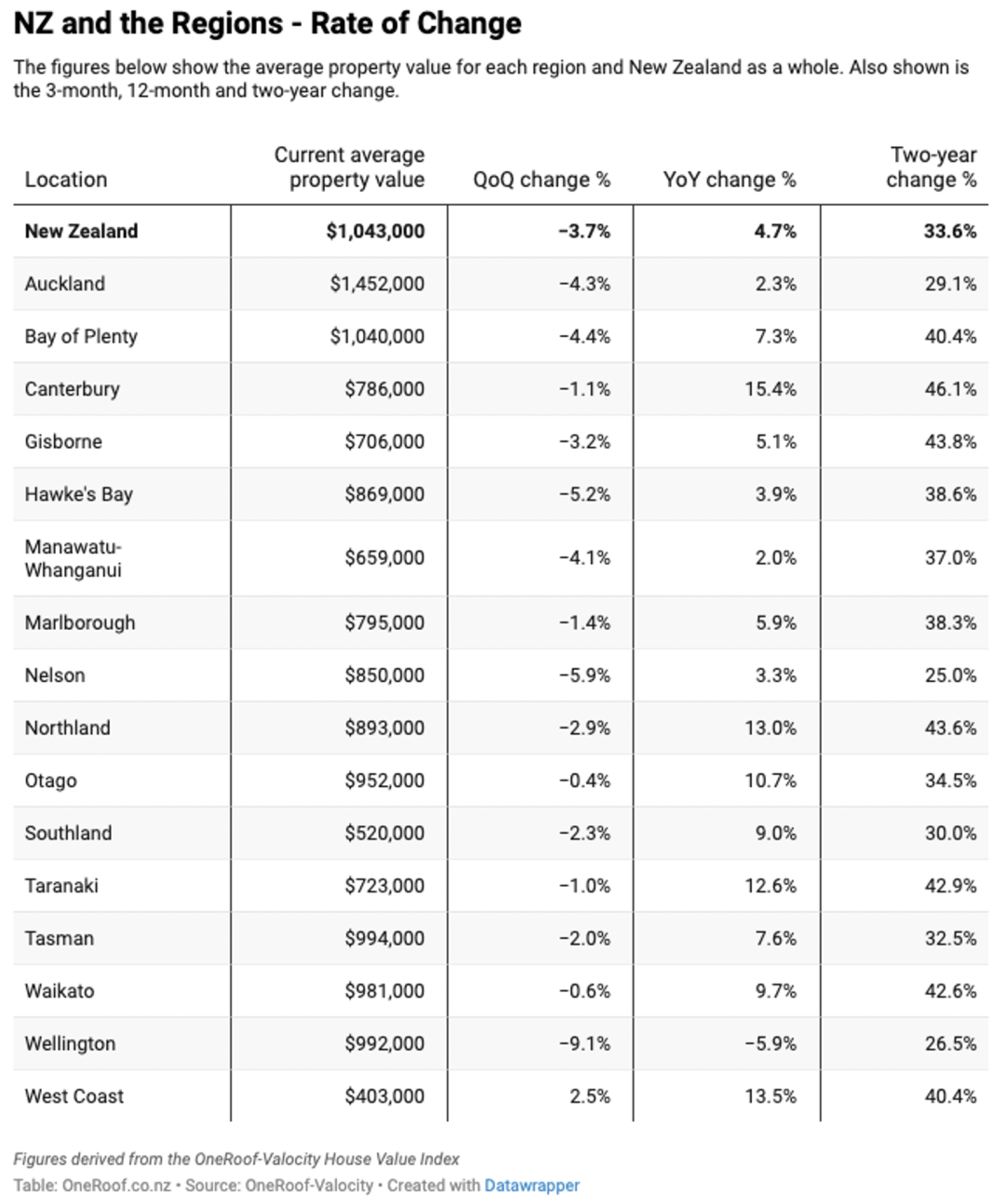
Percentage changes in house prices across New Zealand and its regions over different periods
Wilson attributes the sharp drop in property sales to rising mortgage rates, inflation above 7%, and buyers' concerns about the economic outlook and further house price falls. At the same time, lower sales volumes are putting additional downward pressure on prices. Wilson notes that nationwide property sales last quarter were down 13% on the previous quarter and 31% on the same period last year. More tellingly, Auckland, which accounts for a large share of national sales, recorded 8% fewer sales last quarter than in the corresponding period of 2017, even though Auckland's housing market in 2017 was widely regarded as very subdued.
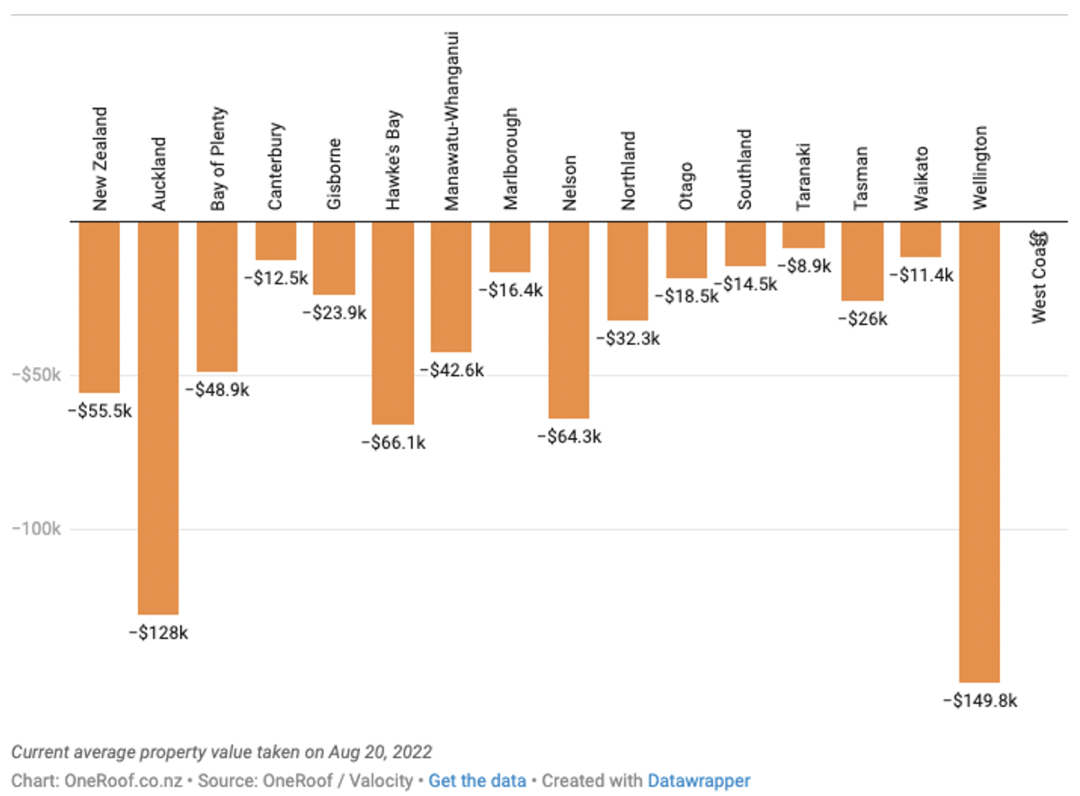
Current house prices compared with peak prices by region
Among the country's 7 main urban centres, only Queenstown-Lakes recorded growth in average house values over the past three months, rising 1.8%, or NZ$33,000, to NZ$1,878,000. In the capital, Wellington city, average house values fell 11%, or NZ$151,000, last quarter to NZ$1,137,000. This was down 6.3%, or NZ$76,000, on the same period last year. Tauranga's average value fell 5.6% last quarter, while Auckland, Dunedin, Hamilton and Christchurch recorded declines of 4.3%, 4.1%, 2% and 1.1% respectively. Nationwide, 58 of New Zealand's 72 areas recorded negative growth last quarter.
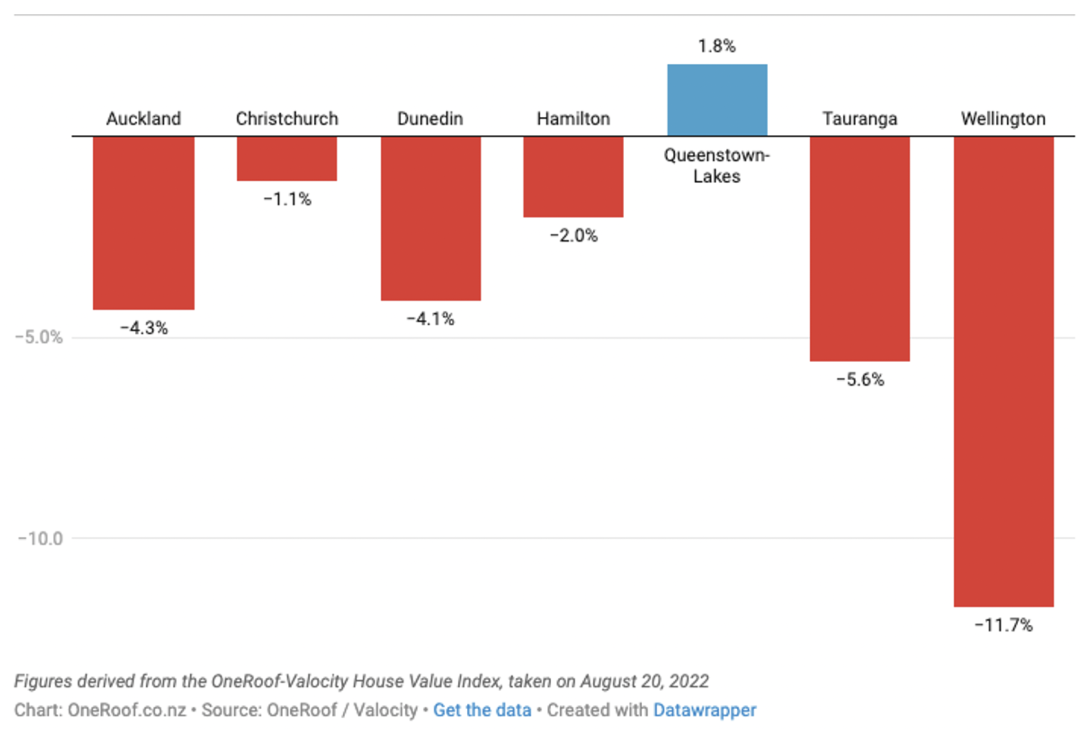
House price movements over the past three months across New Zealand's 7 main urban centres
Mortgage approvals are also falling sharply
Valocity head of research Wayne Shum says the data shows a rapid decline in newly approved mortgages, including applications from first-home buyers, investors and homeowners moving house. Registrations fell from 26000 in the three months to the end of June to 21000 in the three months to the end of July. Between month 5 and July this year, first-home buyers received 38.5% of new loans, or approximately 7600. Compared with 10500 approvals, accounting for about 39.9%, 12 months earlier, this represents a substantial decline in approved first-home buyer applications. Nationwide, in the three months to the end of July, homeowners moving house accounted for 16.5% of newly approved mortgages, investors for 25.6%, and buyers returning to the market for 2.9%.

Independent economist Tony Alexander
Prominent independent New Zealand economist Tony Alexander has a different view of the continuing decline in house prices. His survey of mortgage advisers with mortgage.co.nz found that large numbers of first-home buyers were returning to the market. The survey showed that 8% of mortgage advisers believed more of their enquiries were coming from first-home buyers, marking the strongest confidence in the market among advisers since February 2021. Alexander's monthly survey of real estate agents with REINZ shows that buyers' concerns about high interest rates, heavy repayment burdens and prices falling after purchase are continuing to ease. Most sellers are no longer insisting on late-2021 prices and have adjusted to the market. Sales volumes should therefore rise as prices fall. Alexander predicts a strong cyclical recovery in the property market as spring arrives in New Zealand, and says the market may already have reached a stage where prices are stabilising.