
Is New Zealand really considering an amnesty for people staying unlawfully?
Recently, a news story suddenly attracted widespread attention: In a rare statement, New Zealand’s Immigration Minister said the Government was actively considering an amnesty for overstayers, commonly referred to as undocumented migrants or illegal workers.
According to the NZ Herald, New Zealand’s Immigration Minister Michael Wood confirmed that the Government was ‘actively considering’ an amnesty for migrant overstayers. Officials confirmed that advice on the matter had been prepared for the minister, but he had yet to take it to Cabinet.
Immigration New Zealand estimates that there are about 14,000 overstayers in New Zealand. Immigration Minister Michael Wood confirmed that he had received advice on an amnesty-style arrangement for overstayers and various schemes New Zealand had introduced in the past, but had yet to submit a paper to Cabinet.
‘We are actively considering this issue. It is something I have been discussing with colleagues.’ He said he had spoken about it with ministers, including the Minister for Pacific Peoples. For now, however, he could not give a timeframe for any decision.
{ad}
The calls behind an amnesty
In fact, efforts to secure an amnesty for overstayers have been under way behind the scenes for several years, led mainly by the Green Party, Pacific community leaders and other migrant groups.
The issue resurfaced when National’s immigration spokesperson at the time, Erica Stanford, asked Immigration Minister Michael Wood whether the Government was considering an amnesty for overstayers. She referred to Ireland’s ‘once in a generation’ amnesty introduced in 2022, which applied to adults who had lived in Ireland for four years and children who had lived there for three years.
Ireland had about 17,000 overstayers, and the Government had received 6548 applications by the deadline. By December 2022, more than 1000 Chinese citizens had gained residency through the amnesty.
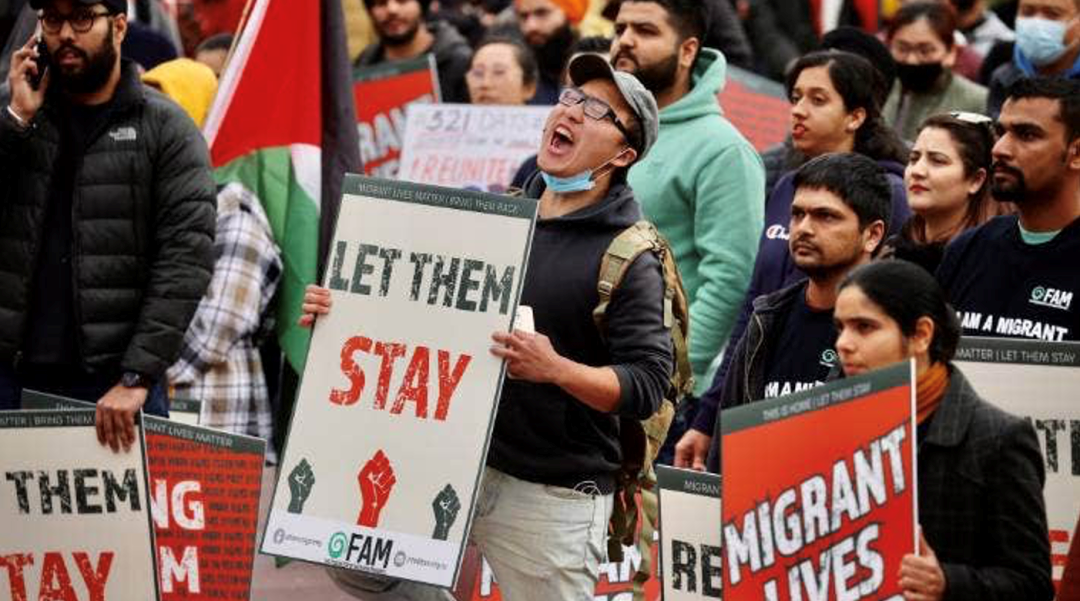
2021 immigration march in Auckland. Photo: Ricky Wilson/STUFF
In New Zealand, Pacific community leaders had appealed to Parliament as early as August 2020, calling on the Government to grant overstayers residency. By around April 2021, pandemic border closures had halted the issuing of large numbers of visas. Anger among migrant groups gradually built, leading to repeated marches and petitions. The Green Party subsequently joined the campaign.
The Green Party wrote to the immigration minister at the time, calling for an amnesty for overstayers and resident visas for temporary visa holders. We saw what happened next: in September 2021, the Government suddenly announced the 2021 Resident Visa policy, resolving the residency status of work visa holders already in the country. Yet the issue of overstayers continued to see little progress.
New Zealand has, in fact, granted amnesties to overstayers before, and Chinese citizens have benefited. Around 1990, New Zealand granted an amnesty to some Chinese international students. In 2000, some overstayers who met requirements relating to length of residence, having children born in New Zealand, or marriage to a New Zealand citizen or resident were also granted an amnesty, covering about 7000 people.
So, although an ‘amnesty for illegal workers’ may sound hard to believe, it is by no means impossible.
What would this mean for the construction industry?
Data from 2017 shows that Tongans and Samoans made up the largest groups of overstayers in New Zealand, followed by people from China, India and Malaysia.
In the construction industry, we regularly hear of overstayers being employed.
Just a few years ago, Immigration New Zealand led raids on Auckland building sites, arresting several illegal workers who were subsequently deported. The incident caused a major stir in the Chinese community and served as a reminder to many employers: employers are legally responsible if they hire ‘illegal workers’ who have no lawful immigration status!
Under immigration law, employing a foreign national who is working illegally in New Zealand can attract a fine of up to NZ$10,000. Employers who knowingly continue to employ someone without lawful immigration status can be fined up to NZ$50,000.
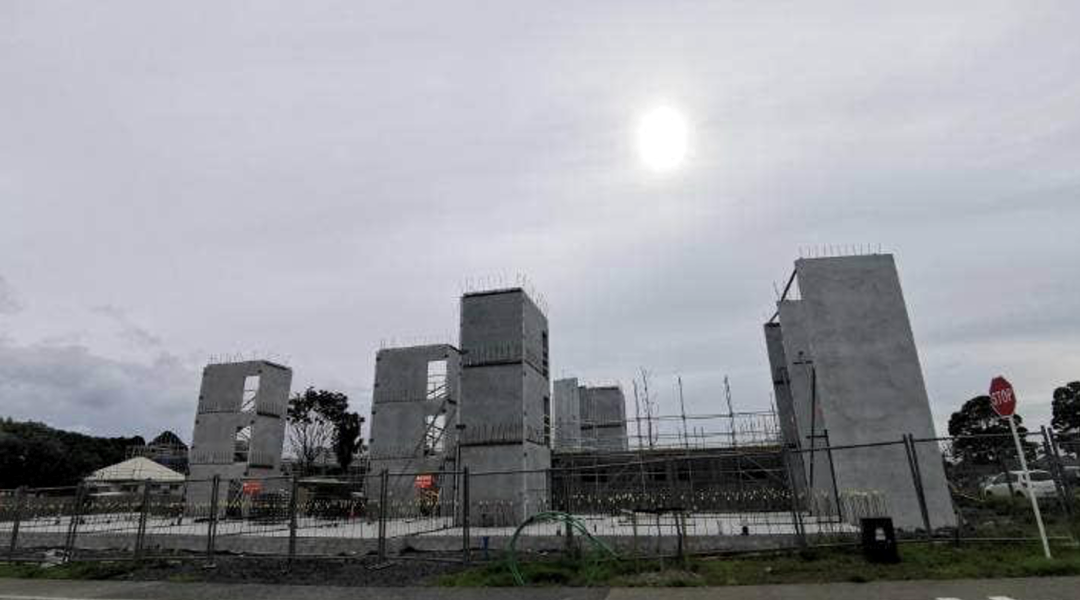
8 workers were taken away from a building site in east Auckland. Photo: Lucy Xia
For overstayers, meanwhile, many were deceived by unscrupulous agents into coming to New Zealand to work, only to discover on arrival that they had no lawful immigration status and had to live in hiding. Many are paid far less than promised and exploited by employers; some have even died on building sites.
It remains unclear whether the Immigration Minister can actually advance an amnesty. If he succeeds, however, construction employers would have an opportunity to legally hire some skilled workers, while overstayers could finally stop living in fear and uphold their statutory employment rights.
But for the many people who have worked hard in New Zealand and obtained resident visas legally, this may seem somewhat ‘unfair’.
What do you think?