
 At two o’clock this afternoon, the Reserve Bank of New Zealand announced its final interest rate decision of the year, leaving the official cash rate (OCR) unchanged at 5.5%. In its Monetary Policy Statement, the Bank noted that although higher interest rates were constraining household spending and inflation was trending down, it believed inflation remained too high and continued vigilance was needed against persistent inflationary pressures. “The OCR needs to remain restrictive so that growth in demand continues to be restrained, allowing inflation to return to the 1–3% target range.”
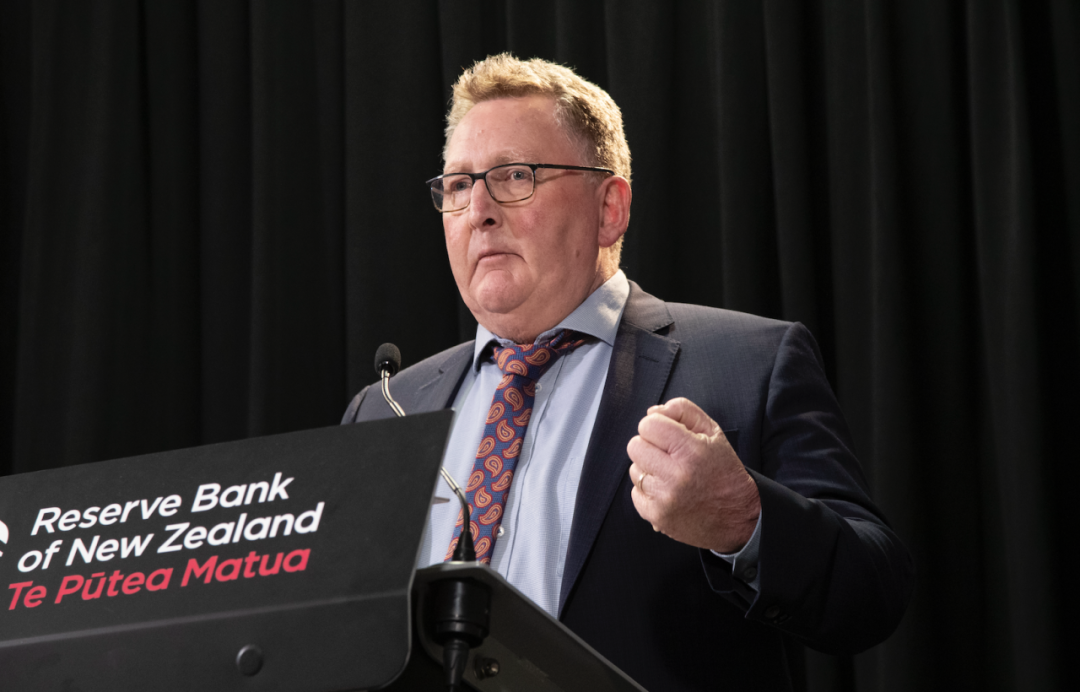 Reserve Bank of New Zealand Governor Adrian Orr announces that the OCR will remain unchanged.
The statement said wage growth had slowed and demand for labour was easing, with job advertisements now back at pre-pandemic levels. Although population growth had eased labour supply shortages, its impact on overall demand was becoming apparent, increasing the risk that inflation would remain above target. The Monetary Policy Committee was confident that the current exchange rate was restraining demand. However, with core inflation elevated, persistent excess demand and inflationary pressures remained concerning. “If inflationary pressures are stronger than expected, the money supply ceiling may need to be raised further.”
Monetary Policy Committee members agreed that interest rates needed to remain restrictive for some time to bring inflation back within the target range and support maximum sustainable employment.
 Rising mortgage rates have put considerable pressure on borrowers in recent years, particularly as inflation remains high and interest rates are unlikely to fall in the short term. So, if borrowers have NZ$100,000 in savings, should they reduce or pay off their mortgage debt? Or should they consider buying a better property before house prices “take off” again?
To answer this, we first need to consider another question: when interest rates are high, is paying off a home loan early with a lump sum the best financial strategy?
Generally, a lump-sum repayment can significantly reduce the mortgage interest a borrower pays. However, such a lump sum may be better used as leverage to buy an investment property. From a long-term investment perspective, using this “spare cash” to buy a better property might deliver a stronger return.
 Should borrowers use their savings to make a lump-sum mortgage repayment or buy a better property?
Mortgage advisers and property market experts have offered differing views on this question:
Mortgage broker Campbell Hastie has been surprised by how much some of his clients have saved since the pandemic. He has noticed that many have spare cash, which they are now putting into their mortgages to offset the interest rate increases they face. Hastie said the most interesting aspect was the size of these sums: they often save NZ$50,000 to NZ$100,000. He fully understood this approach, as borrowers could not simply stand by while interest rates rose. They needed to build savings for a rainy day. Although the “storm” had not truly arrived, interest rates had already increased, so these borrowers were taking the opportunity to ease their repayment burden. That was why so many mortgages were being restructured.
Gareth Veale, a mortgage broker at EasyStreet Mortgages, has seen the same pattern. Veale has noticed more parents willing to use cash to offset their children’s mortgage costs. For example, one father asked him about the best way to repay his daughter’s loan. The father ultimately decided to lend her the money, which she would repay at an interest rate below the bank’s 7%.
Veale said mortgage holders with savings set aside for a rainy day should consider revolving credit or an offset arrangement. These options allow homeowners to reduce mortgage interest while retaining access to funds when needed. Another option for homeowners with substantial savings is to put the cash into an investment property. However, this is only feasible if they have enough income to service another mortgage, as rental income alone is unlikely to cover repayments in the current environment. He also cautioned investors: “Property investment is not necessarily for everyone. You need sufficient income and time to keep topping up your investment.”
{ad}
However, Opes Partner economist Ed McKnight takes a different view. He even warned borrowers against using their savings to upgrade to a better property, as they could reach retirement with nothing but an expensive, mortgage-free home. An investor recently told him he was very concerned about his parents’ finances. They owned a mortgage-free property worth NZ$1,700,000 and had some KiwiSaver savings. While they appeared to face no financial pressure, they would have to sell their home to enjoy a better retirement, which would in turn lower their standard of living.
McKnight further explained that if borrowers could afford higher mortgage rates without financial strain, investing spare cash outside their own home could be a good option. Those investments could include shares, funds or other types of investment property. However, borrowers wanting to use their savings to buy an investment property needed to give additional thought to tax. Accountants would often advise investors to pay off their mortgage with a lump sum and then borrow the money again, as this would make it tax-deductible. It should be noted that mortgages on owner-occupied homes are not tax-deductible, while mortgages on investment properties are.
McKnight also said that borrowers who were not interested in property investment could still ease their repayment burden by paying down their mortgage. Current fixed mortgage rates were 7%, meaning a lump-sum repayment could save borrowers 7% in mortgage costs, equivalent to an after-tax term deposit rate of 10%。This suggests that paying off a mortgage is a sensible move, unless borrowers can achieve a higher investment return elsewhere.
*This article is for reference only and does not constitute investment advice for any organisation or individual.