
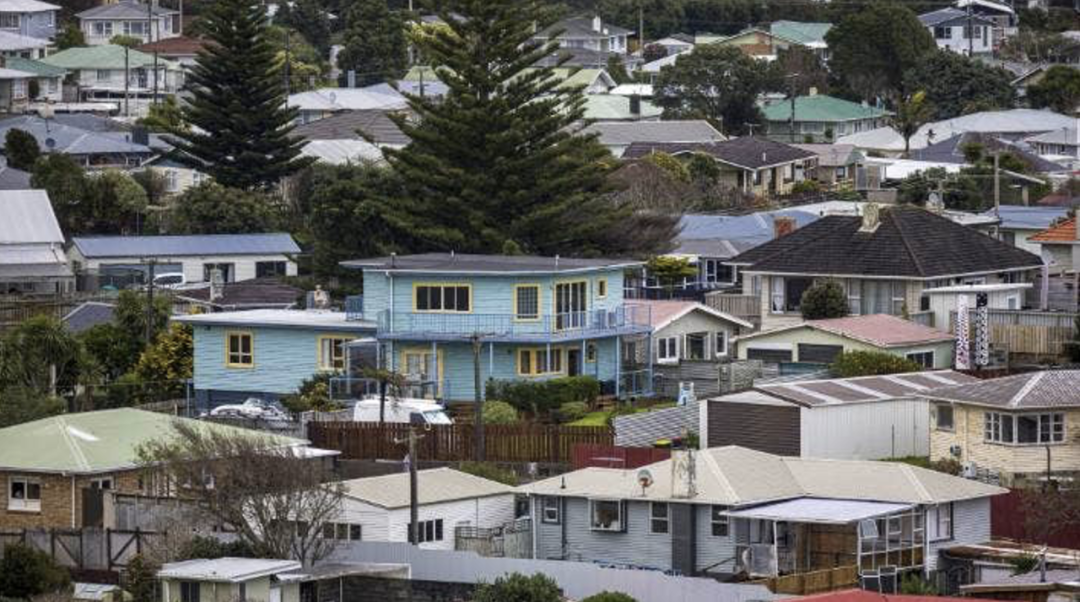

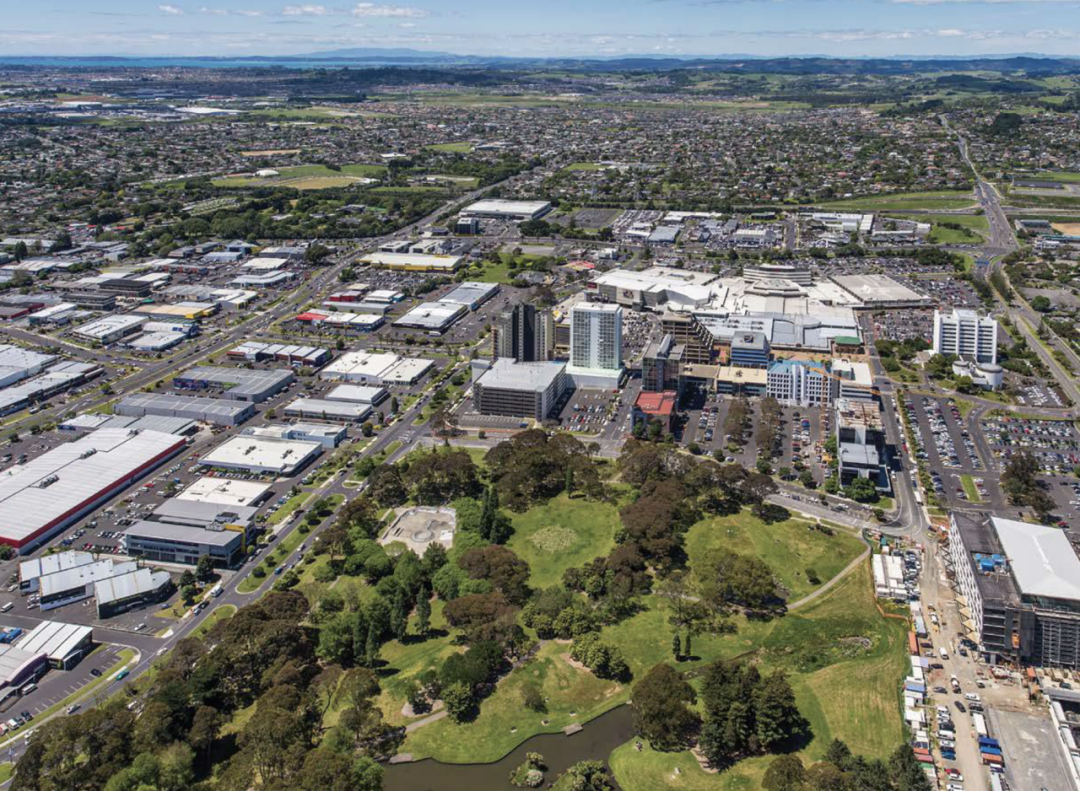
House prices in Auckland’s Otara and Herne Bay have risen by nearly 7% over the past three months.
The latest property report from OneRoof and Valocity shows that New Zealand’s property market has healthy momentum, with house prices recording quarterly growth across the country apart from a few areas. In the three months to November, the national average house price jumped 2% (NZ$19,000) to NZ$968,000. Low stock levels and growing buyer demand were the main factors putting upward pressure on prices.
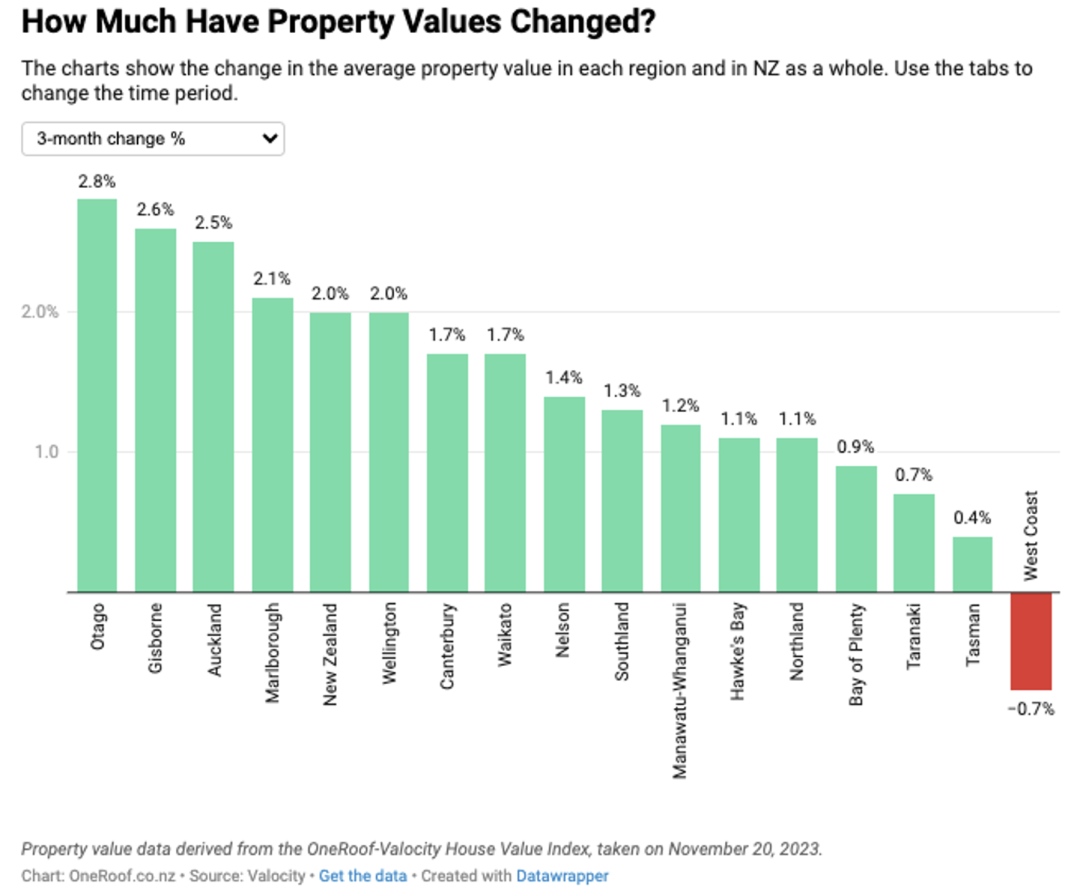 Percentage changes in house prices across New Zealand regions over the past three months (Source: OneRoof)
Otago recorded the largest quarterly increase, rising 2.8% over the past three months to an average price of NZ$944,000. Auckland and Wellington also performed strongly, rising 2.5% and 2% respectively. Canterbury’s house price growth slowed to 1.7%, following earlier gains of more than 2%, but property prices in the region recorded their first annual increase since December 2022.
Overall, the housing market has performed creditably as it enters summer. Northland, Nelson and Taranaki have finally returned to growth, leaving the West Coast as the only region where house prices are still falling.
 OneRoof property editor Owen Vaughan
 said that, at a local level, house prices in Queenstown-Lakes and Wellington rose 3.5% and 3% respectively, outperforming the rest of the country. Although Christchurch’s market is much quieter than before the general election, the city’s house prices are still 2.6% higher than a year ago. In Auckland, Manukau and Franklin recorded the strongest quarterly house price growth, reflecting the continued dominance of first-home buyers in these more affordable areas. Surprisingly, price growth is also gaining momentum on the more expensive North Shore.
Of the 792 suburbs nationwide with at least 20 property sales over the past 12 months, 651 recorded quarterly increases in average house prices; 132 recorded annual increases; and 42 saw prices return to, or approach, their peak before the housing market downturn.
Lake Hawea in Queenstown-Lakes and Camberley in Hastings recorded the strongest growth over the past three months, with average house prices rising 7.3%. Otara and Herne Bay, at opposite ends of Auckland’s house price spectrum, also saw rapid increases of 7% and 6.9% respectively.
Although these figures highlight increasingly widespread house price growth across the country, prices are still falling in some areas. Declines have accelerated in places including Hokitika (-5.9%), Otautau (-5.8%), and Carterton (-3.5%).
Vaughan believes the main reason for rising prices is that new listings remain relatively low, giving sellers greater confidence. Although stock levels in Auckland remain at historic lows, new listings are recovering.
However, those hoping for a leap in house prices and sales volumes may be disappointed. Recent auction results suggest the market is still a long way from panic buying. Meanwhile, the latest Centrix data shows that more than 430,000 people are behind on loan repayments, with nearly 20,000 home loan accounts in arrears, up 25% on a year ago. High interest rates remain the biggest constraint on house price growth. The official cash rate (OCR) remains elevated at 5.5%, and the Reserve Bank has made clear that further OCR increases cannot be ruled out.

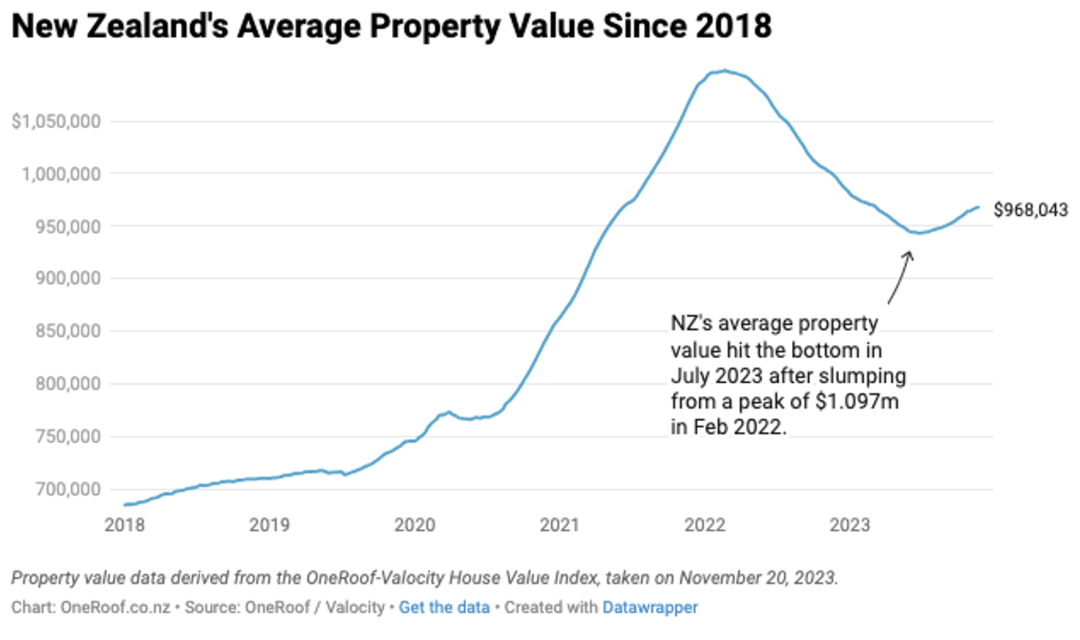
New Zealand’s average house price since 2018 (Source: OneRoof)
Although house prices are recovering, they remain below their pandemic highs. Nationwide, the average house price is 14% below the peak of NZ$1,098,000 before the sharp downturn in February 2022. Wellington (25%) and Auckland (19%) have recorded the largest declines, showing that, despite the recent recovery, prices remain well below their peaks of two years ago. Hawke’s Bay and Manawatu follow, with declines of 16.5% and 15.2% respectively. Canterbury, Southland and the West Coast have recorded the smallest falls, at 6.5%, 4.1% and 2.9% respectively.
Valocity senior research analyst Wayne Shum said interest rates would need to fall significantly for house prices to return to their pandemic highs. “At the last peak, interest rates were 3%, whereas they are now around 7%. High interest rates are expected to persist for at least another year, so returning to that level will take a long time,” he said. He also said some areas would recover faster than others. With net migration reaching record highs, prices in some areas popular with investors could rebound more quickly. Many recent arrivals in New Zealand hold work or student visas and rent their homes. They are unlikely to buy soon, so house prices in areas with a concentration of rental properties could recover faster.