
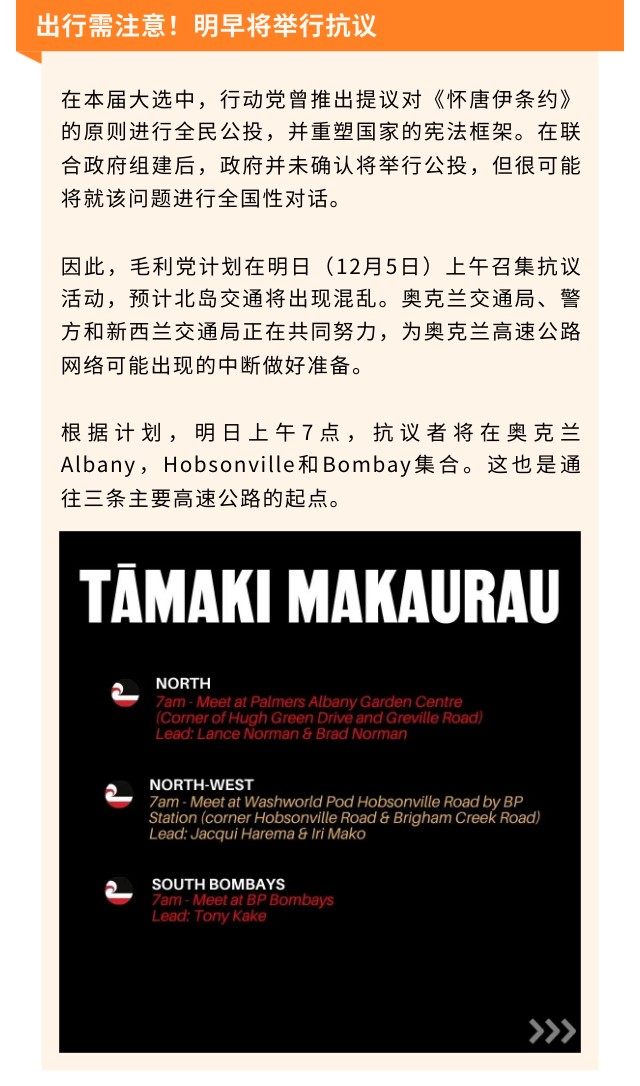
 YIJU reminds everyone to check traffic conditions when travelling tomorrow and keep an eye on the NZTA website for road updates.

 Reserve Bank Governor Adrian Orr struck a tough tone in last Wednesday's speech
As widely expected, the Reserve Bank of New Zealand announced last Wednesday that it would hold the Official Cash Rate (OCR) at 5.5%. Governor Adrian Orr made it very clear that financial markets should not rush to price in an OCR cut in the near term. In fact, the Bank slightly raised its projected OCR track, indicating a 75–80% chance of another increase during this cycle, expected in the first half of 2024, if market conditions require it.
So why is the Reserve Bank taking the opposite approach when the market expects rates to fall? It is concerned about upside risks to inflation. In particular, rents and construction costs could continue rising for some time, requiring another increase in the cash rate to bring them under control. Reassuringly, most of the Reserve Bank's core macroeconomic forecasts were broadly unchanged from its previous update. It expects a recession to be unlikely, employment to continue rising and CPI inflation to return to the 1–3% target range in the third quarter of next year. House prices are expected to rise slowly, with average annual growth of 5% from 2024 to 2026.
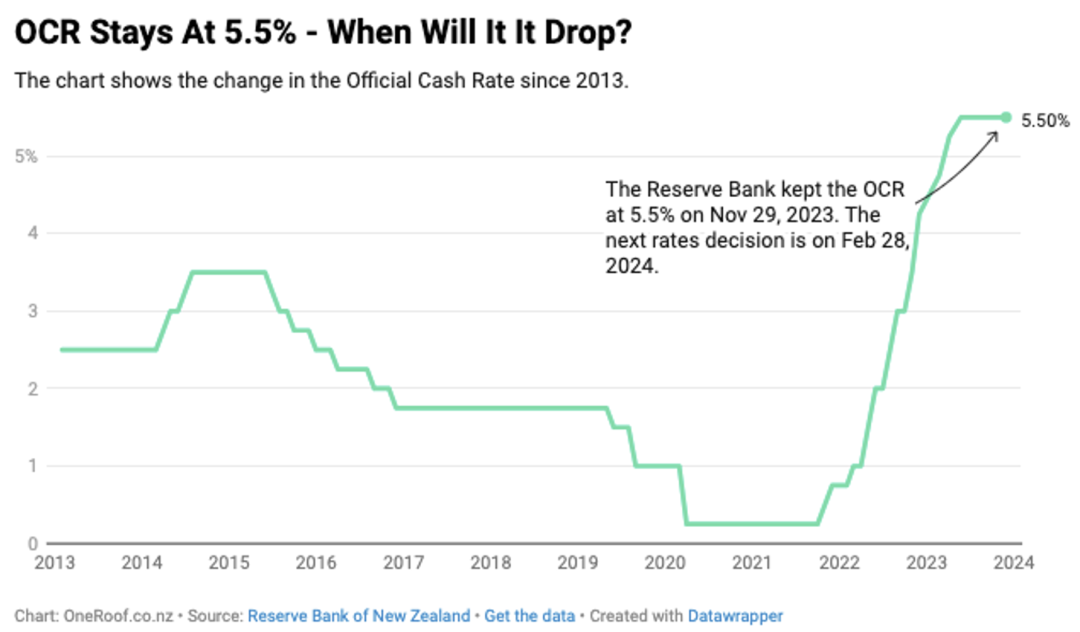
Chart showing the OCR's projected path (Source: Reserve Bank of New Zealand)
Overall, another OCR increase is unlikely, but the Reserve Bank of New Zealand has maintained a firm stance, saying it does not expect to consider a cut until the first half of 2025. This means mortgage rates are unlikely to fall significantly for at least another year.

On the outlook for New Zealand house prices, CoreLogic chief economist Kelvin Davidson says his forecast closely resembles the Reserve Bank of New Zealand's: growth over the medium term, tempered by factors such as rising mortgage rates and potentially higher mortgage debt-to-income limits. House prices appear to have begun another upswing. The November CoreLogic House Price Index, released last week, showed that New Zealand's average house price rose by 0.7%, following a 0.4% increase in October.

Consistent with the Reserve Bank of New Zealand's relatively optimistic view of the labour market, employment figures released by Stats NZ last week showed a further 0.5% rise in the number of people employed in October. Stats NZ noted that the October figures were boosted by temporary election-related recruitment, such as vote-counting roles. Even so, the overall message from the employment data remains reassuring and should give existing mortgage holders greater confidence as their loans reprice.

Although recent employment figures have been encouraging, other data has been less positive. Applications for building consents for new homes fell further in October, while the New Zealand Activity Index—a real-time measure of overall economic growth—has stagnated over recent months. Meanwhile, ANZ's consumer confidence and business outlook indices have shown no particularly striking changes. Overall, the economy is stagnating in many areas. Although this helps bring inflation down, it puts considerable pressure on business profitability in 2024. If unemployment rises, it will also become harder for borrowing households to adjust to higher debt repayments as their mortgage terms expire.

{ad}The Reserve Bank of New Zealand will release data this Tuesday on borrowers' choices of fixed mortgage terms. Recently, more borrowers have been choosing shorter fixed terms of 1–2 years. This gives them some certainty about interest rates during the fixed period while reducing the risk of overpaying if mortgage rates fall more than expected over the medium term.