|
According to a report published by Barfoot & Thompson, a net 8% of landlords said it was difficult to find good tenants in December last year, whereas 28% now say it has become easy, a record figure. The proportion of landlords planning to raise rents has also increased from 70% to 84%. Rising rents will further encourage young people to consider buying a home, while landlords
are increasingly able to cover rapidly rising costs such as insurance, maintenance and council rates.

Property investment may not be rocket science, but it does require careful research and analysis. Understanding the potential return on an investment is crucial. Property investors share a common goal: an investment property that delivers high yields, substantial capital gains and stable rental returns, with low maintenance costs. So how do you understand and calculate rental yields? How can you accurately assess your property's performance in the rental market? Today, we explore these questions with experienced property management specialists from Barfoot & Thompson.

Capital gain is the profit you make when you sell an investment property for more than its purchase price. Many people buy investment properties for long-term gains, as house prices tend to rise over time. In the short term, however, there may be little profit, as mortgage repayments, insurance and other expenses must also be considered. Many investors choose to rent out their properties to cover these costs, which makes calculating gross and net rental yields necessary.

Rental yield comes from the rent paid by tenants. It is calculated as the total rent a property could generate over a year, expressed as a percentage of its purchase price.
|
Gross yield: The income return on your investment before deducting any fees, expenses or potential losses from vacancies. It also excludes the effects of interest rates. Gross rental yield is a commonly used measure of returns because it is easy to calculate and makes it straightforward to compare properties with different values and rental returns. Barfoot & Thompson provides a formula for calculating gross rental yield: divide annual rental income (weekly rent multiplied by 52 weeks) by the property value, then multiply by 100. For example, a property worth NZ$600,000 with an expected weekly rent of NZ$500 has a gross rental yield of 4.33%. |
Although gross rental yield is relatively easy to calculate, remember that it excludes other factors such as expenses, interest rates and vacancy periods. For example, a property may offer a high rental yield but also come with substantial maintenance costs, which must be factored into its actual return.
|
Net yield: The income return on your investment after deducting all fees and other expenses, such as maintenance and insurance. Net yield is sometimes also called the rate of return. The formula for calculating net rental yield: Subtract annual expenses or lost rental income from annual rental income, divide the result by the property value, then multiply by 100. For example, a property worth NZ$600,000, with an expected weekly rent of NZ$500 and annual expenses or losses of NZ$5000, has a net rental yield of 3.5%. |
When calculating lost rental income, costs to consider may include acquisition and transaction costs, such as the property purchase price, legal fees, building inspection fees and initial loan fees, as well as annual costs such as vacancies, repairs and maintenance, property management fees, insurance and taxes.

 According to data published by interest.co.nz in November, weaker house prices and rising rents this year have pushed up rental yields. Auckland remains by far New Zealand's largest rental market. Indicative gross yields for three-bedroom houses rose from 3.5% in the first quarter of 2022 to 4.4% in the third quarter of 2023. Over the same period, yields for one-bedroom units and apartments rose from 6.2% to 12.5%, while those for two-bedroom units and apartments increased from 4.4% to 6.0%.
One-bedroom units and apartments have consistently maintained relatively high yields, while the overall rise in yields also indicates an improvement in properties' income potential. From this perspective, residential property has become a more attractive option for investors since the beginning of last year.
However, investment decisions also require weighing up maintenance costs, tenant quality, other expenses and capital gains. For property owners, this can be demanding work. We have therefore invited experienced property management specialists from Barfoot & Thompson to share their professional insights.
 |
 |
|
Kun Lu Head of Property Management Howick Branch |
Justin Ling Property Manager Howick Branch |

Kun Lu:The most popular choice is a three-bedroom, two-bathroom home with a double garage, followed by a two-bedroom, one-bathroom property. Apartments, townhouses and properties in relatively remote locations offer the highest rental yields. Home & Income properties also deliver very high yields.
Justin Ling:Since the pandemic, demand in Auckland's rental market has consistently exceeded supply. Essentially, any property that meets the Healthy Homes Standards is popular. Rental yield depends on when the property was purchased, as it is closely tied to the purchase price. For example, properties bought more than five years ago have higher rental yields than those bought within the past three years.
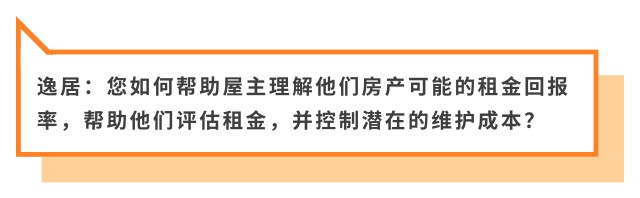
Kun Lu:Most landlords calculate the rental yield when buying an investment property, but some overlook annual maintenance costs. Older properties, in particular, generally have higher maintenance costs.
Justin Ling:Maximising landlords' returns is one of our service objectives. Rent is generally determined by several factors: first, location and school zones; second, the size of the house and section; and third, the age and condition of the house. We can generally help landlords maximise returns within their property's area. Our Howick branch puts extensive preparation into the initial marketing stage. Before an open home, we prepare professional photographs, a floor plan and other information for prospective tenants to view online. We also set requirements for the cleanliness and furniture arrangement of certain properties to help achieve the highest possible rent.
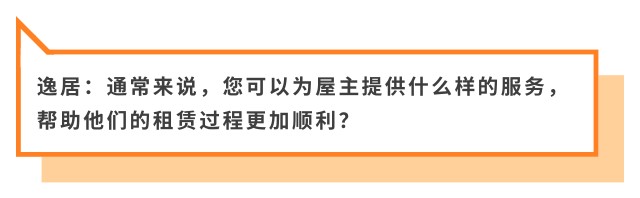
Kun Lu:We offer both property management and a service that simply helps owners find tenants. Once we enter a property into our system, it is listed on several websites simultaneously. Some tenants also come to our office to look for properties. The biggest challenge for owners finding tenants themselves is screening them. We carry out background and credit checks, and our tenancy agreements also offer greater protection for landlords' interests.
Justin Ling:The most important part of tenant screening is checking applicants' backgrounds and financial circumstances. Private landlords generally struggle to access this information from third-party providers. Our Howick branch obtains assessment reports from three different credit agencies and considers them together when deciding whether to accept an application. We also assess and compare rent against total household income. If annual rent would exceed 30% of household income, we will decline the application even if the background and credit checks reveal no issues.
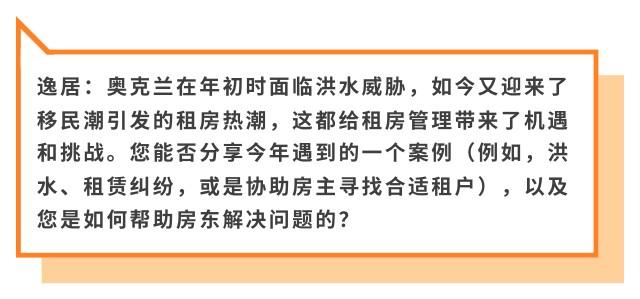
Kun Lu:At one of our properties, pipes burst four times within a year. After the final incident, the tenants complained and the landlord had to arrange hotel accommodation for them. The tenants still sought several thousand New Zealand dollars in compensation. We eventually had to issue 90 days' notice for them to leave so the landlord could replace the property's pipework. Following our discussions and mediation, the tenants withdrew their compensation claim and moved out without further problems.
Justin Ling:Personally, I believe that after a natural disaster, what Chinese landlords need most is for their property manager to communicate with the property's insurer. Although this is outside our contracted services, we at Barfoot & Thompson recognise that many Chinese landlords may face language barriers. Insurance claims also involve third-party investigation companies and require a rigorous process. We therefore give landlords our full support in handling claims after a disaster, helping them receive payouts as soon as possible to compensate tenants for their losses and keep losses to a minimum. Most of our tenants have also been very cooperative after disasters, understanding that unexpected natural events are beyond anyone's control.
Barfoot & Thompson is the real estate agency that knows Auckland best
Barfoot & Thompson accounts for 1/3 of Auckland's home sales,
far ahead of every other real estate agency.