

Perhaps no other country's property market has experienced the rollercoaster ride New Zealand has over the past three years, at least by some measures: from house prices surging around 40% in a year to falling by 13–18% in a year.
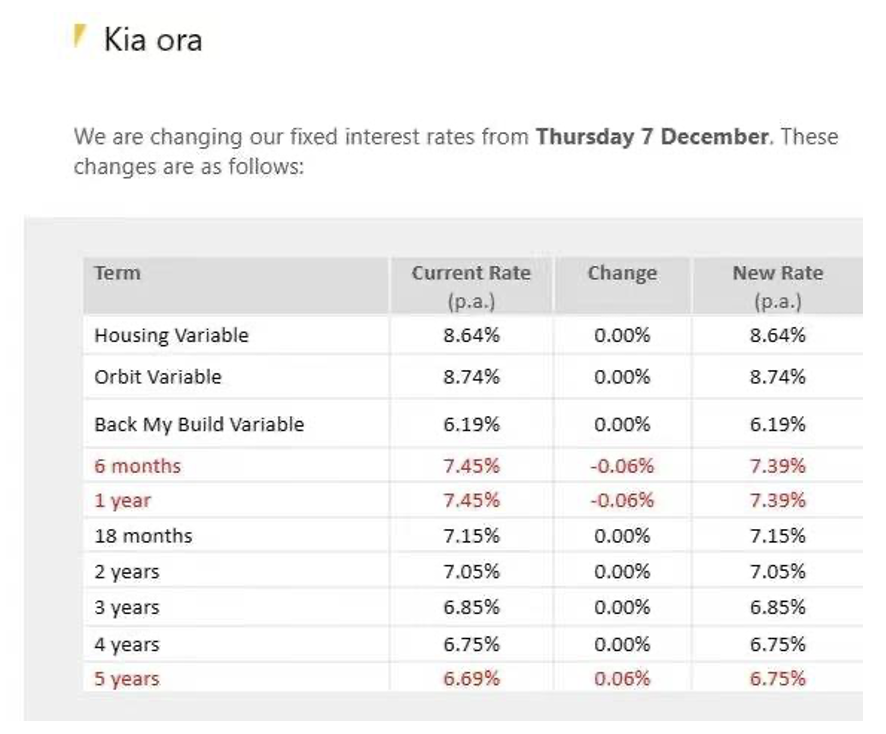
Changes in commercial banks' interest rates have played a part. This week, ASB announced it was cutting its six-month and one-year fixed mortgage rates to 7.39%, while raising its five-year rate to 6.75%.
This week, the Reserve Bank of New Zealand revised its forecast to predict a faster house price recovery, expecting prices to return to their pandemic peak by 2026. So how is the market performing now? In this article, we compare a range of key indicators.

Property turnover is an important factor in the future direction of house prices. High sales volumes combined with relatively few new listings put upward pressure on prices. But when sales volumes are low and buyers have more listings to choose from, prices tend to stagnate or even fall.
Over the past year, Auckland's Whenuapai was the suburb with the fastest growth in property sales volumes nationwide, accounting for around 8.2% of total sales. It was followed by neighbouring Westgate (7.9%) and Woodend in Waimakariri (6.9%). At the bottom of the rankings were Waihi Beach, accounting for 1.2% of total sales; Cannons Creek in Porirua, at 1.3%; East Tamaki Height in Auckland, at 1.3%; and Pauanui in Thames-Coromandel, at 1.4%.
According to research by Realestate.co.nz, the number of properties for sale in Coromandel in November this year was up 37.4% compared with November 2022. The central North Island recorded an increase of 22.1%, while Northland was up 19.8%. In stark contrast, the number of properties for sale in Gisborne and Wellington fell by 20.5% and 22% respectively. Nationally, there was little overall change, with the number of properties for sale down 1.5% from the same period in 2022.
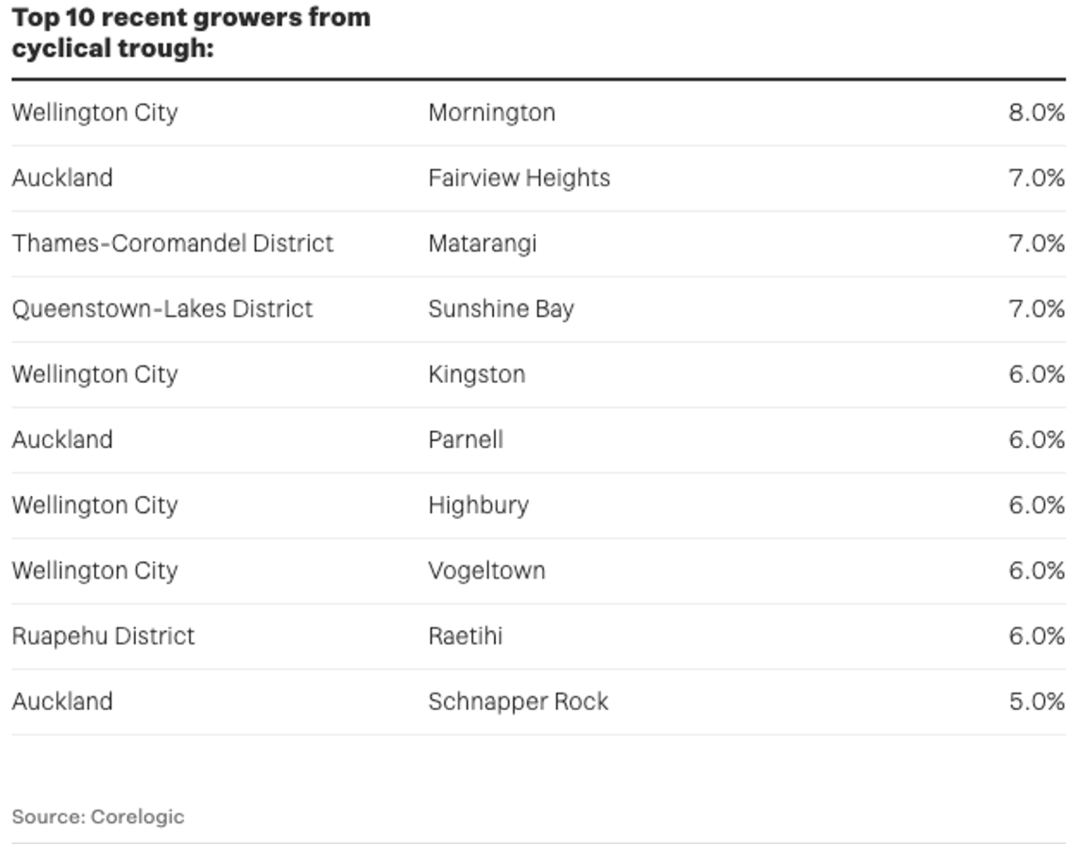 Suburbs currently recording the fastest house price growth (source: CoreLogic)
 Regional data collected by Realestate.co.nz shows Taranaki recorded the largest annual increase in property asking prices in November, at 0.8%. Coromandel recorded the largest decline, with asking prices down 14.3%.
 Building consent numbers can also have a substantial influence on future house prices. A shortage of new housing supply in an area could put significant upward pressure on the prices of existing homes there. For standalone houses and townhouses, the Chatham Islands recorded the largest annual fall in building consents, down 89% according to the latest data. This was followed by Kawerau, down 80%, Waitomo, down 60%, and Waitemata, down 60%. By comparison, Infometrics data shows building consents in Taupo and Gisborne fell by just 1% and 2% respectively.
 The cost of building new homes also influences house prices. QV data shows that, as at month 11, the cost of building a standard three-bedroom home had increased by 4.9%. This compares with an average annual increase of 11.3% at the same time last year and 14.7% at the end of November 2021. CostBuilder spokesperson and quantity surveyor Martin Bisset says construction costs stabilised in the second half of this year, reflecting an improved international economic outlook and an easing of the global supply chain problems that emerged during the COVID pandemic.
CoreLogic chief economist Kelvin Davidson says house prices could continue to rise, but increases on the scale seen a few years ago may be difficult to repeat. By historical standards, he believes the recovery could remain relatively subdued because housing affordability is still stretched, mortgage rates are unlikely to fall materially overall, and debt-to-income caps are still due to be introduced in 2024.
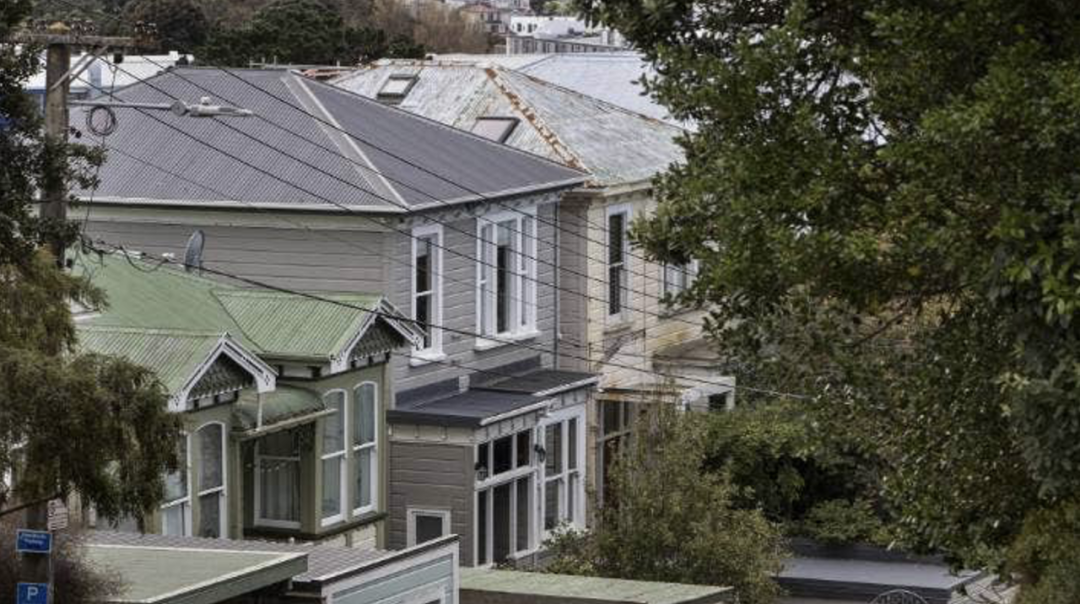
 CoreLogic chief economist Kelvin Davidson
Meanwhile, we should not overlook the ongoing repricing of existing borrowers' mortgages, as the rates they pay will rise to prevailing market levels over the next six to nine months. So far, this process has gone very smoothly. However, he says it remains a potential risk that needs close attention, particularly if job losses begin in 2024. He acknowledges that buyers' fear of missing out (FOMO) and the return of investors could push property turnover and house price growth above expectations. For now, however, the market will struggle to quickly shake off the heavy pressure of high mortgage rates.