

 At one o'clock this afternoon, Finance Minister Nicola Willis unveiled NZ$7,400,000,000 in cuts and savings in the Mini-Budget, as the Government sought to balance its books amid pressure on public finances from the economic downturn.
The document's most important section is a list of 16 Mini-Budget decisions that will have a NZ$7,400,000,000 impact on the Government's books. For example, cancelling Industry Transformation Plans will save NZ$127,000,000 over the next four years; cancelling the Lake Onslow project will save NZ$64,000,000; ending Resource Management Act reforms will save NZ$302,000,000; and terminating Let's Get Wellington Moving will save NZ$525,000,000. The largest saving will come from ending depreciation deductions for commercial buildings, a policy both National and Labour pledged to implement, which is expected to save NZ$2,311,000,000.
The document's most important section is a list of 16 Mini-Budget decisions that will have a NZ$7,400,000,000 impact on the Government's books. For example, cancelling Industry Transformation Plans will save NZ$127,000,000 over the next four years; cancelling the Lake Onslow project will save NZ$64,000,000; ending Resource Management Act reforms will save NZ$302,000,000; and terminating Let's Get Wellington Moving will save NZ$525,000,000. The largest saving will come from ending depreciation deductions for commercial buildings, a policy both National and Labour pledged to implement, which is expected to save NZ$2,311,000,000.
Unemployment is expected to rise to 4.5% next year and 5.2% in 2025, well above the 3.6% recorded in 2023. Meanwhile, inflation is forecast to fall to 4.1% next year and 2.5% in 2025.
 As recently as 29 November, the Reserve Bank announced it would hold the Official Cash Rate at 5.5%, warning that inflation remained too high and monetary policy would remain restrictive. The bank's interest rate forecasts indicated there would be no cuts before the middle of 2025.
However, swap rates have fallen sharply in recent weeks on expectations that the Reserve Bank will soon begin cutting the cash rate. Last month, Westpac became the first major bank to lower mortgage rates, with ANZ quickly following suit.
On deposit rates, ANZ has cut its two-year term deposit rate by 25 basis points to 5.75%, its 4-year term deposit rate by 15 basis points to 5.3%, and its 5-year rate by 25 basis points to 5.2%.
On lending rates, ANZ is cutting its two-year fixed mortgage rate by 20 basis points to 7.49% and its three-year fixed rate by 14 basis points to 7.35%. Its special two-year rate will fall by 20 basis points to 6.89%, and its special three-year rate by 14 basis points to 6.75%.
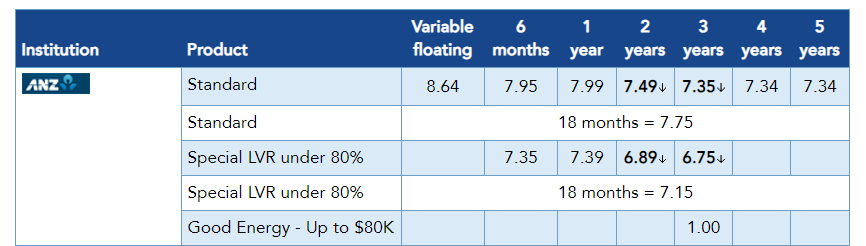
ANZ said it had adjusted some of its rates to reflect recent falls in wholesale swap rates.
 According to figures just released by Stats NZ, despite a record net loss of 45,000 people moving overseas this year, large numbers of new migrants have continued to arrive in New Zealand, producing an overall net population gain of 129,000. For a small country with a population of just 5,100,000, that means a surge of 2.5% in a single year. This raises the question: what impact will the rapid increase in arrivals have on New Zealand's housing market?
Independent New Zealand economist Tony Alexander said, regrettably, even the most expert economists could not reliably predict future property prices, rents or investment returns. Given this, we might as well analyse the question using the most basic economics from a first-year university Eco 101 textbook.

For any commodity, if demand falls while supply rises, its price will certainly fall in a market economy. Conversely, if demand rises while supply falls, its price will certainly increase. Returning to our question, we know that surging net migration will drive a sharp rise in future housing demand. But what will happen to housing supply? Over the past year, the number of consents issued for new homes in New Zealand fell by 21%. In the three months to October, building consent applications were down 28% on a year earlier. This means the supply of new homes is falling rapidly.
Putting these two facts together points to the following situation: house prices may keep rising to meet market demand and bring supply and demand into balance. However, the large influx of new migrants cannot immediately gain residency, and most cannot buy a home straight away, so the pressure on housing will mainly be felt in the rental market. In other words, rental demand will grow rapidly. Making matters worse, in the years before this surge in rental demand, the Labour Government introduced numerous policies intended to discourage homeowners from providing rental housing, such as removing interest deductibility.
This creates another problem: rising housing demand alongside falling supply means rents will keep increasing. As we move into 2024, rent increases will become substantial, because landlords can now not only pick and choose among prospective tenants but also more easily evict tenants unable to afford higher rents. They can also pass on some sharply increased costs to tenants, including council rates, insurance and maintenance.
 Independent economist Tony Alexander: surging housing demand will send rents soaring
Photo: Fiona Goodall
Alexander believes the link between a tightening rental market and house prices is that more people will do the sums and decide to buy a home to live in rather than rent. In fact, we have already seen this factor at work: first-home buyers' share of all buyers has been steadily increasing since the start of this year.
Beyond these two basic factors, what other significant macroeconomic factors will influence house price trends in 2024? Alexander noted that interest rates would fall at some point. As rates decline, more people will be able to secure enough finance to buy property, and their demand for investment properties will put greater upward pressure on house prices.
Tony Alexander believes the four fundamental factors discussed above could easily offset the negative effects of rising unemployment, and expects house price growth in 2024 to far exceed the level seen in 2023.