


Before predicting house price trends over the next 30 years, let's look back at how New Zealand house prices have evolved over the past 30 years. In January 1993, the national median house price was only slightly above NZ$100,000. Newspapers from the time show a four-bedroom home in Rotorua priced at just NZ$89,000, and a three-bedroom home built three years earlier selling for NZ$105,000.

It was not until 2005, 12 years later, that New Zealand first had a suburb with an average property price above NZ$1,000,000. At that time, first-home buyers in Auckland, Christchurch and Wellington were paying broadly similar amounts for their homes.
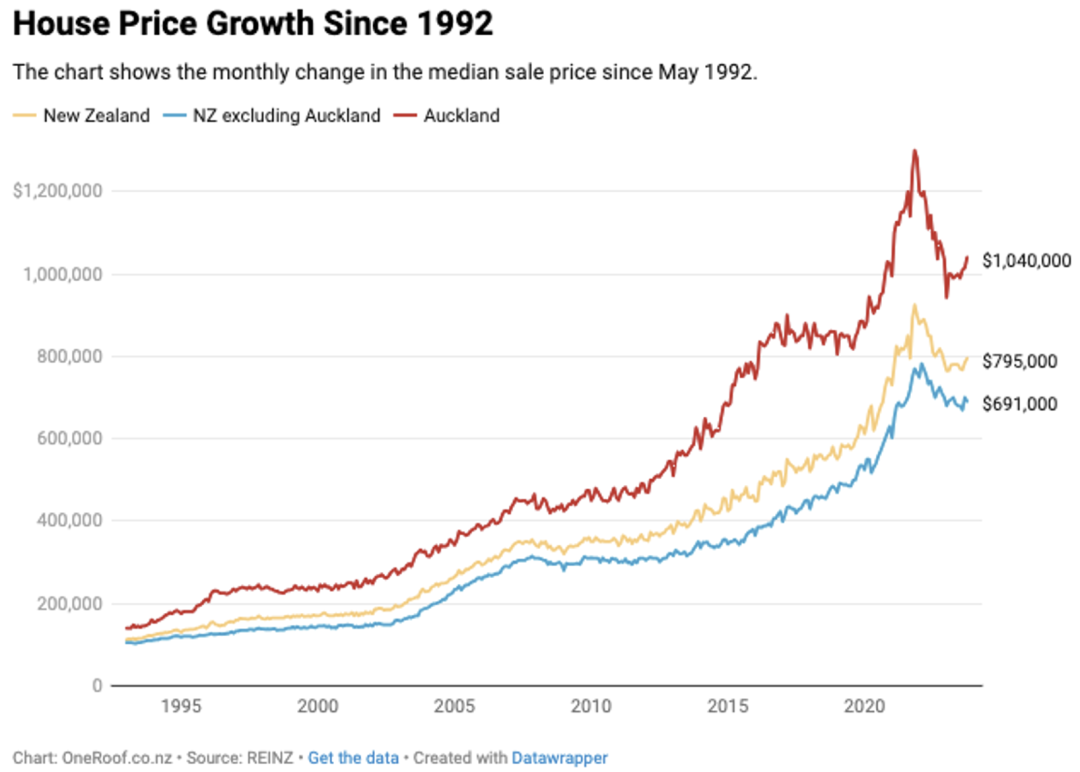 Changes in median property prices in New Zealand, Auckland and New Zealand excluding Auckland from May 1992 to the present (source: REINZ)
By 2023, even amid an economic downturn, New Zealand's national median house price had reached NZ$800,000. More than a third of the country's suburbs had an average property price above NZ$1,000,000, with three even exceeding NZ$3,000,000.
Over the past 30 years, Auckland's median house price has risen 7-fold。If growth continues at this pace, the city's median house price will reach a staggering NZ$7,000,000 by 2050. Even using the growth rate over the past 10 years, Auckland's median house price would exceed NZ$2,000,000 by then.
But will the future really be such a simple numbers game?

 Kiwibank chief economist Jarrod Kerr
Addressing this question, Kiwibank chief economist Jarrod Kerr said people need not worry too much about rising house prices. Even if house prices in 2050 more than double from current levels, ordinary New Zealanders' wages will also rise accordingly. He predicted that house prices would represent a smaller share of household income than they do now, potentially improving affordability. Although land prices for future property development may rise rapidly, prefabricated housing will become increasingly popular, urban housing density will increase, and there will be more townhouse and apartment developments. As a result, housebuilding costs are expected to fall substantially in the future, while homes will also be of better quality。
However, Kerr stressed that the biggest future constraint on development would be whether infrastructure such as water supply and wastewater systems could keep pace with the property sector's rapid growth. Good infrastructure would enable more land to be developed and higher-density housing to be built more efficiently. But if we continue with the existing development model, we will still face the same constraints in 2050 as we do today.
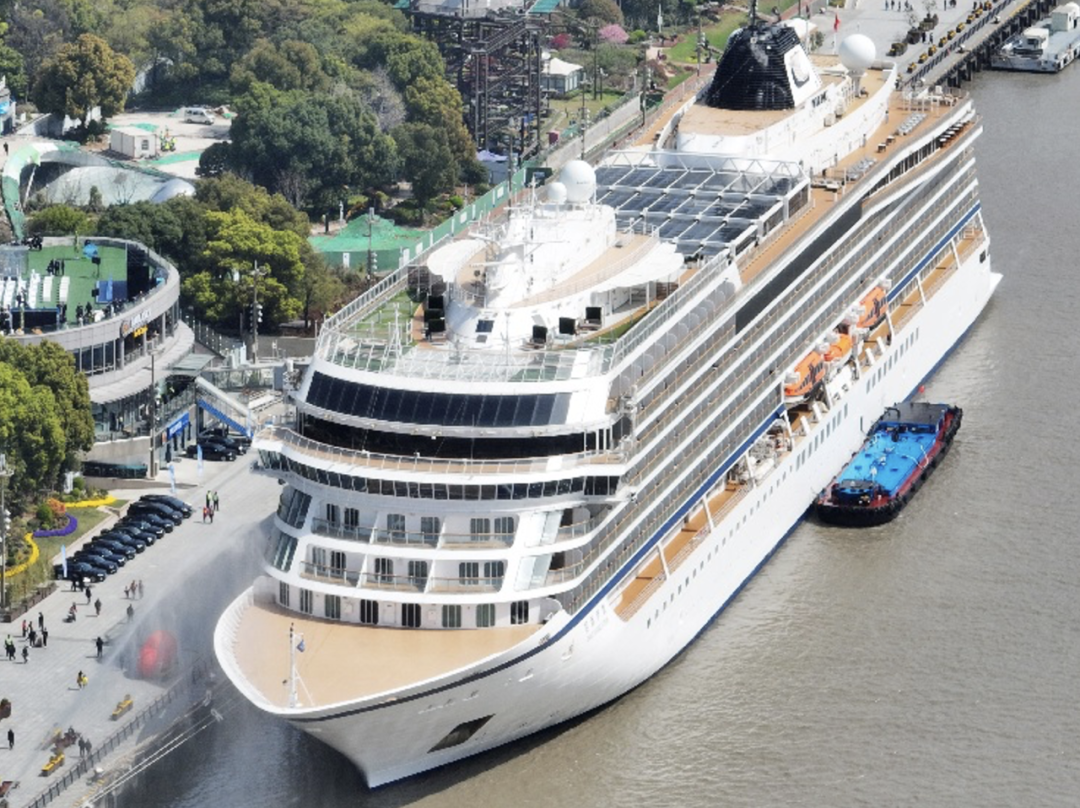 Apartment buildings in 2050 could have layouts similar to today's cruise ship cabins
He said future apartment buildings would be more like today's cruise ships. People would live in small units and could also go outside the apartment building to work, study or enjoy leisure activities, while all their daily needs could be met aboard the 'cruise ship'. He expected more commercial buildings in central business districts to be converted into housing as businesses reduced their office space. He cited BNZ as an example: with many employees starting to work from home, the bank had consolidated its offices from three buildings into two, delivering substantial operating cost savings.
McKay also hoped to see greater urban greenery in exchange for higher housing density. We are already starting to see this elsewhere in the world, with green parks incorporated into corners of high-rise buildings to help reduce the urban heat effect. Greenery absorbs carbon dioxide and produces more oxygen, ultimately strengthening its role as the city's ecological 'green lungs'. He went on to explain that although people in New Zealand tend to sell their homes in large cities and move to towns they consider more liveable, urbanisation has in fact been the prevailing trend since the Industrial Revolution. People in large cities enjoy better health, more opportunities, better infrastructure and cheaper food. People often regard cities as dirty and dangerous, but they are actually better suited to human habitation than we imagine.
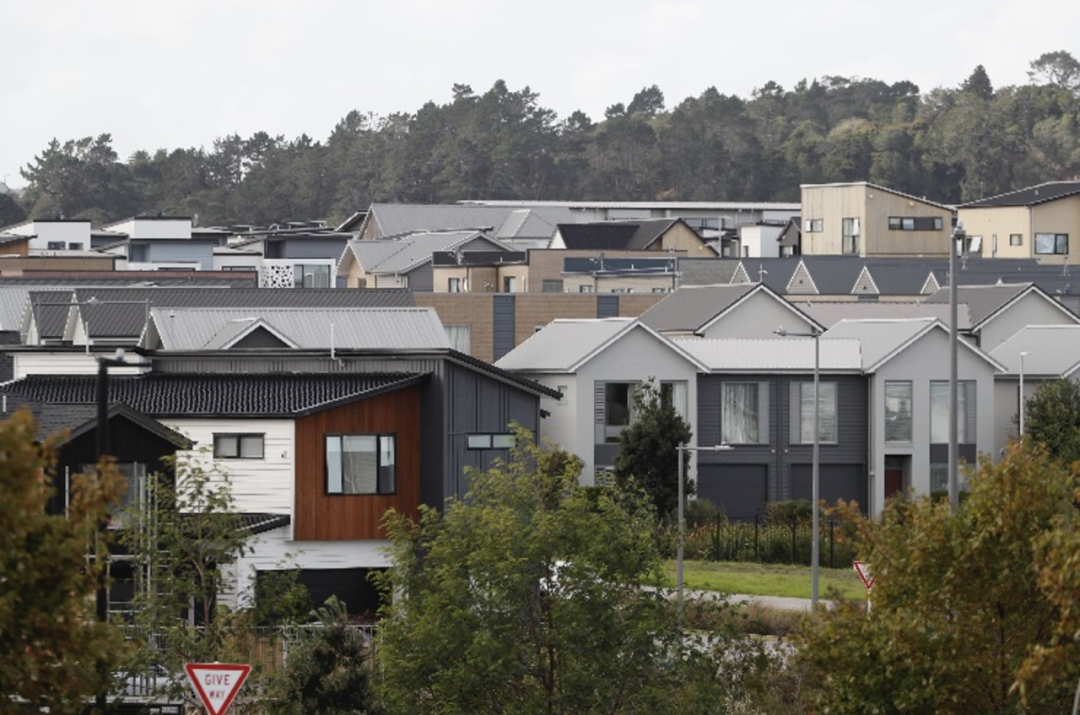 The current housing density in Hobsonville Point in west Auckland appears better suited to future development
Hughes highlighted the '20-minute city' concept, in which residents can reach most places they need in daily life within 20 minutes of home by walking, cycling or public transport. These include shops selling everyday essentials, healthcare services, community facilities, schools and parks. Hughes said the concept had become increasingly popular since the COVID pandemic, and Hamilton had also adopted it as an important direction for future development. Research shows that compact cities cost two to three times less to operate than sprawling cities.
He noted that some existing Auckland neighbourhoods already perform well in terms of density. Wynyard Quarter and Hobsonville Point, for example, combine medium- and high-density housing with commercial and retail spaces and new transport options. This means building better communities with lower carbon emissions will become the main direction of future property development.
Do you agree? Share your thoughts in the comments.