
The Reserve Bank recently signalled to the market that its stance remained firmly hawkish, giving no indication of a possible OCR cut. To understand its position, we first need to understand its primary responsibility: Keeping inflation within the 1%–3% range.
Inflation in New Zealand is influenced by a range of international and domestic factors. To restrain domestic demand, the Reserve Bank wants people to keep their money in the bank or in their pockets rather than spend too much. It also advises taking a cautious view of the market and avoiding excessive optimism. This is crucial to understanding its stance.
To influence people’s decisions, the Reserve Bank uses the OCR (Official Cash Rate). Its level directly affects the interest rates commercial banks receive on deposits with the Reserve Bank and pay on borrowing from it. This then influences household deposit and lending rates, helping regulate the economy.
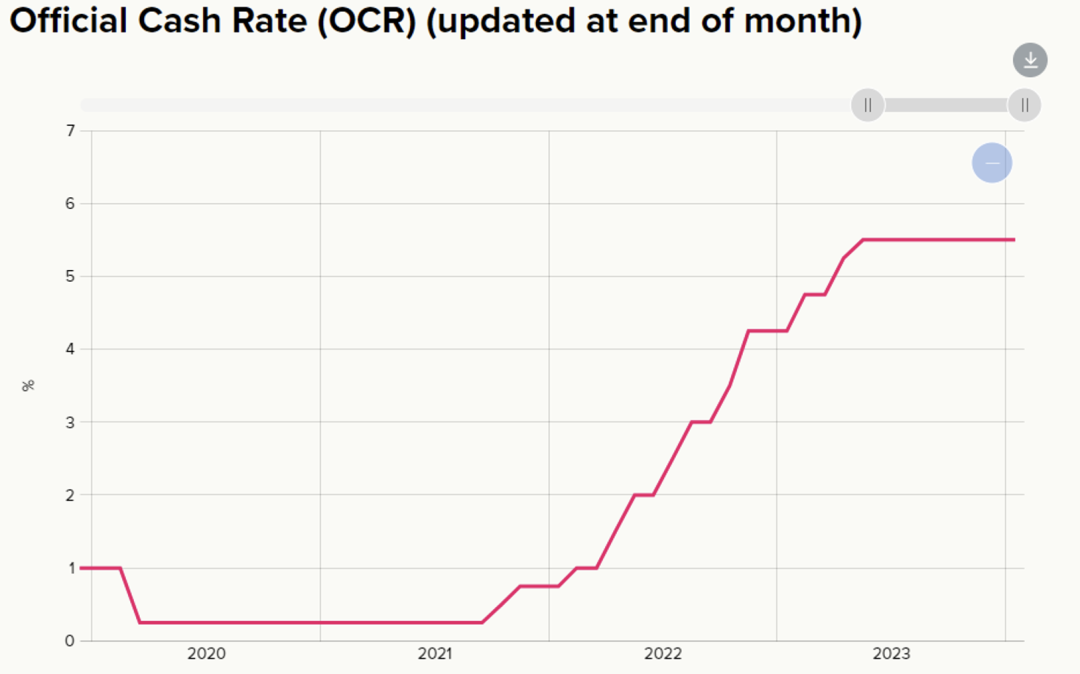
When the OCR rises, commercial banks face higher borrowing costs from the central bank, which in turn pushes up market interest rates. For ordinary people, borrowing from a bank becomes more expensive, while deposit rates become more attractive. More people therefore choose to leave their money in the bank rather than spend it. This reduces consumer demand, lowers prices and eases inflation.
Higher interest rates usually push up the exchange rate, making foreign or imported products cheaper to buy and helping reduce overall inflation. Higher interest rates also mean New Zealanders expect lower inflation in future. This encourages businesses to set lower prices for their products, helping keep inflation in New Zealand low.

With these basic concepts in mind, let us look at recent inflation figures and the Reserve Bank’s hawkish stance.
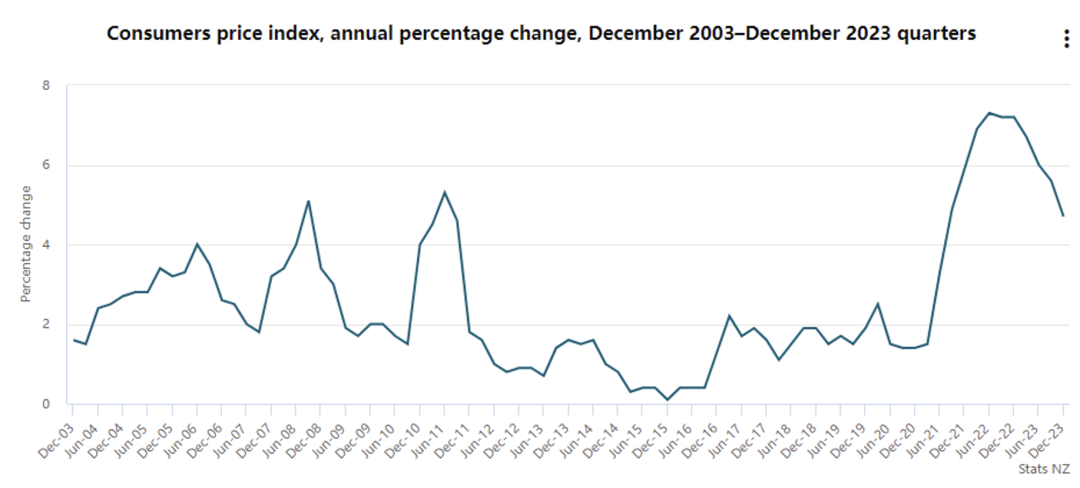
On 24 January, Stats NZ released inflation figures for the final quarter of 2023, showing the smallest increase in two years. In the year to December, annual inflation measured by the consumers price index (CPI) was 4.7%. Although this was above the Reserve Bank’s 1%–3% target range, it was below the bank’s earlier forecast of 5% and well below the peak of 7.6% in mid-2022. This offers hope of relief from cost-of-living pressures for New Zealanders. Combined with lower wholesale interest rates, it also puts greater pressure on the Reserve Bank to lower interest rates.
Following the release, Reserve Bank of New Zealand chief economist Paul Conway offered an official interpretation on 30 January, while maintaining his consistently hawkish stance.
Conway said recent economic data showed the Reserve Bank’s monetary policy was working, with economic growth and inflation slowing as expected. However, he stated plainly that there was still a long way to go to bring inflation back within the 1–3% target range。Although inflation fell to 4.7% in the final quarter of last year, domestically driven non-tradables inflation was above the Reserve Bank of New Zealand’s forecast of 5.9%.
These remarks gave no indication that the Reserve Bank was about to cut interest rates, and served as a measured response to market expectations of cuts. These remarks gave no indication that the Reserve Bank was about to cut interest rates, and served as a measured response to market expectations of cuts.
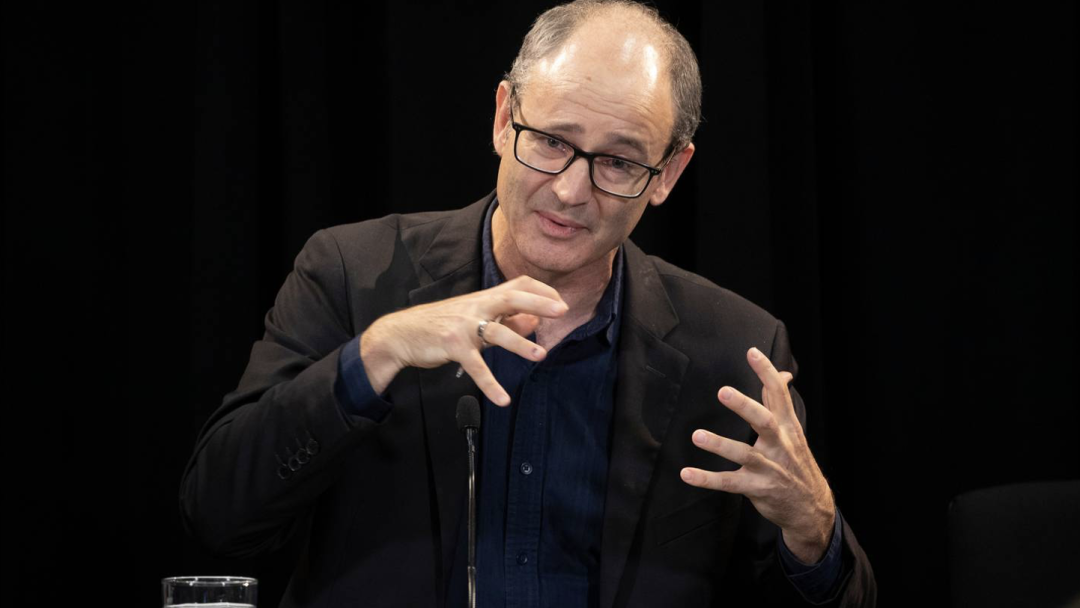 Reserve Bank chief economist Paul Conway. Photo: NZ Herald
Looking back at the Reserve Bank’s rate increases last year, the rises from the start to the end of the year clearly had a significant impact on the housing market. Yet house prices began recovering in the second half, and major commercial banks started cutting lending rates after raising them repeatedly. Market expectations shifted towards the view that rate cuts were very likely. Consequently, the Reserve Bank needs to maintain a firm stance at this point, otherwise commercial banks will cut rates more quickly。
ANZ senior strategist David Croy believes that if the Reserve Bank of New Zealand backs away from its firm stance, financial markets will double down on bets on multiple OCR cuts this year. This would cause wholesale interest rates, which influence mortgage and term deposit rates, to fall faster than the Reserve Bank wants.

The Reserve Bank remains firm and overseas financial markets remain uncertain, but the gradual easing in inflation is undeniable. In fact, much of the market discussion now centres on when the Reserve Bank will lower the OCR.
Some optimistic industry figures believe an OCR cut could come as early as August this year. If that proves correct, actual market rates, such as mortgage and term deposit rates, could fall more quickly.
Many experts remain cautious, however. Westpac senior economist Darren Gibbs said they expected OCR cuts to begin in February next year. In their view, some components of domestic inflation are particularly persistent, so inflation will take longer to fall than other economists predict.
Another Westpac senior economist, Satish Ranchhod, noted that although inflation had eased and monetary policy was working, domestic inflation remained high and there was still a long way to go to bring inflation back to target. He stressed that simply bringing inflation below the 3% upper limit of the Reserve Bank of New Zealand’s target range was not enough.
Ultimately, the Reserve Bank’s most important and sole task at present is to control inflation. If inflation falls faster than expected, the OCR will fall faster than the bank currently indicates, and banks will quickly lower mortgage rates. Conversely, if inflation persists, the Reserve Bank is more likely to maintain its current approach, keeping the OCR elevated for an extended period and mortgage rates higher for longer.
The OCR will be reviewed again on 28 February, when we will bring you further analysis. With the outlook for interest rates uncertain, anyone looking to buy or sell a home may wish to seek help from experienced professionals at Barfoot & Thompson.
Barfoot & Thompson is the real estate agency that knows Auckland best
Barfoot & Thompson accounts for 1/3 of Auckland’s home sales,
far ahead of every other real estate agency.