
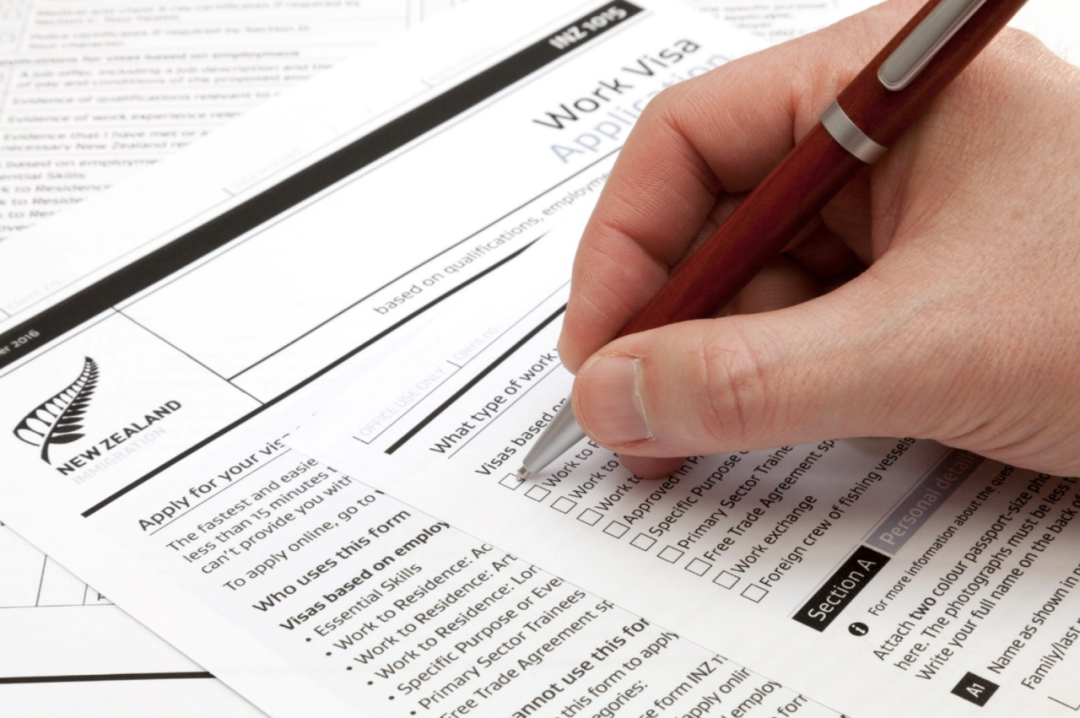
Yesterday (7 April), New Zealand Immigration Minister Erica Stanford announced the latest changes to the Accredited Employer Work Visa (AEWV). These introduce minimum work experience and/or qualification requirements, add an English language requirement for applicants in skill level 4 or 5 roles, and shorten the visas available to them.
Employers will also face stricter job advertising requirements and must fulfil certain obligations. The new English language requirement means migrants from China will face greater challenges than those from English-speaking countries or Southeast Asia. For Chinese employers, this also means hiring workers from China will become more difficult. The construction industry faces further bad news: some construction occupations have been removed from the Green List.
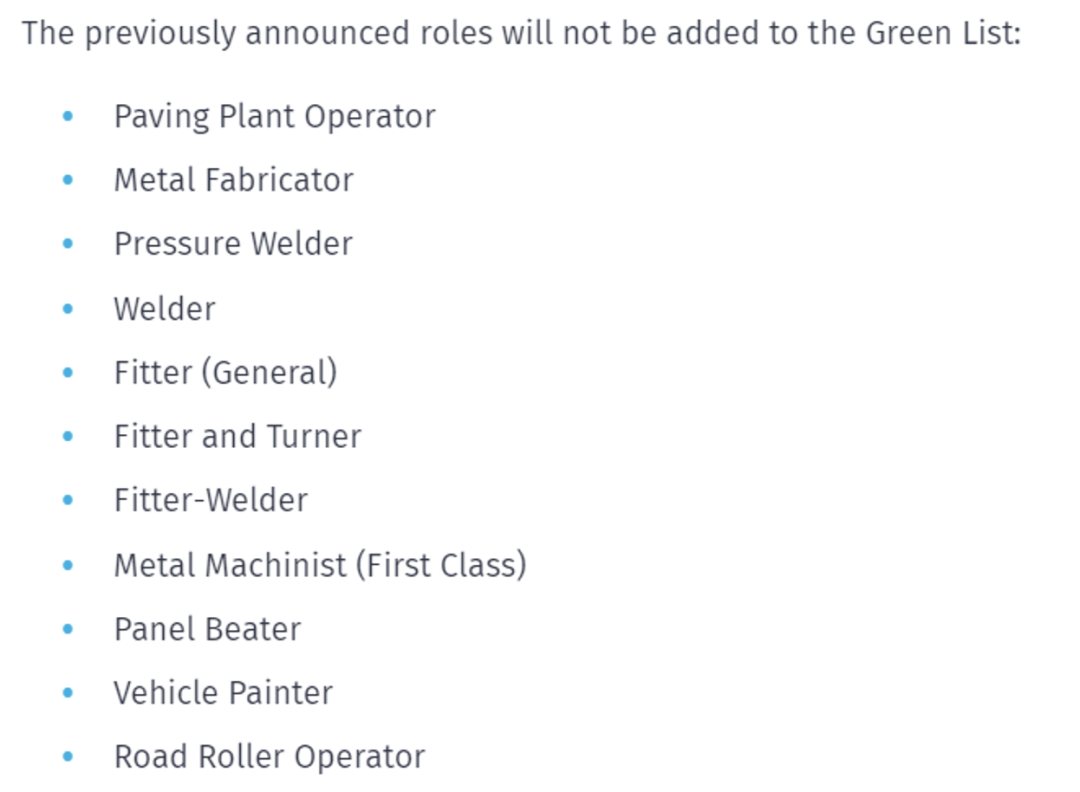
YIJU has once again invited former immigration officer and experienced immigration lawyer Sonny Lam to explain the details and implications of this major work visa reform.

As I often say, immigration policy undergoes a major change every three months and a minor change every month. This latest major overhaul arrived right on schedule in the first week of April. The changes mainly make work visa applications more difficult, although I personally believe strong applicants who meet the requirements will not be greatly affected.
The key changes, ranked from most to least important, are as follows:

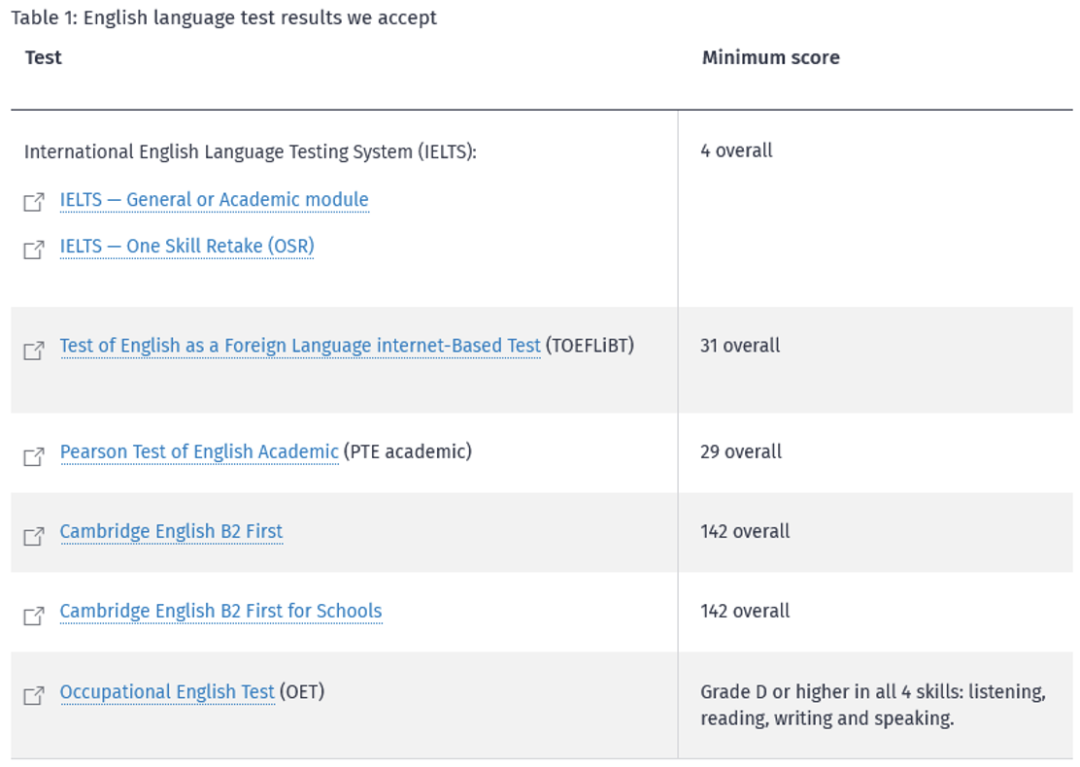
An English language requirement will apply to AEWV applicants in skill level 4 or 5 roles:
-
Achieve an overall IELTS score of 4.0;
Or,
-
Be a citizen of Canada, Ireland, the United Kingdom or the United States (excluding Australia), with 5 years of study or work experience in that country, Australia or New Zealand;
-
Complete 2 years of bachelor's degree study in Australia, Canada, Ireland, New Zealand, the United Kingdom or the United States;
-
Complete 1 year of study at level 8 (postgraduate diploma) or above in Australia, Canada, Ireland, New Zealand, the United Kingdom or the United States.
For IELTS 4.0 or an equivalent level, please refer to the chart below.
This English language requirement does not apply to current applications, or to the partners or children of AEWV applicants.

If you apply for an AEWV, you need to provide evidence of your work experience or qualifications. There is no change if your job is on the Green List and you meet its requirements, or if the role pays twice the median wage.
In other cases, you need 3 years of relevant work experience or a relevant qualification at level 4 or above.
Qualifications gained outside New Zealand need to be assessed by the New Zealand Qualifications Authority (NZQA).

Roles at skill level 4 or 5 will qualify for work visas lasting a maximum of 3 years (2 + 1).
There is no change for roles at skill level 1, 2 or 3.

Previously, ANZSCO codes were used more as a reference than a mandatory criterion in Job Checks, but Immigration New Zealand will now assess applications against ANZSCO again. Interestingly, ANZSCO was an important assessment standard before 2018, but its relevance gradually diminished. Now we are back to the pre-18 situation.

Employers advertising skill level 4 or 5 jobs must advertise for an additional 21 days and work with Work and Income New Zealand (WINZ) to obtain a Skills Match Report. Those in the industry will remember that this was a report we needed from the Ministry of Social Development for work visa applications between 2016 and 2018. This part of the process also returns to the old model.

Employers must offer at least 30 hours of work per week. If an employee leaves with more than 1 month remaining on their work visa, the employer must notify INZ within 10 working days.

New Zealand Immigration Minister Erica Stanford

As a former immigration officer, I remain in contact with many people in the industry, so I generally take a broad, rational view of Immigration New Zealand's intentions and consider the logic behind each new policy. In most cases, after fuller consideration and reflection, its decisions generally prove to do more good than harm overall.
This time, however, I believe the reforms are inhumane and regressive. They do not address employer exploitation, because the policy still ties employees to specific employers. As work visas become harder to obtain, the visas themselves become a commodity, giving employers greater power over employees.
Immigration New Zealand's additional requirements for vulnerable work visa holders—those in skill level 4 and 5 roles—will intensify the exploitation of migrant workers already in New Zealand. Migrants desperate to stay will have a stronger incentive to break the law. When people are backed into a corner, they will disregard the rules.

On the surface, the English language requirement aims to improve migrant workers' bargaining power and educational levels so employers cannot take advantage of them. But as someone who works in employment disputes, I believe an IELTS 4.0 requirement will do nothing to reduce migrant exploitation. It simply means exploitation will shift from Chinese workers to Indian and Filipino workers. More people are likely to falsify English test results and/or work histories and commit fraud.
For Chinese employers, this means recruiting workers from China will become more difficult. I urge all Chinese employers to proceed carefully, because an employment dispute could cost NZ$20,000 to NZ$30,000.

The winners from these rule changes:
|
|
The losers from these changes:
|
|

In addition to my comments above, I predict the following effects:
|
|

After announcing the AEWV reforms on Sunday (7 April), INZ also updated its AEWV application form, INZ 1385, on its website. The form's main purpose is to identify precisely the skill level of an AEWV applicant's role and whether they meet the requirements for that level. Next, we break down what the new form covers and how to complete it correctly:
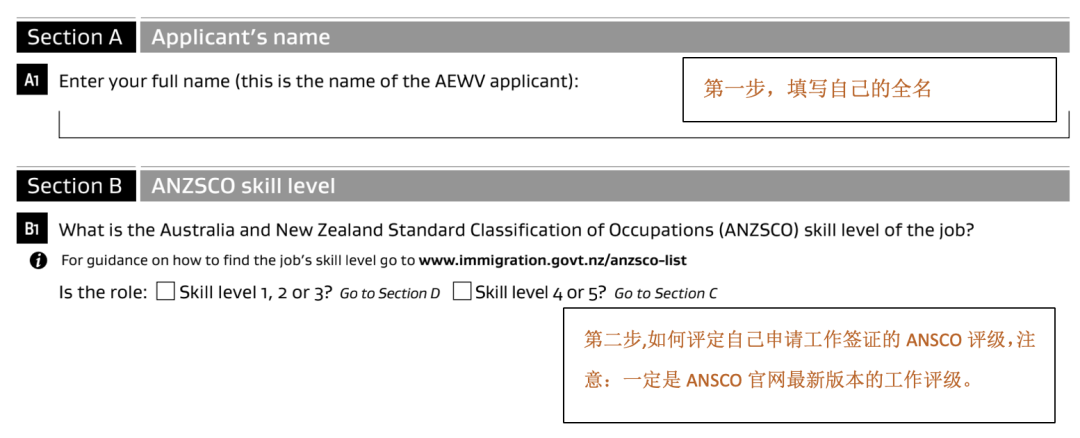
From step two onwards, we mainly use the form to explain how people whose jobs are classified at ANZSCO skill levels 4–5 can demonstrate that they meet the AEWV application requirements. If your search shows your job is at skill level 1–3, you can go straight to step five.
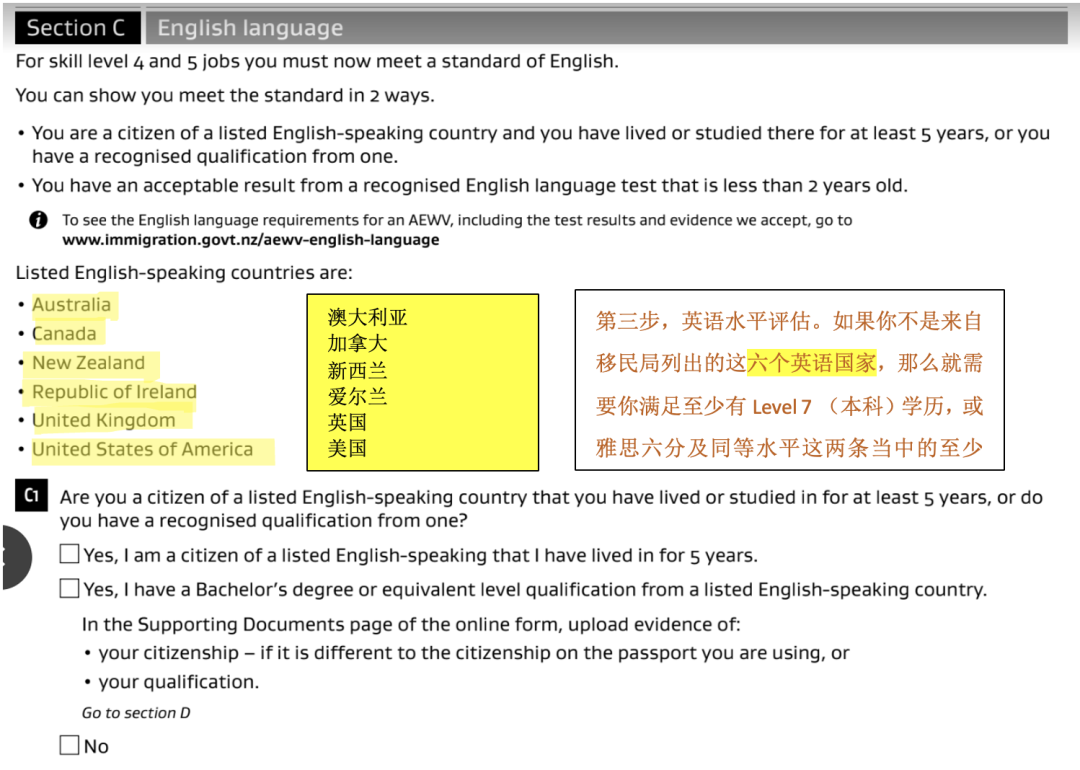
Those whose jobs are at skill level 4–5 and who do not meet the requirements in any of the steps above may face a difficult situation. But those in ANZSCO skill level 1–3 roles should not be complacent either: under the new policy, you must meet the requirements in step five below to qualify for an AEWV:
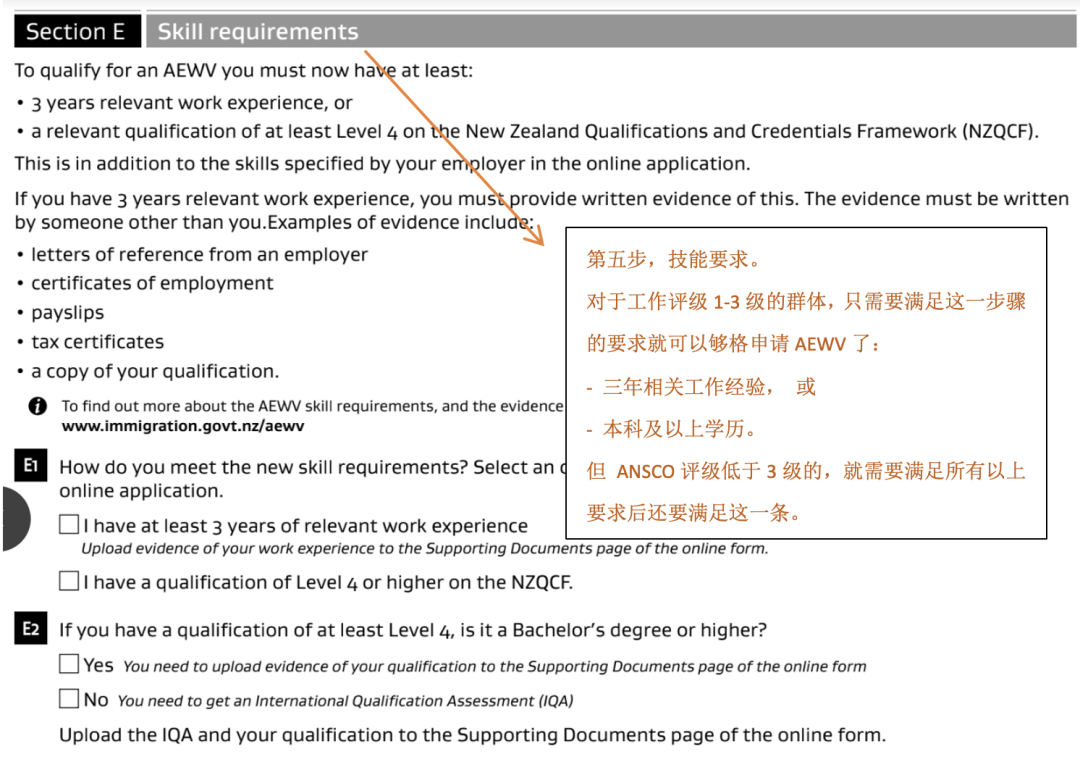
As the final step, remember to upload the form to your online application.
Overall, the new AEWV application form makes it clearer just how strict the updated policy requirements have become. It also offers a more direct view of the main changes and what is required.
For more information, see the links below (copy them into your browser):
????Immigration New Zealand: changes to the Accredited Employer Work Visa (AEWV)
????Immigration New Zealand: information on employing migrants, new employer accreditation and work visas, and passing the Job Check
????Immigration New Zealand: information on preparing a visa application, working in New Zealand and the Accredited Employer Work Visa
????Immigration New Zealand: information on changes to Work to Residence and Green List occupations
????Immigration New Zealand: information on English language test results for the Accredited Employer Work Visa

Sonny Lam is a consultant lawyer at Queen City Law. He has worked in employment and immigration since the last global financial crisis. He began in employment disputes, then became an immigration officer at the Ministry of Business, Innovation and Employment before returning to private practice in 2015. He specialises in niche areas of immigration and employment law. His clients range from major international businesses with New Zealand subsidiaries to individuals seeking to settle in New Zealand.
Scan the QR code to enquire about further information
