

According to the latest OneRoof-Valocity House Value Index, average house prices fell in more than 500 suburbs in the three months to the end of June. That was an increase from the 322 suburbs recording price falls in the three months to the end of May.
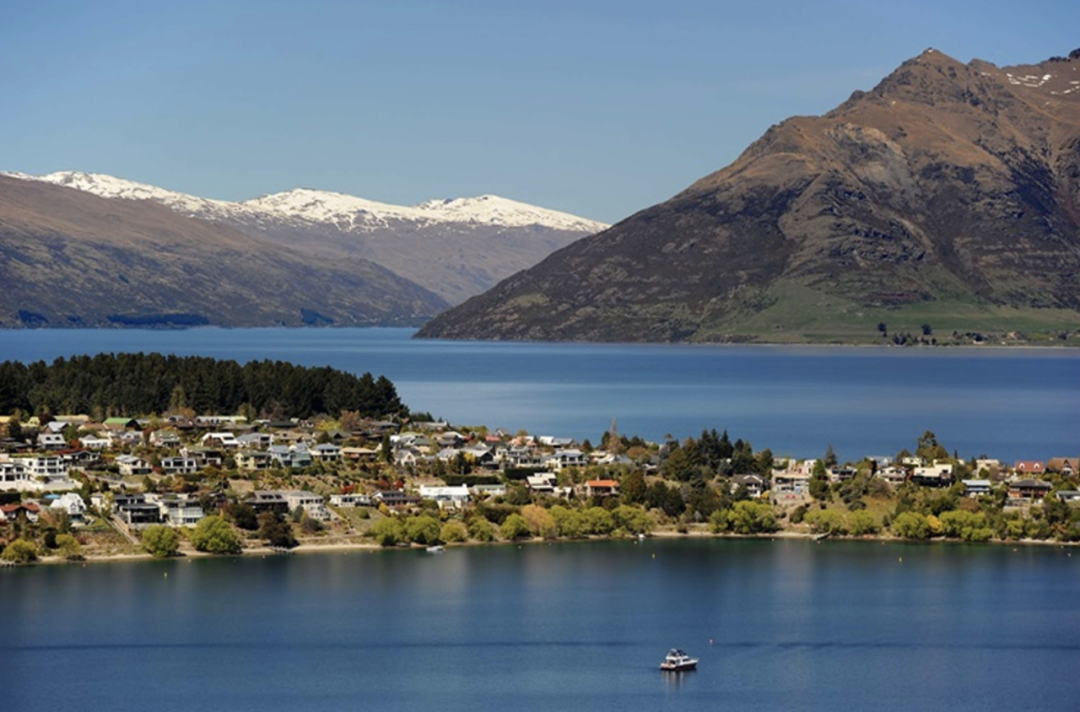
The average property price in Kelvin Heights, in Queenstown-Lakes, fell to NZ$2,717,000 over the past three months
The analysis found that price falls were also becoming larger. The average quarterly decline was NZ$17,990 at the end of June, compared with NZ$14,398 at the end of May. These declines may, however, be good news for first-home buyers with ample funds, who will benefit from a wider choice of homes on the market and more room to negotiate.
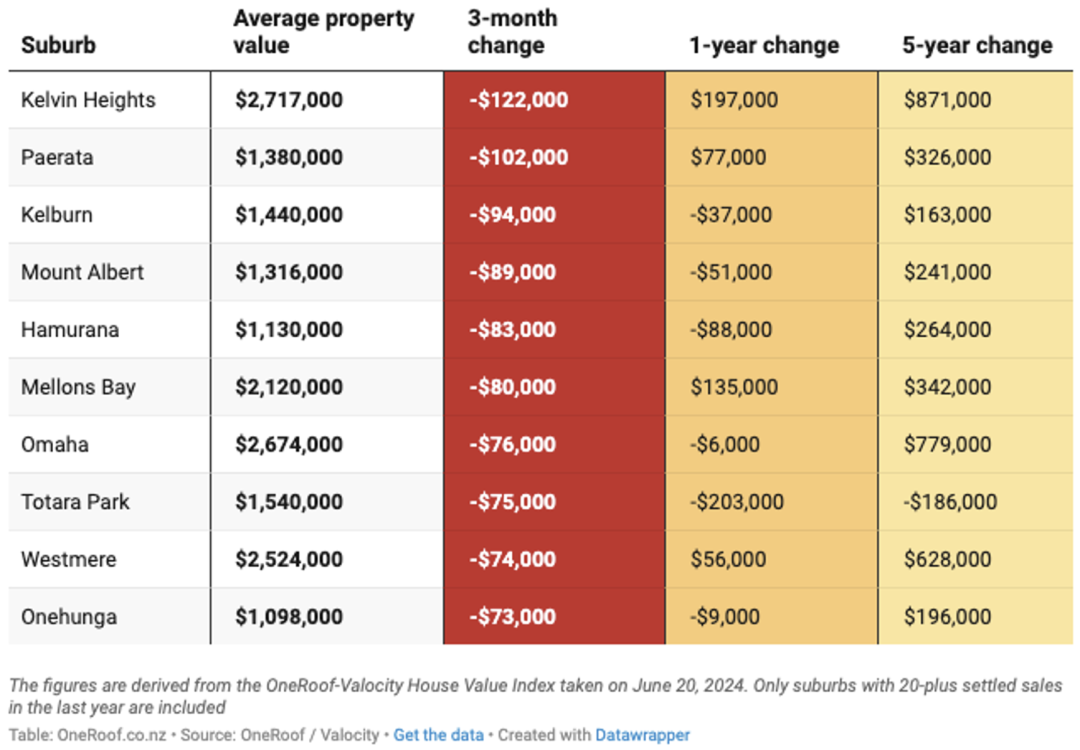
Table of changes in average house prices across New Zealand regions as at 20 June 2024 (Source: OneRoof)
Full list: https://www.oneroof.co.nz/news/oneroof-house-price-report-july-2024-45758
The research found that average house prices in 20 suburbs across New Zealand fell by more than NZ$50,000 over the past three months. Most were in Auckland, but Kelvin Heights recorded the largest decline. The Queenstown-Lakes suburb's average house price fell by NZ$122,000 to NZ$2,717,000.
Because OneRoof's research focused on the dollar value of price falls, affluent suburbs featured heavily in the rankings. The list suggests places that buyers with ample funds should focus on before interest rates eventually fall and house prices begin rising again.
In percentage terms, the average house price in Kelvin Heights fell by only 4.3%. However, even a small percentage change in the suburb translates into a large dollar decline (the average price was up 7.8% year on year, or NZ$197,000 above June 2023). Larger percentage falls in lower-priced suburbs often produce smaller dollar declines. Greymouth's average house price fell by 5.5% over the past quarter, amounting to a decline of just NZ$26,000 to NZ$447,000.
The latest OneRoof figures also show that the recovery in house prices following New Zealand's recession is losing momentum. The national average house price fell by 0.9% over the past three months to NZ$969,000. The figures show quarterly price declines in 10 regions, up from the three regions recorded in the previous month's house price report.
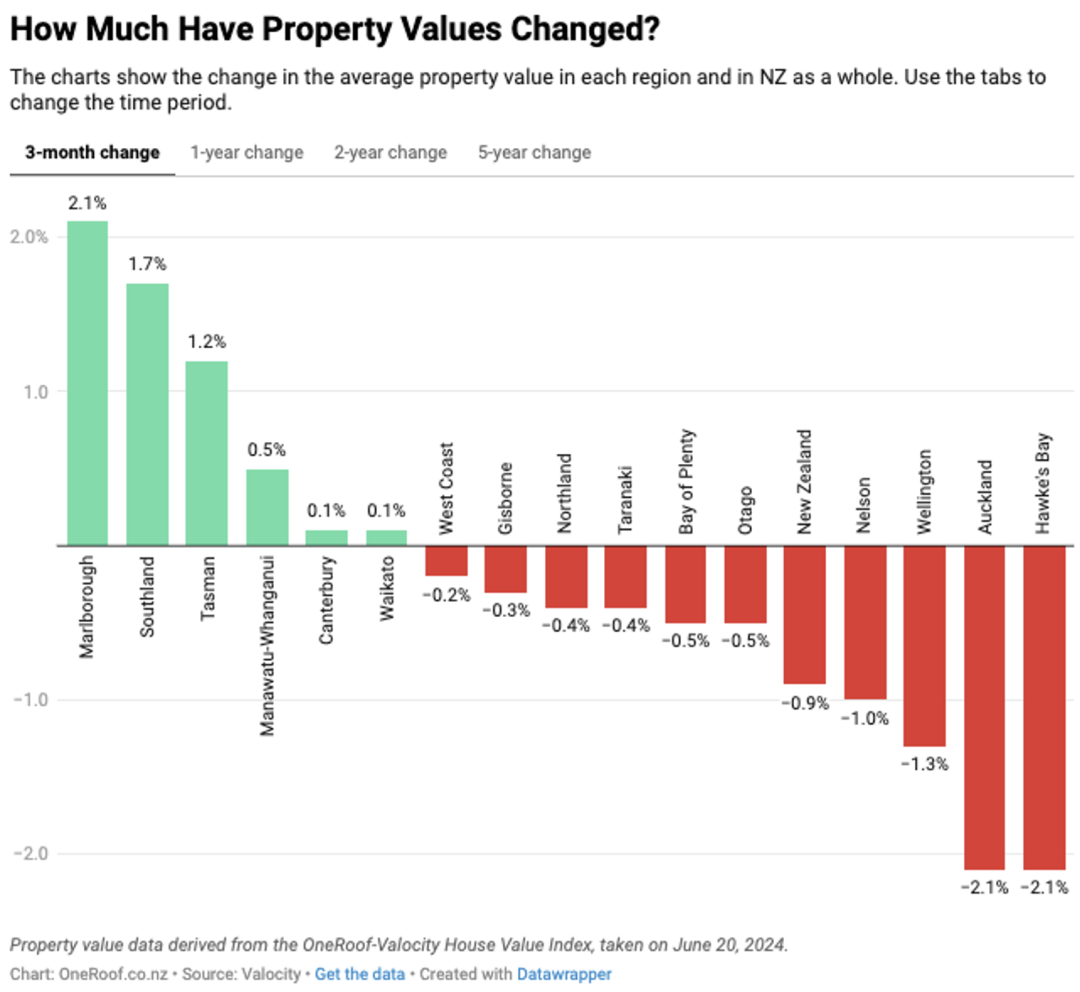
Table of changes in average property prices across New Zealand regions over the past three months (Source: Valocity)
Auckland's house price decline is accelerating. The region's average house price fell by 2.1% in the three months to the end of June, compared with a decline of just 1.1% in the three months to the end of May. In addition, Hawke's Bay (-2.1%), Wellington (-1.3%) and Nelson (-1%) also recorded substantial quarterly house price declines. Within a month, the West Coast's average house price shifted from quarterly growth of 4% to a decline of 0.2%.
Conditions in other regions also changed noticeably, reflecting instability across much of the property market. Canterbury, by comparison, appears to have the country's most stable house prices. Its slowdown in price growth over the past three months was driven more by seasonal factors than other external pressures. No major city recorded house price growth over the past three months. Outside Auckland, Wellington (-1.9%) and Hamilton (-1.8%) recorded the largest declines.
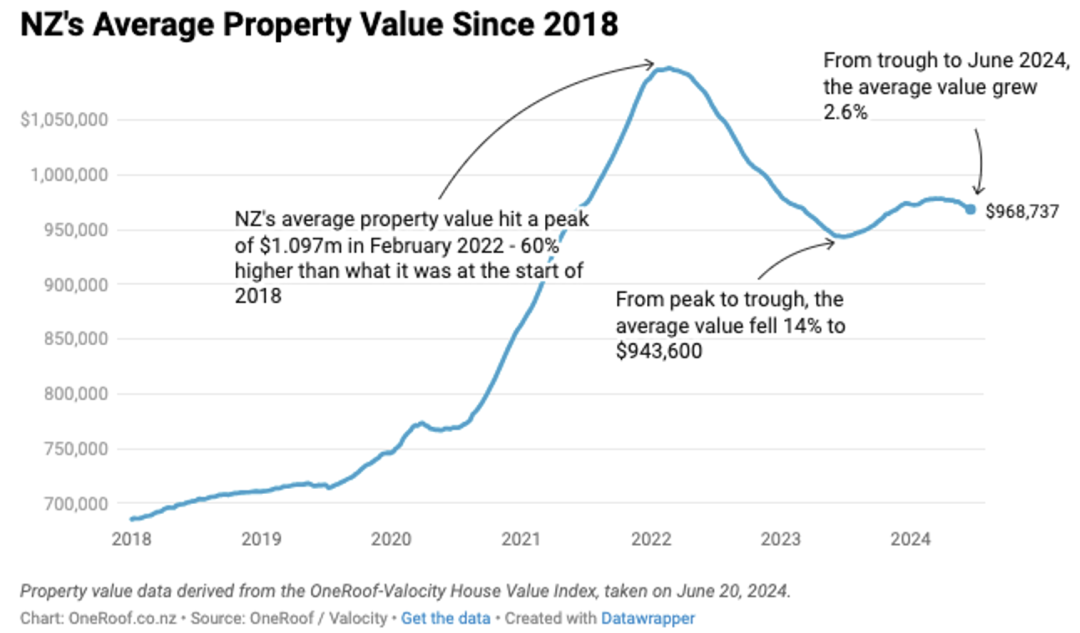
Graph of changes in New Zealand's average house price from 2018 to the present (Source: OneRoof)
Although house prices also fell slightly in Dunedin and Christchurch, these cities appear to have handled the shift between a sellers' and buyers' market better than others. In Auckland, Manukau and Papakura recorded the largest price falls. Although prices in most areas remain above their June 2023 levels, when the post-pandemic house price downturn ended, growing economic uncertainty, the ongoing cost-of-living crisis and higher interest rates have eroded the strong capital gains homeowners made in the second half of last year.
Properties for sale reach a decade high, yet average asking prices fall?
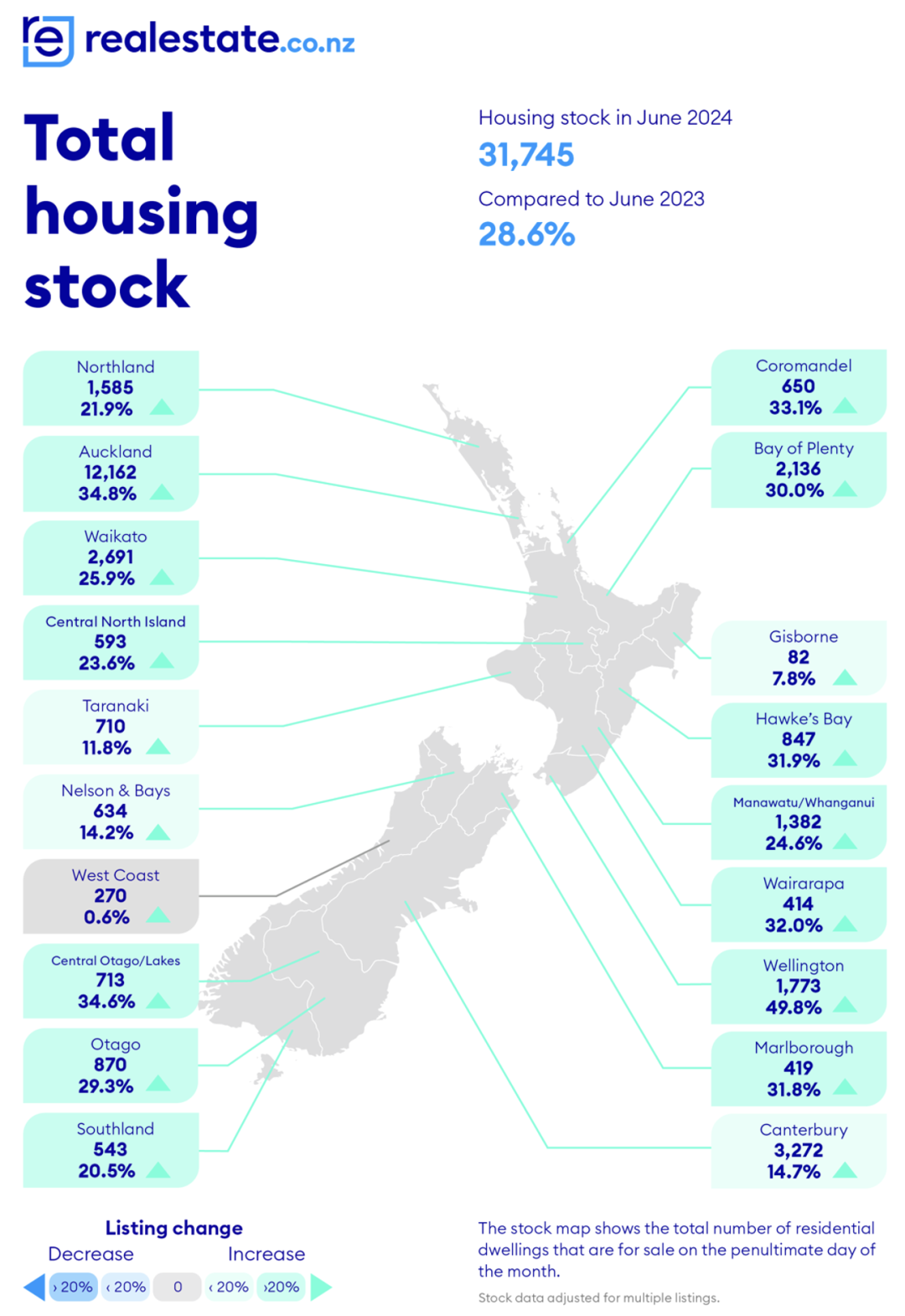
According to the latest figures from property sales and rental website Realestate.co.nz, the number of homes for sale has reached a 10-year high, while average asking prices are falling. At the end of June, the website had 31,745 residential properties available for sale. This was up 28.6% on June last year and was the website's highest June stock level since 2014.
Wellington recorded the largest increase in available stock among the regions, with the number of properties for sale rising by 49.8%. It was followed by Auckland, up 34.8%, Otago Central/Queenstown-Lakes, up 34.6%, and Coromandel, up 33.1%. Eight regions recorded annual property stock growth of more than 30%, and no region had fewer properties for sale than a year earlier.
New listings remained strong in June at 7805, up 25.5% nationwide from June last year. Every region except Northland, Marlborough and the West Coast recorded an increase in new listings.
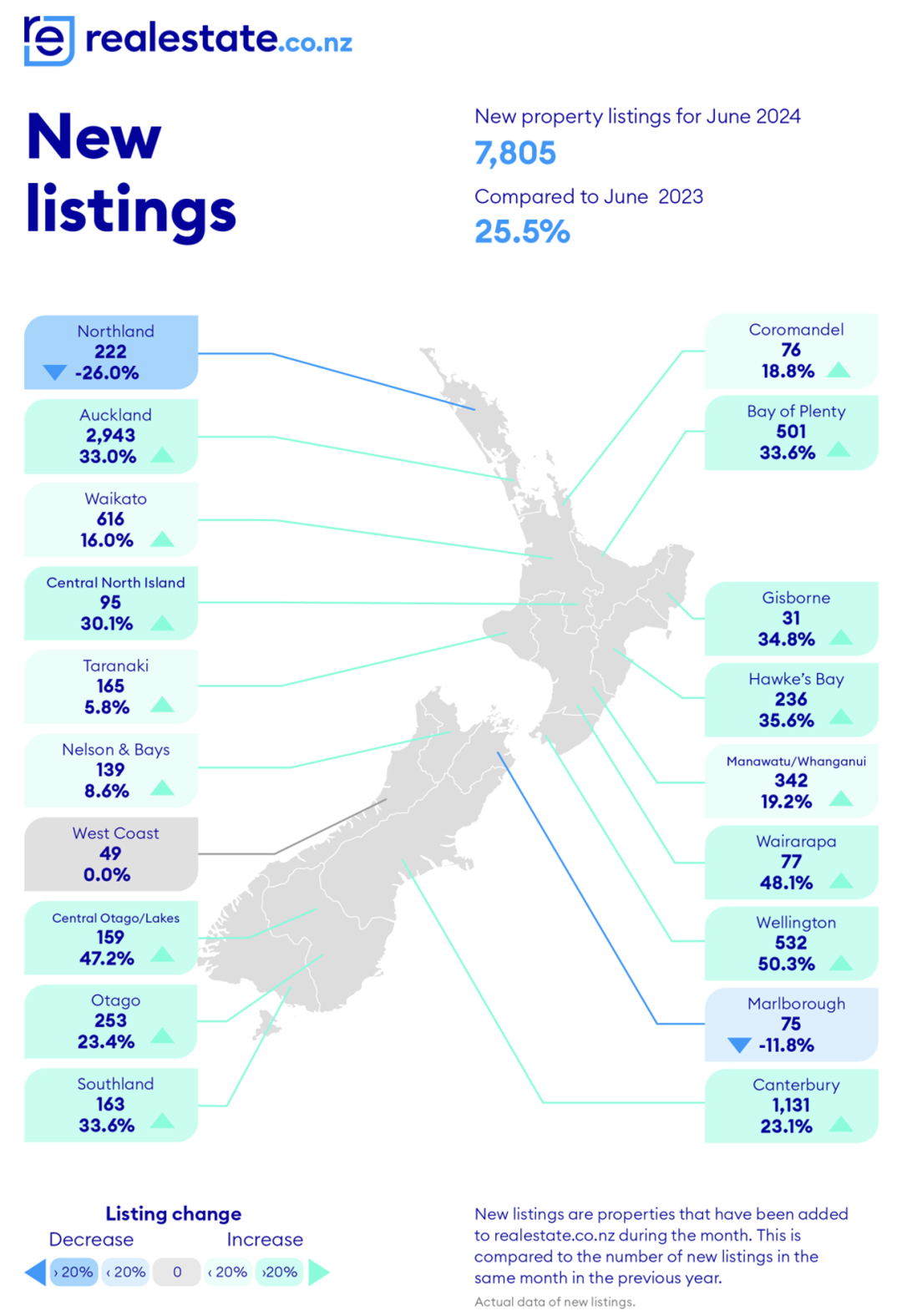
Auckland, the Bay of Plenty, Gisborne, Hawke's Bay, the Central North Island, Wairarapa, Wellington, Central Otago/Queenstown-Lakes and Southland all recorded increases of more than 30% in new listings compared with a year earlier.
These figures show that the market continues to favour buyers. Property investors should note that first-home buyers still dominate the current market, although their share of new mortgage registrations has declined over the past six months. Changes to tax and lending rules from 1 July could lead to greater competition between them and property investors.