

1
The big question: will mortgage rates fall to 5% by year-end?
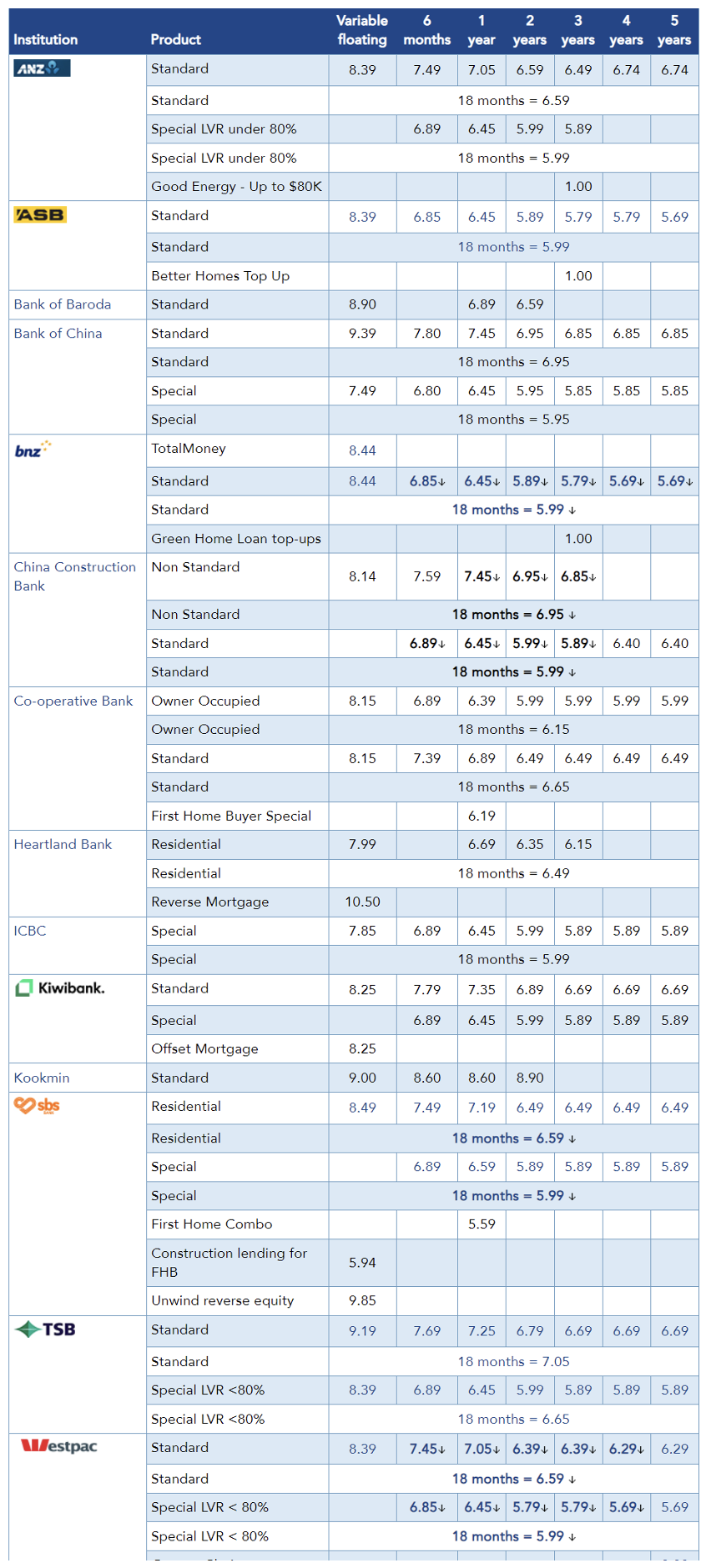
Since late July, New Zealand’s major commercial banks have delivered successive rounds of rapid, aggressive interest rate cuts. This all stems from the Reserve Bank of New Zealand’s first official cash rate (OCR) cut in four years, which sparked a battle between banks. Within just weeks, some banks’ short-term mortgage rates had fallen to 6.29%. Financial experts have made even bolder predictions that rates could fall further, potentially reaching around 5% by year-end.
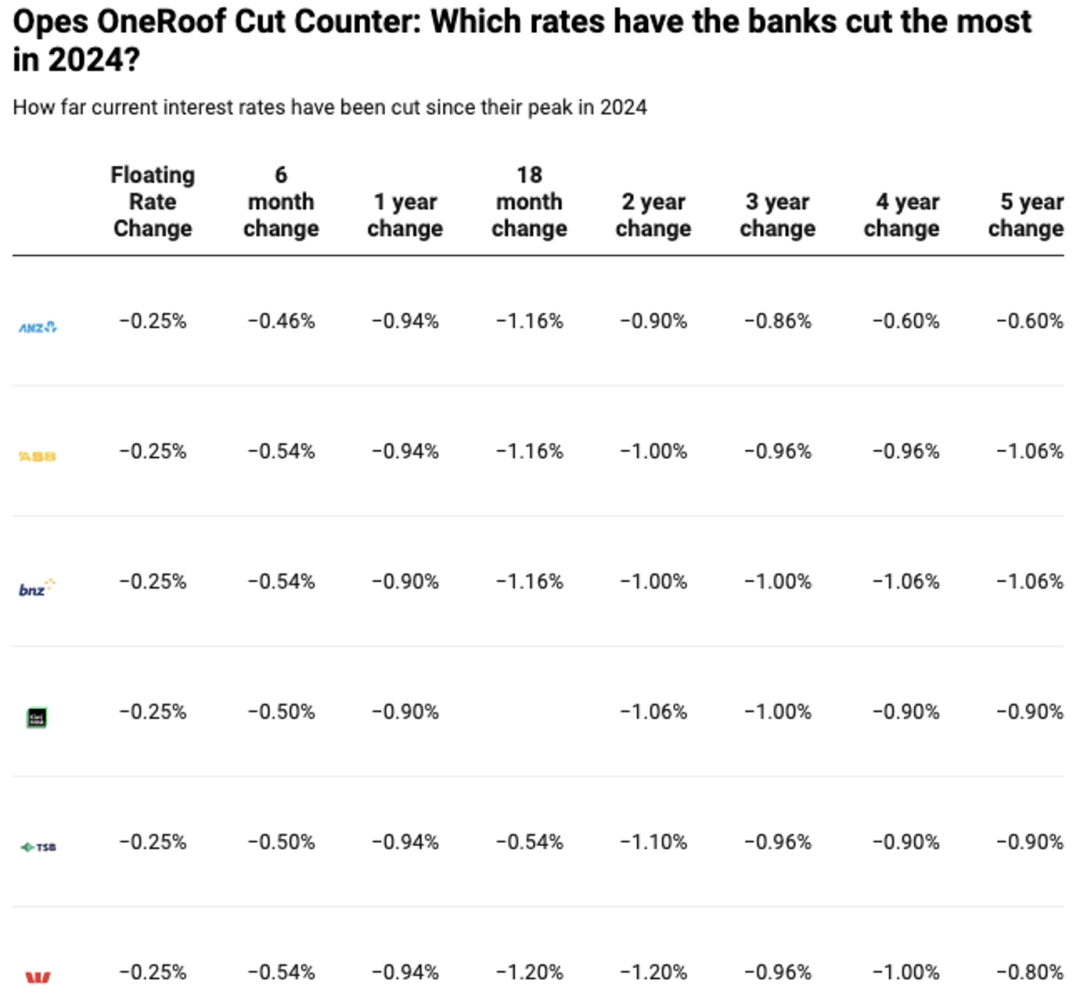
Table of banks’ rate cuts to date across different fixed terms (Source: OneRoof)
This wave of rate cuts has undoubtedly ignited homebuyers’ enthusiasm. Loan Market mortgage adviser Dave Williams revealed that his phone had been “ringing off the hook” since the OCR was cut by 25 basis points on 14 August. The surge in enquiries highlighted a major shift in market sentiment. With house prices low and mortgage rates continuing to fall, this is undoubtedly a rare opportunity for those who have been waiting on the sidelines.
But with rates so enticing, should homebuyers act immediately?
ANZ led the wave of rate cuts, prompting other banks to follow swiftly. Within weeks, 18-month mortgage rates had fallen almost across the board. With the Reserve Bank expected to cut rates again in October and November, the market widely expects short-term mortgage rates to settle into the 5–6% range before Christmas. Kiwibank chief economist Jarrod Kerr said the rapid shift in market sentiment reflected people’s confidence in the future. Although the Reserve Bank would proceed cautiously with rate cuts to prevent inflation from resurging, rates below 6% were certainly no longer a fantasy but an approaching reality.
This wave of rate cuts has brought hope to first-home buyers and tangible benefits to many households already paying off mortgages. Kiwi Mortgages adviser Jatinder Singh said some of his clients had already benefited from the sudden rate cuts, with substantially increased borrowing limits greatly improving their purchasing power. Some had seen their borrowing limits rise by tens of thousands of New Zealand dollars overnight, making them more competitive when bidding for homes.
Latest mortgage rates across the banks:
2
The impact of looser loan-to-value ratio (LVR) rules
Last week, the Reserve Bank released its mortgage lending figures for July. Total new lending reached NZ$6,700,000,000, up NZ$1,700,000,000 year on year. This growth was largely driven by first-home buyers taking advantage of low-deposit lending opportunities, alongside active participation by owner-occupiers and investors. Under the new LVR rules, banks can allocate 20% of lending, previously 15%, to owner-occupiers with deposits below 20%. Up to 5% of lending can go to investors with deposits below 30%, previously 35%. Economists had previously suggested that looser LVR rules could trigger a surge in investor purchases. The July figures showed lending to investors with deposits below 35% accounted for 20% of total lending, compared with less than 1% in June. However, the share of lending to investors with deposits below 30% remained low at just 0.4%.
Meanwhile, the new debt-to-income (DTI) limits introduced in July appear yet to have a significant impact on the market. Data showed fewer than 2% of first-home buyers obtained loans with a DTI above 6, while fewer than 4% of investors obtained loans with a DTI above 7. This suggests current mortgage rates remain high enough to constrain borrowing capacity to some extent. As rates fall, however, the impact of DTI limits will gradually emerge. Estimates suggest their impact could increase substantially once mortgage rates reach 5.5% or below.
3
Are “small investors” starting to return to the market?
CoreLogic’s latest buyer classification data showed mortgaged multiple-property owners, including investors, remained very keen to buy new builds, accounting for 31% of activity in that segment in July. While their overall share of purchases across properties of all types and ages remained steady at around 21%, the share of this activity had shifted slightly towards smaller investors and away from larger investors. With low rental yields and high mortgage rates, albeit falling ones, breaking even remains difficult for “ordinary investors”. However, as mortgage rates fall and the cash top-ups required decline, some investors appear to be re-entering the market.
4
Labour market downturn deepens
The latest Stats NZ figures showed employment fell 0.1% in July, the fourth consecutive monthly decline. Total employment had fallen by about 25,000 since March (-1.1%). This was clearly a disappointing result. The figures suggest that while falling mortgage rates will boost the housing market, unemployment will work in the opposite direction. Although labour market weakness emerged later, the downturn is now becoming more pronounced.
5
Have new dwelling consents bottomed out?
New dwelling consents totalled 3352 in July, up 10% on a year earlier. On the surface, this is an encouraging sign for an industry that has experienced two consecutive years of decline. However, the June figures were very weak, so the strong July result may simply reflect timing, such as “making up” for a weak June. Stats NZ also noted that a large development in Queenstown contributed to the result. It is therefore too early to be overly optimistic, but the figures do suggest residential building consents may be nearing the bottom. What is certain is that, with mortgage rates falling, 2025 could be a better year for the construction industry.