

Commercial banks’ mortgage rate war intensifies
New Zealand state-owned Kiwibank today announced a market-leading one-year fixed mortgage rate of 6.29%, responding to ANZ’s mortgage rate cuts five days earlier. The move puts Kiwibank in a strong position in a fiercely competitive market. Meanwhile, Kiwibank has also lowered its term deposit rates, in line with ANZ’s adjustments. These changes show the bank keeping pace with its main competitor while taking its one-year fixed mortgage rate down further to the lowest in the market.
The rate adjustments come amid a sharp fall in wholesale money market rates, with swap rates dropping significantly yesterday. Financial markets are also increasingly expecting a cut to the official cash rate (OCR), anticipating that the Reserve Bank of New Zealand (RBNZ) will very likely cut by 50 basis points at its next rate review on 9 October. Although this forecast remains speculative, markets have fully priced in the expected cut.
The one-year swap rate has now fallen to 4.19%, its lowest level in two years. The lowest fixed mortgage rates offered by major banks across different terms are listed below:
-
6 months: Bank of China 6.80%
-
1 year: Kiwibank 6.29%
-
18 months: Bank of China 5.95%
-
2 years: ANZ, Kiwibank, Westpac 5.79%
-
3 years: All mainstream banks and Cooperative Bank 5.79%
-
4 years: BNZ, Kiwibank, Westpac 5.69%
-
5 years: ASB, BNZ, Kiwibank, Westpac 5.69%
Most banks currently offer some flexibility on their discounted rates, with the extent depending on the borrower’s financial position and loan-to-value ratio (LVR). Banks use sophisticated tools to assess property values, so borrowers whose LVR is close to 80% will find it difficult to secure a lower rate. Discounted rates available through banking apps may differ from those publicly advertised. Readers are welcome to share the actual rates they see in their banking apps in this article’s comments section, helping provide more market information.
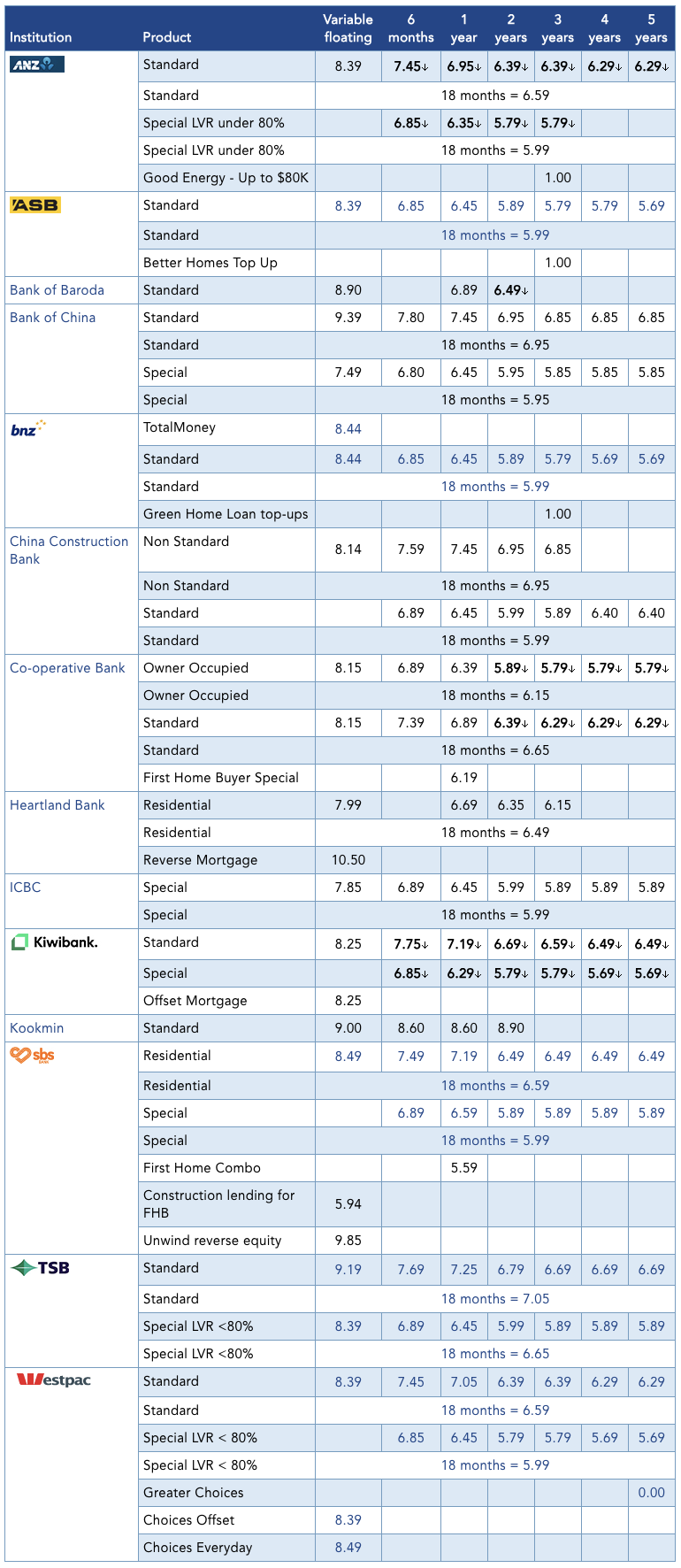
Latest mortgage rates across the banks
Owners forced to shoulder a staggering NZ$46,000,000 repair bill
As Auckland’s property market flourishes, structural problems in many older buildings are gradually coming to light, and the Connaught apartment building in the city centre is a prime example. The 14-storey building, containing 154 units, now faces a comprehensive refurbishment and major repairs costing NZ$46,000,000 because of severe water leaks. Although owners have raised the necessary funds and work is under way, the wider issues this exposes deserve serious consideration.
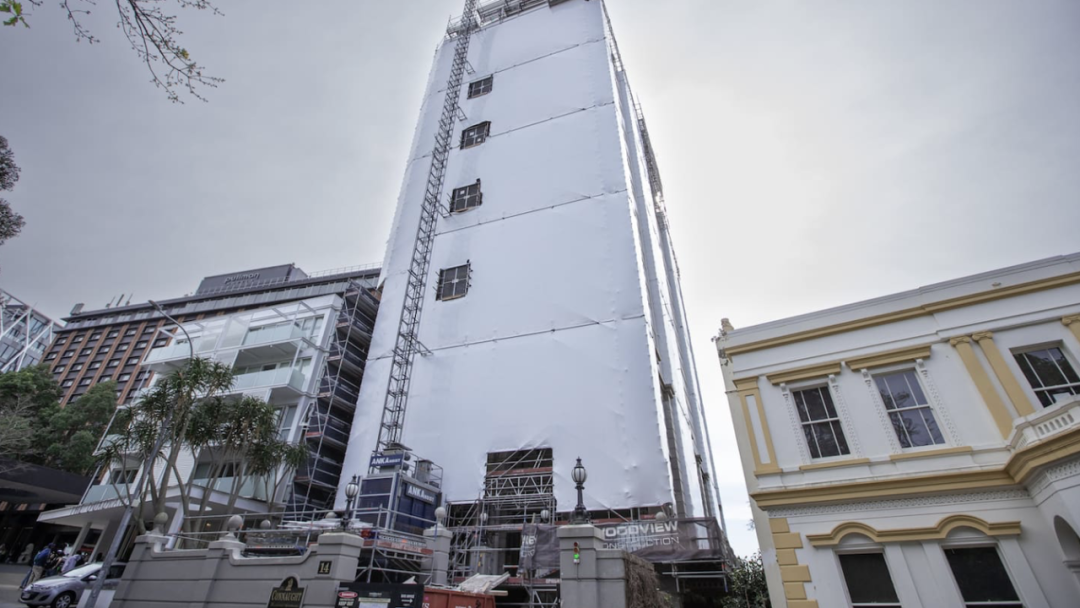
The Connaught apartments in central Auckland
Construction of the building began in the late 90s. Over time, its waterproofing systems and exterior cladding gradually failed, causing serious leaks throughout the building. In 2021, engineers estimated repair costs at NZ$25,000,000, but two years later the figure had soared to NZ$46,000,000. This is no isolated case: similar situations frequently arise in older buildings across New Zealand. Owners have little choice but to accept ever-increasing repair costs, while the underlying problem lies in past building standards that failed to adequately account for long-term waterproofing and maintenance needs.
Richard Angell is a registered building surveyor at Maynard Marks, a property and construction consultancy engaged to investigate the defects and damage. He concluded that moisture ingress was caused by:
-
Deterioration and cracking of sealed joints in the glass fibre reinforced concrete panel and cladding system;
-
Failure of internal gutters around the perimeter of the main roof;
-
Deterioration of fibre cement infill cladding and waterproofing membranes used on balconies and terraces.
Harry Dillon, a consultant on the repair project, said:
-
Roof leaks have damaged the structure, cladding and wall and ceiling linings;
-
Cladding leaks have damaged the cladding support structure, timber framing and wall linings;
-
Leaks in deck and platform areas have damaged the cladding, structure and wall and ceiling linings;
-
Building components have reached the end of their service life, and the roof cladding needs replacing.
The court ruling noted that the building’s weathertightness problems were first identified as early as 2018.
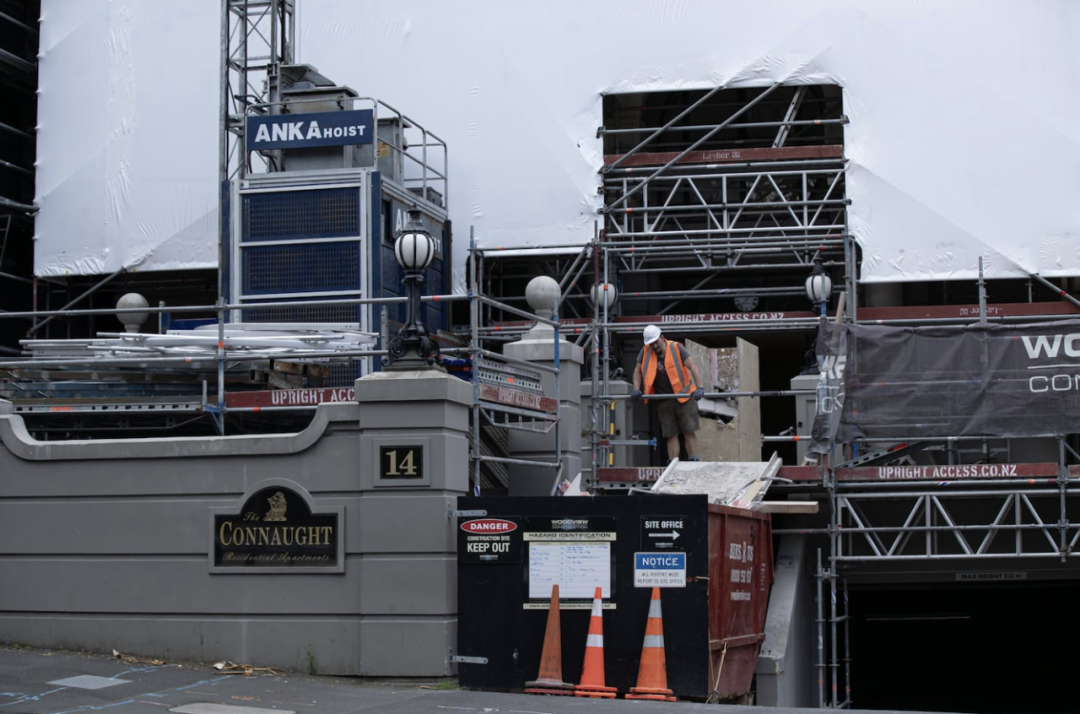 Apartment remediation work is under way
Connaught’s owners have already faced several rounds of levies, with more than 98% paying their repair charges on time to keep the work progressing smoothly. This solidarity is admirable, but we must also ask: why should these ordinary owners pay for past construction defects?
One owner, Linda Keesing-Styles, is the current chair of the body corporate committee and has led the team in actively advancing the remediation project since 2021. She said the committee had communicated regularly with owners over the past four years to ensure everyone clearly understood the project’s progress. Even so, some owners have been forced to sell their properties at heavily discounted prices because of the high repair costs. One unit, originally listed for more than NZ$400,000, eventually sold for just NZ$40,000, simply because its owner could not afford a repair bill approaching NZ$500,000.
Who should take responsibility for construction defects in older apartment buildings?
As repair and maintenance costs rise for some older apartment buildings, the central question is: who should take responsibility? Do New Zealand’s building standards and regulations need further strengthening? Should owners continue paying for past construction defects? Although owners have shown a tremendous sense of responsibility and solidarity, should this become the norm for apartment building repairs in future?
Faced with rising house prices and construction costs, the government, developers and relevant organisations need to find the best solutions and develop more effective policies and regulations to ensure any problems in future buildings can be properly resolved. Readers are welcome to share their views on this issue.