

The latest report from the Real Estate Institute of New Zealand (REINZ) says just 4356 homes were sold nationwide in June this year, down 25.6% from the same month last year and a full third below May. Apart from June 2020, when pandemic restrictions were still affecting the market, the monthly total of 4356 was the weakest June result since the global financial crisis in 2008. These figures have attracted attention and debate across the market. Where will the housing market head next? Let us take a closer look.
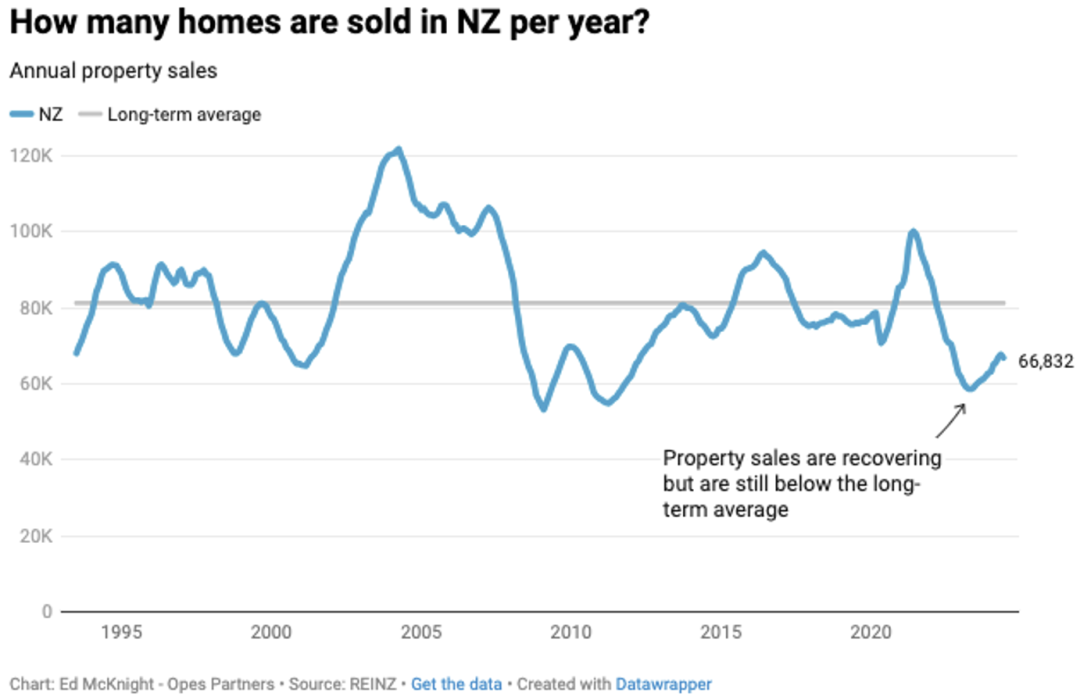
New Zealand’s long-term average annual property sales (Source: REINZ)
House prices fall again
In its June sales report, REINZ described the market as “a little chilly amid economic challenges”. The REINZ House Price Index (HPI), arguably the most timely indicator of monthly price movements, fell 0.7% nationwide in June and 2.3% over the second quarter this year. Rodney in northern Auckland recorded the largest June decline, at 3.5%, while the largest second-quarter falls were in Lower Hutt and Wellington City, both down 3.9%, compared with a 2.1% fall in Auckland.
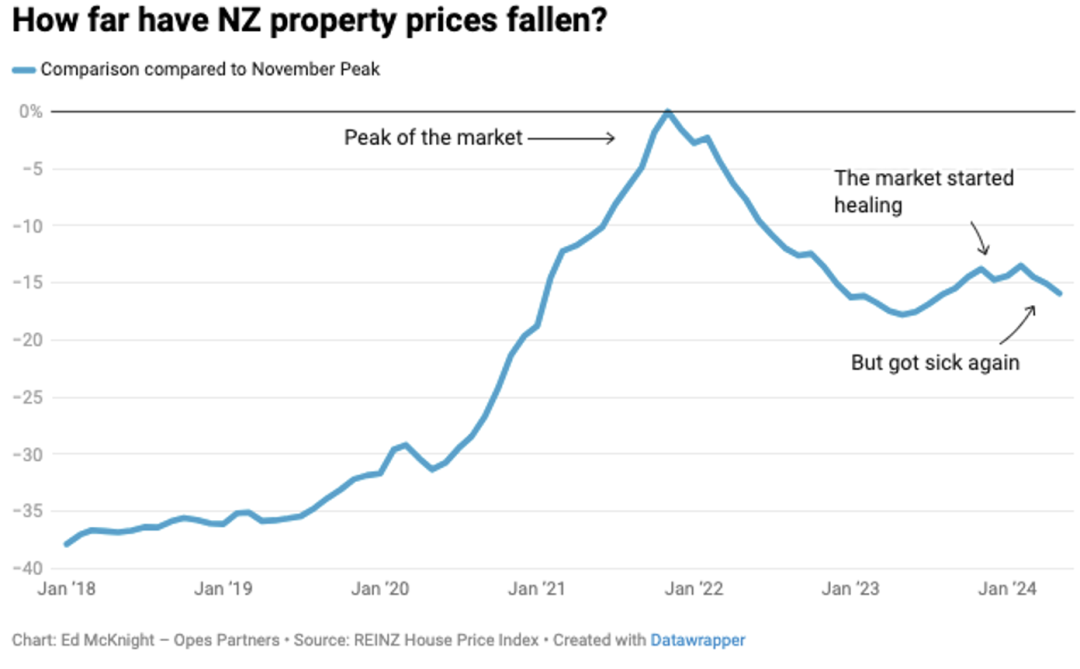
New Zealand house price trends over the past six years (Source: REINZ)
In some respects, price trends are the only bright spot in the latest data, because prices are falling more slowly than sales volumes. Properties currently outnumber buyers, and this supply-demand imbalance is adding to downward pressure on prices. Although prices may remain weak in the short term, future interest rate cuts could improve the outlook. For experienced buyers, this may be a good time to find a bargain by negotiating during the downturn. Most buyers, however, remain on the sidelines, waiting for clearer signs of recovery.
Fewer new dwelling consents
New dwelling consent numbers have been declining since their peak in 2022, reflecting the difficulties facing the residential construction sector. Apart from a small increase in March, the overall trend has been downward. This reflects weak market demand, rising construction costs and economic uncertainty, which have made developers more cautious. Although this will constrain supply in the short term and ease competition in the market, the trend will make a positive contribution to a healthy market recovery over the longer term. Reduced supply will help rebalance the market and prevent sharp falls in house prices.
Market outlook: cautious optimism
CoreLogic chief property economist Kelvin Davidson said the market would recover once interest rates fell. Lower mortgage rates typically stimulate the housing market, and we may soon see this happen again. However, with debt-to-income restrictions now in place, these rules will limit how much people can borrow as mortgage rates fall, constraining house price growth. The housing outlook over the next 12 to 18 months may therefore be weaker than previously expected.
Davidson believes a stable market is not necessarily a bad thing, however. He said it gives incomes a chance to catch up, restores housing affordability and enables more people, particularly first-home buyers, to enter the market.
First-home buyers are taking advantage of lower prices, more stock and less competition, accounting for a substantial 26% share of the market. Once interest rates fall, the market will receive the boost it needs and buyer confidence will gradually recover. In particular, the rate cuts expected before the end of the year could be an important catalyst for recovery. Once buyers expect prices to rise, they will make purchasing decisions more quickly, increasing market activity.
Time is running out for first-home buyers
At Ray White Manukau, partner Tom Rawson noted that demand in South Auckland’s sub-NZ$600,000 market remained strong. However, falling interest rates could cause prices to rise rapidly, making homes below NZ$600,000 difficult to find. First-home buyers may therefore have only the remainder of this year to buy at that price.
For those planning to buy in Auckland with a budget below NZ$600,000, now could be the best time. With interest rates changing and the market fluctuating, house prices could rise soon, making timely action particularly important. If banks continue to cut rates, all buyers will benefit and more investors will return to the market, while first-home buyers can still benefit from banks’ low-deposit lending policies and may even be able to use KiwiSaver to fund part of their deposit. Although the First Home Grant has been discontinued, other support, such as the First Home Loan, remains available to help buyers with limited equity.