
BNZ adjusted its fixed mortgage rates today. Changes to short-term rates, for terms of two years or less, were relatively modest, but long-term fixed rates for four and five years rose significantly. The move reflects changes in the yield curve and may signal that other banks will follow suit.
Global economic factors
Push long-term interest rates higher
Long-term interest rates are rising in the United States as well as New Zealand. The US 10-year Treasury yield recently rose from 3.70% to 4.20%, largely driven by uncertainty over the federal budget and economic volatility. The decline in yields that had persisted since the early 1980s has reversed in recent years.
The impact on borrowers
Despite rising long-term rates, short-term rates remain the main focus for most borrowers. Markets expect the Reserve Bank of New Zealand may make another substantial cut to the Official Cash Rate (OCR) in February 2025, further restoring the upward slope of a “normal” yield curve. However, BNZ’s long-term fixed rates are now among the highest in the market, which could influence homebuyers’ decisions. Homebuyers and existing mortgage holders should actively negotiate the rates they pay, as banks typically offer more flexible options based on individual financial circumstances.
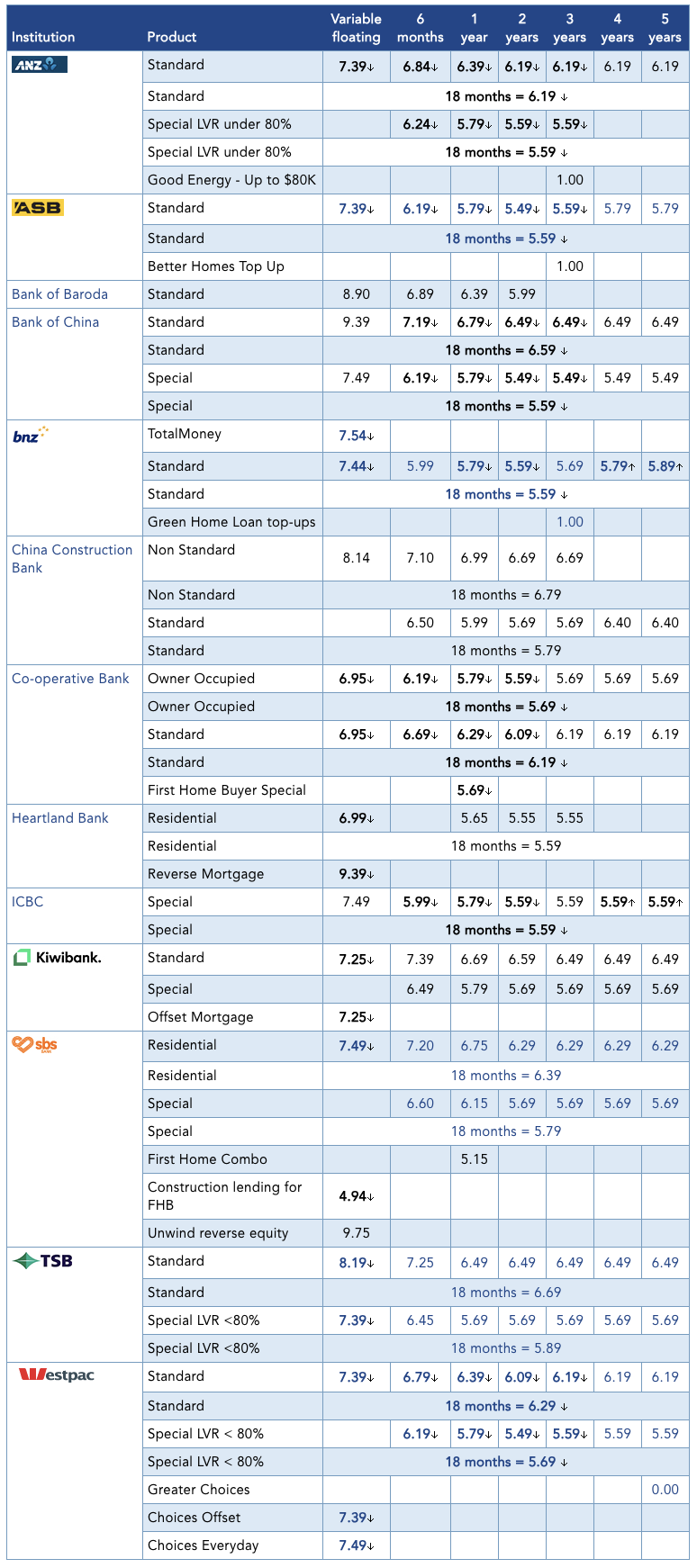
An overview of mortgage rates offered by banks as at 3 December is available here: https://www.interest.co.nz/borrowing
House prices rise across nine regions
Strong recovery signals in New Zealand’s housing market
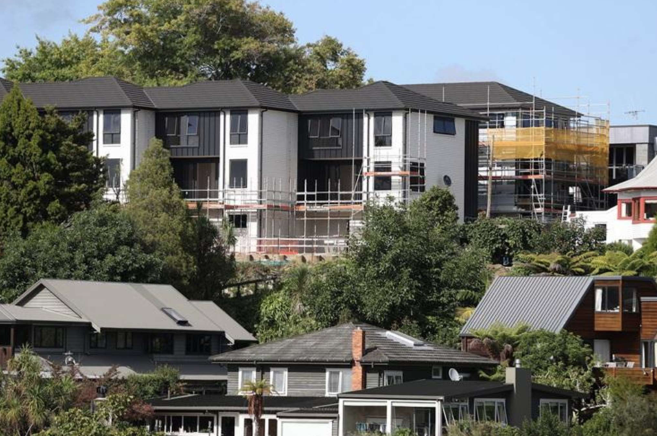
New Zealand house prices have finally turned upwards after seven consecutive months of declines. According to the latest figures from OneRoof and its data partner Valocity, the national average house price rose 0.7% (about NZ$7000) over the three months to the end of November, reaching NZ$963,000. This upward trend extended across two-thirds of the country’s regions and all its main cities except Wellington.
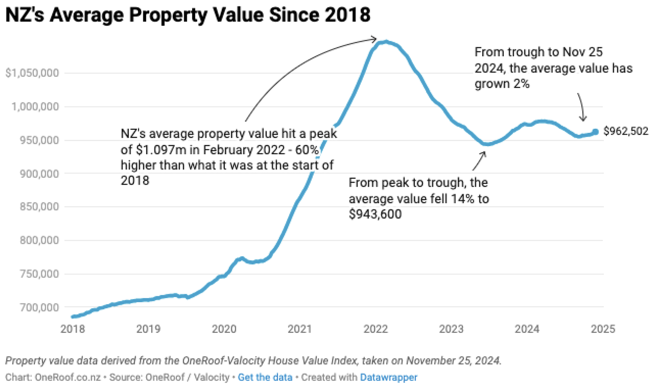
Chart showing changes in New Zealand’s average house price from 2018 to the present (Source: OneRoof; also the source for the charts below)
Auckland house prices rebound
Wellington remains subdued
Auckland house prices have rebounded after seven months of declines, rising 0.9%, after a fall of as much as 3% in July. However, Wellington house prices are still falling, although the decline has narrowed from 3.2% to 0.7%. Successive cuts to the Official Cash Rate (OCR) by the Reserve Bank of New Zealand have helped restore homebuyer confidence and sparked competition between banks over mortgage rates.
OneRoof editor Owen Vaughan said lower mortgage rates had given the market momentum. With the OCR falling to its lowest level in two years (4.25%), major banks have actively cut rates to win market share, giving homebuyers more confidence to enter the market before prices rise further.
Regional performance
The West Coast leads price growth
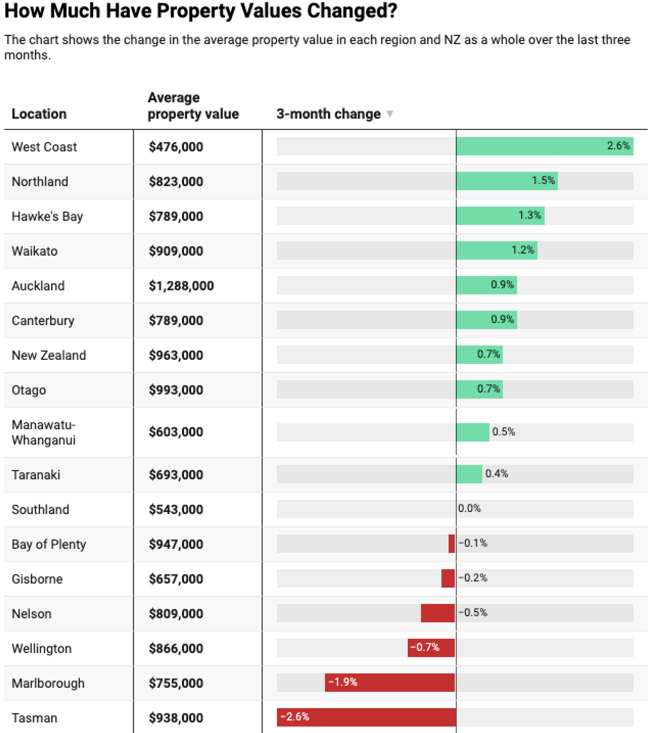
Table showing changes in average house prices across the regions over the past three months
House prices rose in 9 of the country’s 16 regions. The West Coast recorded the largest gain, with its average house price rising 2.6% (about NZ$12,000) to NZ$476,000. Northland (+1.5%), Hawke’s Bay (+1.3%) and Waikato (+1.2%) also recorded notable growth. By contrast, Marlborough, Nelson and Tasman saw house prices fall, suggesting buyer confidence remains weaker in the upper South Island.
The West Coast also led annual growth, with an increase of 11.5% (about NZ$49,000). Over five years, house prices on the West Coast rose 67.6% (about NZ$192,000), almost matching Auckland’s five-year increase of NZ$211,000.
Main city performance:
Hamilton leads price growth,
while Queenstown’s luxury home market is active
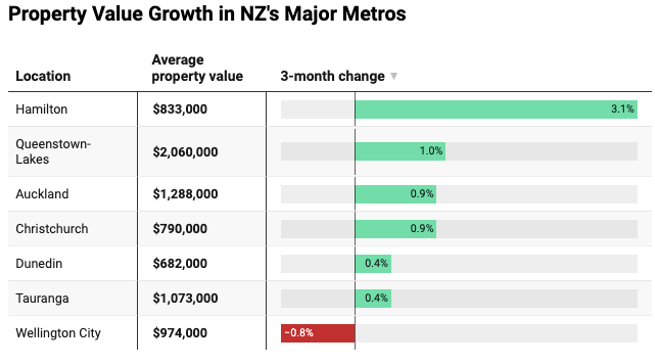
Chart showing changes in average house prices in New Zealand’s main cities over the past three months
Among the main cities, Hamilton stood out, with house prices rising 3.1% (about NZ$25,000), recovering earlier losses of more than 2%. Queenstown’s high-end market was also active, with several property sales worth more than NZ$10,000,000, and even NZ$20,000,000, driving overall growth.
House prices in Wellington city are still falling, but the decline is easing. High unemployment, high council rates and charges, and high house prices remain the main pressures on the city’s market, although lower mortgage rates have brought some improvement.