
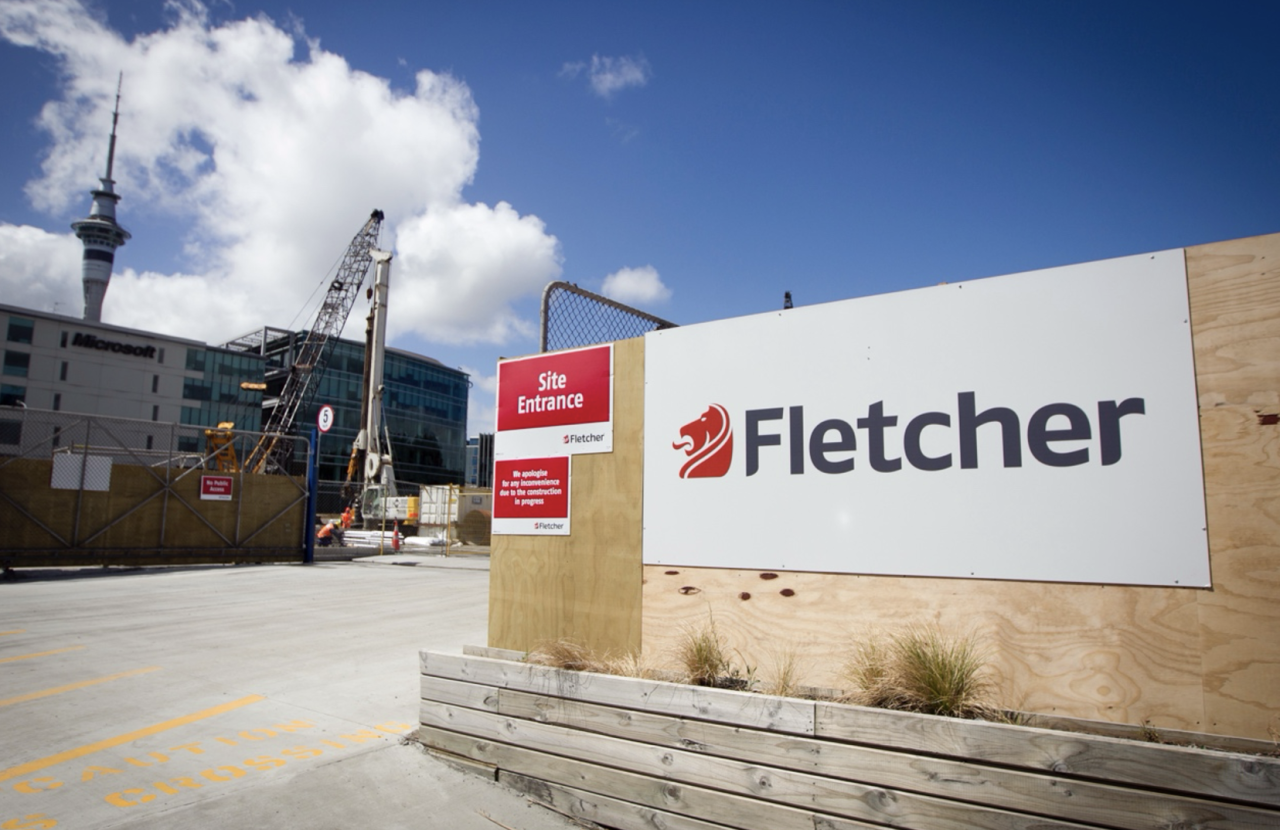
Today, Fletcher Building, one of New Zealand’s largest construction companies, is once again at the centre of controversy, this time over a warning of staggering losses rather than the successful delivery of a project.
In its Investor Day briefing released on 24 June, Fletcher Building revealed that significant items for the financial year ending 30 June 2025 were expected to total between NZ$573,000,000 and NZ$781,000,000. If confirmed, this would wipe out almost all its operating profit and far exceed last year’s annual loss of NZ$227,000,000. More worryingly, the company also expects no resumption of dividends in the near term, while current net debt remains as high as NZ$1,100,000,000, well above its target range of NZ$400,000,000–900,000,000.
A cash-burning past, a future spent in advance
The components of this loss are highly complex, but not difficult to understand. Fletcher acknowledges that:
-
The company expects to write off approximately NZ$250,000,000 to NZ$440,000,000 in book value, mainly through brand and goodwill impairments, business closure costs and the cancellation of contracts relating to its ERP system;
-
Cash significant items are expected to total approximately NZ$50,000,000 to NZ$60,000,000, mainly for redundancies and restructuring;
-
Completion costs for the New Zealand International Convention Centre (NZICC) have risen again, requiring the company to make a further provision of NZ$12,000,000 to NZ$15,000,000;
-
The company expects to spend approximately NZ$10,000,000 to NZ$15,000,000 on legal disputes relating to leaking pipes in Western Australia and other legacy construction issues.
In other words, this goes beyond a construction company balancing its books: it is a systemic disaster involving strategic mistakes, a loss of management control and failures in project delivery.
From NZICC to ERP: every mistake is accruing interest
Looking back at Fletcher’s major setbacks in recent years, the Auckland international convention centre (NZICC) project stands out. Since the fire in 2019, the project has suffered repeated delays and spiralling costs, and has also faced legal action from SkyCity. This single project has almost become synonymous with Fletcher’s troubled financial results.
Meanwhile, the ERP software system failed to deliver the expected operational efficiencies and instead became a sunk cost. With those contracts no longer able to deliver benefits, the company must now recognise the losses in its accounts. What was intended a few years ago to reshape the future through digital management has become a heavy financial burden.
Another strategic review yields no outcome after leadership changes
Just two weeks ago, Fletcher acknowledged receiving several enquiries about buying core operations, including its construction business, but there has been no substantive progress. Last year, the company also said it hoped to bring in a partner for its residential development division. That, too, has yet to produce a result.
Arguably, this strategic review looks more like a smokescreen intended to steady market confidence. But with years of losses, frequent leadership changes and major asset write-downs, no amount of reviewing can conceal the difficulties on the ground.
Investor trust is slipping away
Judging by the capital market’s response, Fletcher’s announcement of significant items clearly came as a surprise. One institutional investor put it bluntly: “The scale of these amounts is shocking.”
When a company reports structural losses and restructuring costs year after year, it points to deep problems in its operating model and governance systems that go beyond cyclical fluctuations.
Comment: as brands turn from assets into liabilities, corporate struggles reflect a wider economic downturn
Fletcher Building faces a harsh reality: the brands and goodwill once considered strengths have become impairment entries in its accounts. In an era of close scrutiny of delivery capability, financial strength and governance, companies can no longer survive on past prestige.
The New Zealand construction giant’s substantial impairments amount to more than an accounting reshuffle: they bring together the consequences of systemic failure. From the NZICC project delayed for years and an ERP system unable to deliver value to repeated, inconclusive strategic reviews, every element is draining market confidence. As restructuring becomes routine, growth becomes the exception.
But Fletcher is not an isolated case. Its predicament is a snapshot of today’s economic reality.
ANZ economists warned this week that New Zealand’s economy remains fragile. They have cut their GDP growth forecast for the current quarter from 0.4% to 0.1% and predict that the Official Cash Rate (OCR) will ultimately have to fall to 2.5% to provide an effective boost to demand. Although the OCR has fallen substantially from last year’s peak, the economy’s sluggish state is far from over.
This means that, with corporate earnings struggling to recover, household spending still constrained and investment appetite persistently weak, Fletcher’s impairments and restructuring are just the tip of the iceberg. More companies may yet be forced to confront similar asset revaluations and changes to their governance.
As ANZ put it: “We may be past the worst, but many households and businesses will not feel an improvement straight away.” A real recovery will require easier monetary conditions, growth in real incomes and a rebuilding of confidence.
Until then, what we are seeing at Fletcher extends beyond one company’s crisis: it reflects a shared predicament deep within the economic cycle.