
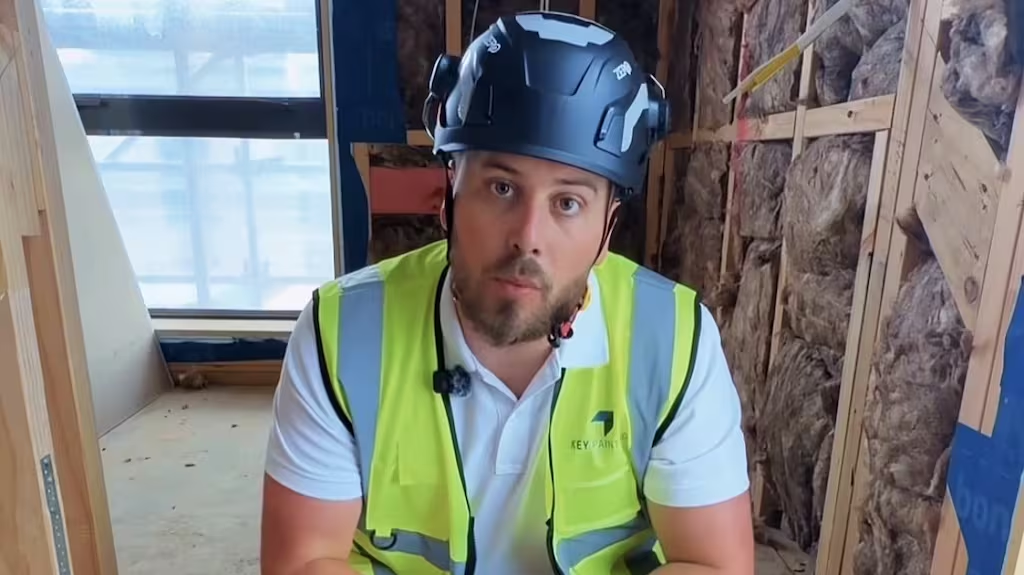
Auckland’s construction industry has been shaken by another development. Construction entrepreneur Max Key, son of former New Zealand prime minister John Key, recently said he was “rattled” by the sudden liquidation of Auckland builder Teak Construction Group, with his company owed a six-figure sum or more for completed work.
Max Key said on social media that his residential construction business, Key Companies, had completed the work and supplied all documentation and warranties. However, the payment remains outstanding following the main contractor’s liquidation.
“We completed the work, submitted all the documentation and provided the warranties, and then the main contractor went into liquidation,” he said. “Our company is owed well into six figures and, frankly, it has really rattled us.”
However, Max Key stressed that he was not alone. Many electricians, plumbers and other construction subcontractors are in similar situations, with numerous businesses still awaiting payment for completed work.
NZ$7,900,000 in debt comes to light
According to the first report released by liquidator PKF Corporate Recovery, creditors have lodged claims totalling approximately NZ$7,900,000 against Teak Construction and its related companies.
The report shows the company has approximately NZ$6,400,000 in assets available to repay preferential creditors. This means unsecured creditors, including many subcontractors, may struggle to recover everything they are owed after preferential creditors are paid.
MTK Capital, an investment company associated with Max Key, is also listed as a creditor. The initials MTK stand for Max Timothy Key.
Liquidators Chris McCullagh and Steve Lawrence have been appointed to take over the company’s affairs and manage its projects in Auckland and Hastings.
Construction company suddenly collapses after 34 years in business
Records show Teak Construction had operated in New Zealand’s construction industry for more than thirty years. It had worked on numerous commercial buildings, public facilities and residential developments, and previously claimed to have completed more than 500 building projects.
According to the liquidation report, the company’s shareholders formally appointed liquidators on 2 March.
The report states that Teak Construction and its related companies had primarily acted as main contractors on new builds, renovations and building remediation projects, with most of their work concentrated in Auckland.
The main reasons for the company’s collapse included:
-
Long-running legal disputes with several clients, with some completed work remaining unpaid;
-
A broader construction industry slowdown, making it difficult to secure sufficient profit on new projects;
-
Increased compliance costs and legal fees resulting from changes to building regulations.
Together, these factors made continued trading commercially unsustainable.
Several major building projects could be affected
Records show Teak Construction had been involved in, or responsible for, several substantial projects, including:
-
Remediation of Victopia Apartments in central Auckland, worth approximately NZ$72,000,000
-
Remediation of Quattro Apartments in Grey Lynn, worth approximately NZ$29,000,000
-
Construction of an activity centre at Westlake Girls’ High School
-
A classroom block project at Waimauku School
-
Construction of Kāinga Ora apartments in Pt Chevalier
-
Construction of the Krispy Kreme store in Manukau
The company had also been involved in construction or remediation work on numerous schools, churches and public facilities.
Subcontractors ask whether retention money is truly protected
The liquidation has also renewed industry scrutiny of the construction retention money system.
Construction law specialist Raine Selles said Teak had spent the months before its liquidation in disputes with subcontractors over retentions and outstanding payments, through court and arbitration proceedings.
She said: “It is disappointing that Teak has gone into liquidation after months of legal disputes with subcontractors over retentions and other payments. What now needs to be established is whether those retentions were actually held in trust accounts as required by law.
Commentary and reflection: risks continue to build in construction
Teak Construction’s liquidation once again highlights the multiple pressures currently facing New Zealand’s construction industry.
Over recent years, rising construction costs, tighter financing conditions and a slowing property market have significantly squeezed margins for many building companies. Payment delays or disputes on a project can quickly put pressure on cash flow between contractors and subcontractors.
This risk is particularly acute for subcontractors. Many small construction businesses must fund work upfront. If a main contractor encounters financial difficulties, unpaid invoices can affect their cash flow and potentially trigger a chain of financial problems for other businesses.
Meanwhile, compliance with retention money requirements has again become an industry focus. The law requires retentions to be held in trust to protect subcontractors’ interests. In practice, however, whether the money is genuinely kept separate and protected if a company becomes insolvent remains a frequent source of dispute.
As the property market gradually shows signs of recovery, the construction industry’s ability to regain stability will depend largely on further improvements to project financing, payment mechanisms and industry oversight.
Teak Construction’s collapse may be an isolated case, but shocks like this can have serious consequences for many subcontractors. A single unrecoverable payment can sometimes be enough to push a small construction business to the brink of insolvency.