
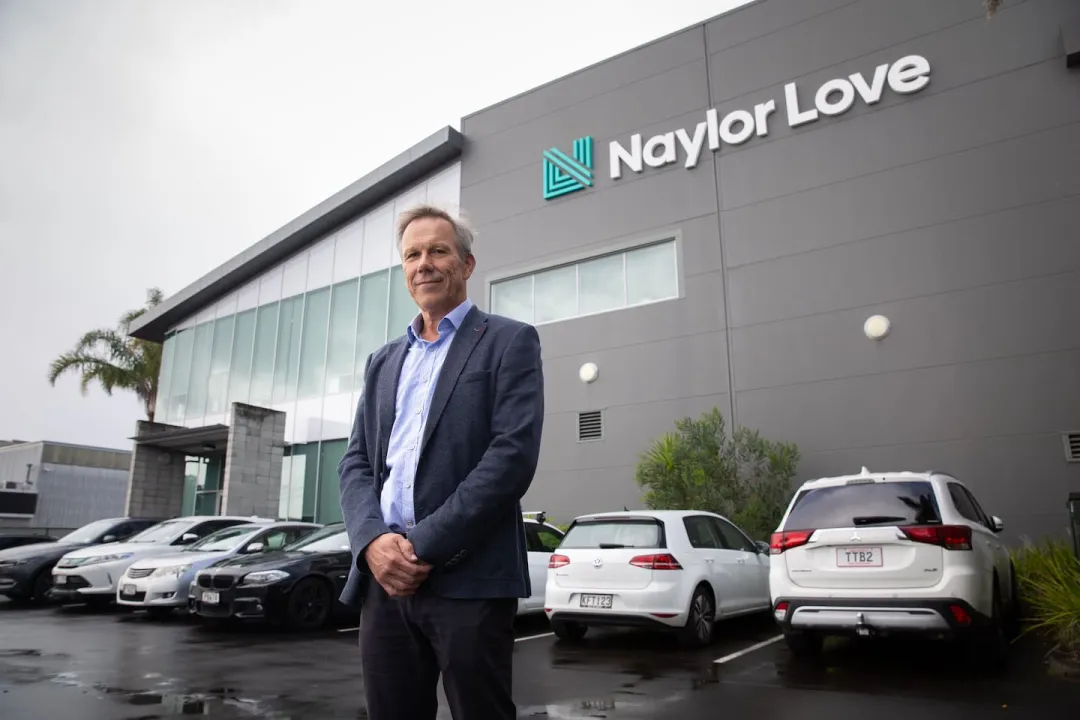
The latest figures show Naylor Love has regained its position as New Zealand’s busiest builder, with approximately NZ$1,030,000,000 worth of projects starting in 2025, across 103 projects. That figure has not only reclaimed the top spot it lost last year, but also set a new record for the rankings.
Previous leader Hawkins has slipped to second this year, with approximately NZ$592,000,000 worth of project starts. Looking at the rankings alone, this might seem like the usual shifts in relative fortunes. But putting the figures for both years side by side reveals a different pattern emerging.
A new leader, and more than a change in rankings
In 2024, Hawkins topped the rankings with approximately NZ$1,200,000,000 worth of project starts. Its defining feature was clear: relatively few projects, but large ones — a classic case of growth driven by major contracts.
Naylor Love ranked second that year, with a more dispersed portfolio but a slightly smaller overall value. The following year, the situation reversed.
Naylor Love’s rise to the top this time depended largely on a whole portfolio of projects progressing steadily, rather than a single megaproject. From IKEA at Sylvia Park in Auckland to teaching building B230 at the University of Auckland’s Grafton campus, alongside public projects including hospitals, courts and prisons, its work is widely spread and more balanced.
Hawkins still has major projects such as the Auckland Airport terminal on its books, but its project count has fallen noticeably, with a greater emphasis on delivering large projects at a slower pace.
This looks less like a difference in company strategy and more like a changing industry environment.
The top ten: who leads, and what is changing
The full rankings offer a clearer view of how the industry is changing:
First: Naylor Love (NZ$1,030,000,000)
Second: Hawkins (NZ$592,000,000)
Third: Classic Group (approximately NZ$570,000,000)
Fourth: LT McGuinness (approximately NZ$426,000,000)
Fifth: Dominion Constructors (approximately NZ$425,000,000)
Sixth: Southbase Construction (approximately NZ$381,000,000)
Seventh: 3Eyes (approximately NZ$332,000,000)
Eighth: Icon (approximately NZ$316,000,000)
Ninth: Simplicity Living (approximately NZ$305,000,000)
Tenth: Haydn & Rollett (approximately NZ$290,000,000)
Another detail in the rankings deserves attention.
Seventh-placed 3Eyes is among the few construction businesses with Chinese roots in this year’s top ten. Established by founder Sean Li in 2011 and headquartered in Rosedale on Auckland’s North Shore, the company has gradually expanded from a business focused primarily on construction into a comprehensive service offering spanning project management, subdivision development and design and build.
Making the top ten despite having relatively few projects also reflects, to some extent, how adaptable these versatile construction companies are in the current market.
The list looks comprehensive, but the more revealing question is who is still on it and who has disappeared.
Looking back to 2024, companies such as Summerset, Watts & Hughes, Kalmar, Apollo Projects, Built NZ and Fletcher Living still held places in the top ten. Many focused on retirement villages, school construction, conventional residential development or medium-sized commercial projects.
By 2025, most of these names had dropped out of the rankings, replaced by a group of companies with distinctly different business structures — including Dominion Constructors, 3Eyes, Icon and first-time top-ten entrant Simplicity Living.
Looking at these companies together reveals a clear difference.
Those that dropped out were more aligned with the approach familiar to the market over recent years: residential developments, retirement communities and education projects. Their project types were relatively consistent and more dependent on market conditions.
The newcomers have noticeably more diversified businesses: some build large manufacturing and research facilities, some combine development and construction, and others have moved directly into rental housing held for the long term.
This turnover is difficult to explain simply in terms of a hot or cold market. A closer explanation is that project types are changing, funding is moving in different directions, and the companies capable of taking on these new projects are changing accordingly.
Residential development steps back as public projects take its place
Breaking down these companies’ project types makes the change clearer.
Many of the major projects in this year’s rankings are concentrated in:
1: Hospitals and mental health centres
2: Courts and government office buildings
3: Universities and student accommodation
4: Airports and major infrastructure
5: Manufacturing and research facilities
These projects share a common feature: they are unlikely to stop simply because market sentiment fluctuates.
By comparison, residential development based mainly on building homes for sale has a noticeably smaller presence in the rankings. Classic Group has become one of the few companies in the top ten still working in this area, which is telling in itself.
New directions are gradually taking shape
One name in the rankings deserves a closer look: Simplicity Living.
This build-to-rent company, which develops homes for rental rather than sale, has entered the top ten for the first time this year. Its portfolio of projects in Auckland and Queenstown is substantial and clearly follows a strategy of holding assets for the long term.
Student accommodation projects involving companies such as Icon and Haydn & Rollett are also becoming increasingly common.
Taken together, these projects show how the familiar cycle of development, sales and cash recovery is being replaced by a slower, longer-term model.
Commentary and reflection:
The market has changed its approach rather than slowed down
Looking only at house prices, many people might conclude that the industry has cooled. But these rankings suggest residential development has not disappeared; it simply no longer occupies the dominant position. The projects continuing to progress are those centred on population, cities and public needs. Airports are being built, hospitals expanded and schools upgraded. These activities will not stop because of temporary changes in market conditions.
Meanwhile, some previously less prominent sectors are gradually moving forward. Assets held for the long term, such as build-to-rent developments and student accommodation, are attracting increasing attention from investors. Compared with building for sale, this model is more stable, but it also demands greater patience.
In other words, construction has not slowed down; its rhythm has changed. It is no longer moving entirely with the housing market’s ups and downs, and is beginning to follow longer-term demand.
When the busiest builders no longer make their money primarily from selling homes, and more projects come from hospitals, schools, airports and rental housing, is the balance of influence in the industry already quietly shifting?