
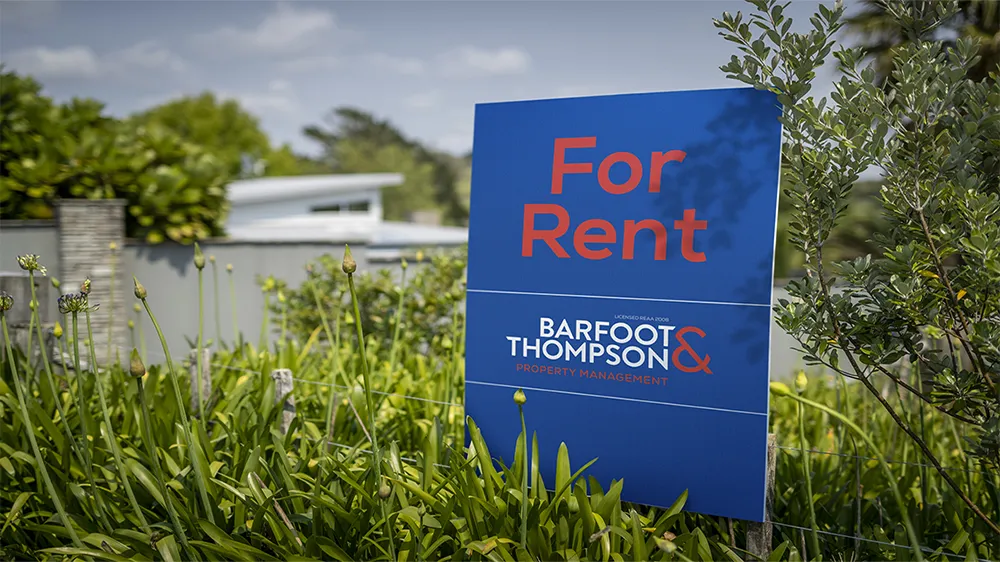
After rapid increases and volatility over the past two years, subtle changes are emerging in New Zealand’s property market.
The latest figures show the national average rent was NZ$631 per week in April 2026, down 1.4% year on year. Meanwhile, sales volumes at Auckland’s largest real estate agency, Barfoot & Thompson, fell 18% year on year in April, while housing stock reached an 18-year high.
Rents are easing, sales are slowing and listings are increasing. These seemingly mixed signals are together outlining a new market landscape.
Rents: the steady decline eases, but regional differences widen
Overall, the cooling trend in the rental market has slowed.
The latest Realestate.co.nz figures show the national average rent fell NZ$9 from a year earlier, but was just NZ$1 below March this year. Compared with the previous run of declines, this looks more like a shift into a relatively stable phase.
However, this “stability” is not emerging across all regions at the same time.
Of 19 regions, 10 recorded annual rent declines. Rents in the Central North Island fell 8.6%, while Gisborne recorded a decline of 5.4%, both reflecting markedly weaker local demand.
The change in Wellington is particularly pronounced. Average rents in the region fell from NZ$647 in April last year to NZ$620, a cumulative decline of NZ$77 over two years. The industry generally links this to pressure on the local employment market and fewer jobs.
Yet amid the overall decline, some regions have followed a different path.
Waikato and Nelson rents bucked the trend, rising 4.1% year on year to NZ$583 and 7.8% to NZ$617 respectively, both record highs.
Auckland, by comparison, is closer to “stabilising”. Its average rent in April was NZ$690, down NZ$12 year on year but up slightly by NZ$1 from March, suggesting the market has not continued to fall.
This divergence makes one market characteristic increasingly clear: demand has not disappeared, but is being redistributed between regions.
Home sales: the pace slows markedly while stock grows
While the rental market is gradually cooling, the change in property sales is more immediate.
Barfoot & Thompson figures show 688 homes were sold in April, down 18% year on year. Although seasonal factors such as Easter, school holidays and ANZAC Day played a part, the market overall slowed noticeably after its March peak.
Prices also showed signs of easing. The average sale price fell 3.9% from the previous month, while the median fell 7.3%. However, prices remained slightly higher than a year earlier, suggesting the market has not entered a clear downward trend.
Changes on the supply side deserve even closer attention.
New listings in April totalled 1744, up 10.5% year on year and the highest for that month in 21 years. Available stock reached 6356 properties, the highest level in 18 years.
Meanwhile, both renters and buyers have more choice, but are becoming more cautious in their decisions.
With rents no longer rising and sales beginning to slow, there is naturally room for prices to soften.
Commentary and reflections: The market is moving from “moving in unison” to “structural divergence”
Over the past few years, many people have become accustomed to using interest rates to judge the direction of house prices. What is now clearer, however, is that market changes are no longer fully synchronised.
Wellington rents continue to fall amid employment pressures, while Waikato and Nelson have reached record highs. Sales nationwide are slowing, yet listings keep increasing.
Behind these changes, population movements, employment conditions and regional economic differences are gradually playing a more direct role.
For tenants, pressure is indeed easing in some regions, but the change is uneven.
For investors, relying solely on a rising overall market may be becoming a less effective strategy. Regional choices and market judgement are growing more important.
As winter approaches, the traditional quiet season for property transactions, combined with economic uncertainty, is likely to leave the market even more subdued.
In this environment, a more practical question is emerging:
In a slower market with more choice, how many people are willing to take the plunge?
Perhaps from 2026 onwards, the defining feature of New Zealand’s property market will no longer be simply a collective rise or fall, but divergence between regional markets.