
Once you buy a home in New Zealand, is it yours forever? If certain bills are ignored for too long, your ownership could gradually be stripped away.
Over the past few weeks, two cases have emerged in Auckland in which properties were sold following prolonged council rates arrears. On the surface, these are two extreme cases. But viewed together at this point in time, alongside broader data, they look more like signs of pressure that is building but has yet to be fully discussed.
01. Two cases: the same starting point, different outcomes
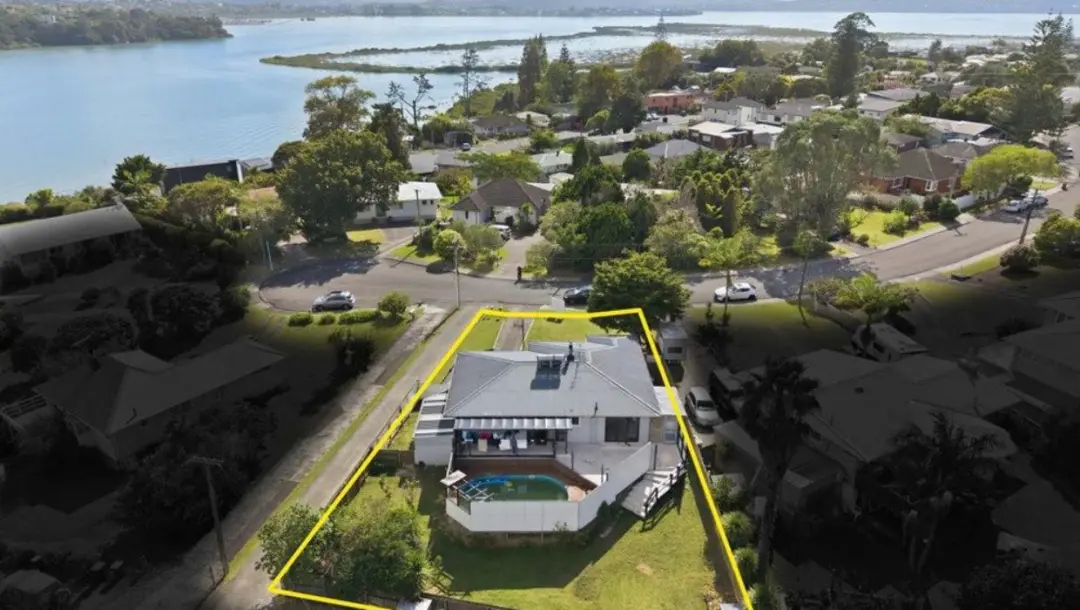
The first case occurred in Te Atatū Peninsula
A company called AVT Painting Services Ltd had owned this standalone house since 2004. It began falling behind on council rates in 2016, with arrears accumulating each year, before stopping payments altogether after 2020. The debt continued to grow, reaching $37,852 by early 2025.
Auckland Council made repeated contact and offered instalment plans, but the issue remained unresolved. The case eventually went to the High Court, the company was liquidated, and the property went to a mortgagee sale.
The house sold for NZ$1,000,000. After debts, including those owed to Inland Revenue, were repaid, the owner still received about NZ$483,000.
This was a case of an involuntary exit. Although the outcome was far from ideal, some of the asset’s value was preserved.
The second case reached a more extreme outcome.
A three-storey townhouse in Northcote was forcibly auctioned by Auckland Council. The reason was straightforward: council rates had gone unpaid for years, and there was almost no response.
No council rates had been paid on the property since after 2005, and years of accumulated arrears reached nearly NZ$220,000. During that time, the council made repeated attempts to make contact and even hired a private investigator to trace the owner, but never established effective communication.
Eventually, under a High Court order, the property was auctioned in “as is” condition and sold for NZ$610,000.
This was only the second publicly reported forced auction over council rates arrears since the “super city” was established in 2010.
The key difference from the previous case was the prolonged loss of contact.
02. This does not happen suddenly: it is a gradual process
Many people assume that a forced property sale means a problem has suddenly erupted. The reality is different.
Under Auckland Council’s process, rates arrears usually go through a lengthy cycle, from reminder letters and phone calls to offers of instalment arrangements. Legal proceedings begin only after repeated attempts have failed.
Auckland Council chief financial officer Ross Tucker said that, in the vast majority of cases, the council prioritises working with owners to resolve the issue, including repayment plans or other arrangements, to avoid further enforcement action. But when these approaches fail, the situation changes. “Sometimes enforcement action is the only option the council has left.”
Data shows that between October 2024 and October 2025, Auckland Council initiated 34 liquidation proceedings, most of them related to council rates arrears.
This is more like a chain that gradually tightens than a blanket response.
03. The third dimension: pressure is spreading
If the first two cases represent the outcomes, the bigger change is happening across a much wider population. The latest data shows that, before the 2025/26 financial year has even ended, more than 105,000 households nationwide have applied for a rates rebate. That already exceeds the 104,344 applications received over the whole of last year.
In Auckland, around 14,500 applications have already been received, while more than 1500 instalment arrangements are in place.
Local Government Minister Simon Watts also acknowledged that the continuing rise in living costs is putting more households under pressure, while rising council rates are adding further strain to household budgets.
Meanwhile, average council rates nationwide have risen to around NZ$3386, up NZ$451 on a year earlier.
These figures do not, in themselves, signal a crisis. But they point to a clear trend: council rates are becoming part of the financial pressure facing more households. Those on fixed incomes, such as households reliant on pensions, are particularly vulnerable as property costs continue to rise.
Looking at these developments together reveals a detail: properties forced onto the market have often been through a long period of delays, communication or repeated attempts to find a solution.
That was the case in Te Atatū. Although it ultimately ended in liquidation, there were at least responses and room for negotiation throughout the process. Northcote was entirely different. With the owner unreachable for years and communication almost completely cut off, the room for a resolution gradually disappeared.
So the issue may be less about the amount owed than whether anyone responds.
04. Observations and reflections: a risk that is accumulating
From an institutional perspective, it is unsurprising that the council pursues unpaid rates. If prolonged arrears remain unresolved, the cost ultimately falls on other ratepayers, which is itself unfair. Viewed another way, however, when more than 100,000 households begin relying on assistance, the issue is no longer confined to isolated cases.
It will not erupt suddenly, but its impact keeps spreading.
For the property market, forced sales of this kind will not reach significant scale in the short term. What they reflect, however, is a change in the structure of costs: owning a property is no longer simply about its price and the mortgage, but a whole range of ongoing expenses, including council rates.
House prices fluctuate and interest rates move in cycles, but these fixed costs are often harder to ignore. As costs keep rising, are you actively managing your property, or passively bearing the pressure it brings?