
For New Zealand’s development industry, slow approvals have never been an isolated problem.
They affect project feasibility, financing timelines, construction schedules and cash flow pressures, and determine whether a project can move from drawings to reality. Often, developers’ greatest fear is not an outright rejection, but the gradual drain on time and money as they repeatedly supply more information, wait for replies, revise details and explain things again.
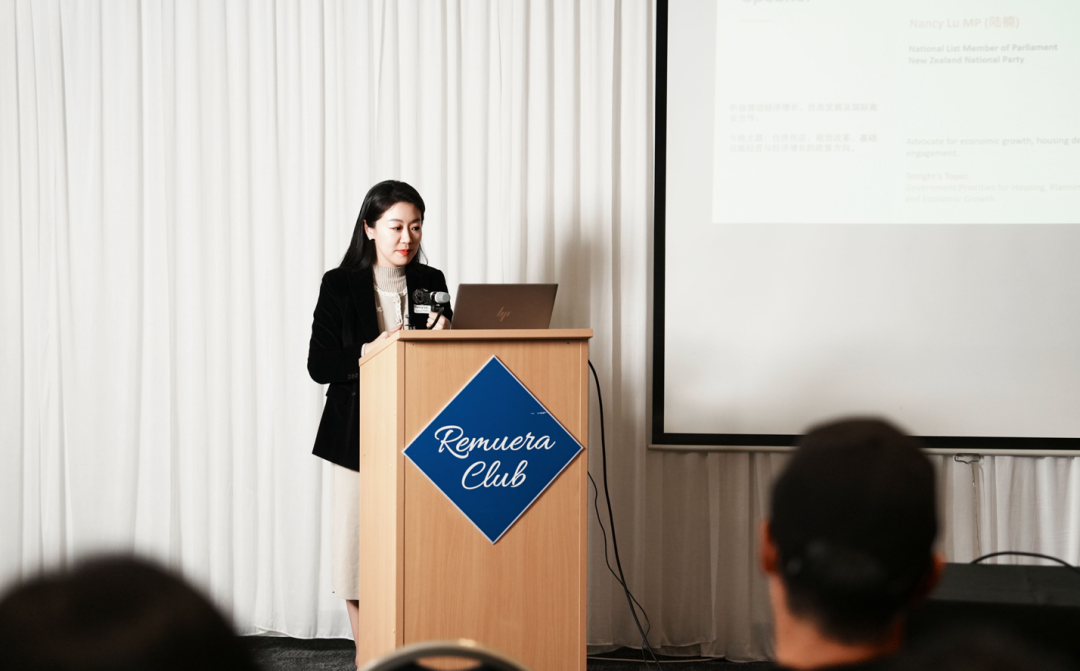
On 4 June, Property Development Solutions (PDS) held an industry event at Remuera Club titled “From Design to Approval: Mastering Council Coordination and Securing Fast Consents”. National Party MP Nancy Lu and Jeff Fahrensohn, former Building Inspection Manager at Auckland Council and now a director of Fahrensohn Building Consultants, were invited to discuss a pressing industry question from both policy and practical perspectives:
As policy gradually shifts towards encouraging construction, how can project teams genuinely improve approval efficiency and reduce development risks?
Policy is sending more positive signals
With the New Zealand Government’s release of its latest Budget (Budget 2026), housing supply and infrastructure investment are once again in focus. Nancy Lu said the Government was giving greater priority to economic growth, infrastructure development, housing supply and productivity improvements.
The closely watched RMA reforms will simplify the existing planning and resource consent system, creating a clearer path for housing development and infrastructure construction. The Government has also introduced a housing growth incentive fund to encourage councils to support more housing supply and ease the associated infrastructure pressures.
These policies send positive signals to the development industry, but turning opportunities into results still depends on project teams’ expertise and early preparation.
The approval process really begins at the design stage
Jeff Fahrensohn’s presentation offered developers and building professionals at the event valuable insights from a council perspective.
As Auckland Council’s former Building Inspection Manager, Jeff spent many years overseeing building inspections and compliance. He noted that, as a project progresses from design to building consent, site inspections and an application for a Code Compliance Certificate (CCC), compliance work should begin at the design stage, rather than being addressed only after problems arise.
Many project delays stem from inadequate early preparation, such as incomplete design documentation, insufficient evidence for product substitutions, incomplete construction records or missing quality assurance (QA) processes. Within New Zealand’s building system, councils look for sufficient evidence, rather than explanations.
If matters such as design compliance, product certification, installation requirements and proposed material substitutions are not resolved early, a project can easily enter the request for information (RFI) stage, extending the approval timeline.
RFIs are a hidden cost in the project timeline
At the event, Jeff shared some figures worth noting: the average time from submitting a building consent application to approval is around 57.2 days, including an average pause of 39 days while waiting for responses to RFIs. At the CCC stage, RFI-related waiting time can also reach 31 days. In other words, supplying additional information alone can cost a project around 70 extra days.
For developers, this means higher financing costs, changes to construction schedules and cash flow pressures. Jeff therefore stressed that compliance strategies must be established early, rather than waiting for the council to raise questions before seeking answers.
By engaging with the council early, establishing a clear compliance pathway, putting robust QA processes in place and properly retaining construction records, engineers’ reports and product information, project teams can effectively reduce the risk of RFIs, improve approval efficiency and avoid unnecessary losses of time and money.
A good project needs both good design and compliance preparation
A well-developed project needs more than excellent design and budgeting. It also requires a complete, clear trail of compliance evidence that allows the council to review and approve it smoothly. For multi-unit housing, apartments, retirement communities and commercial projects, details involving fire safety, waterproofing, structure, windows and doors, insulation, and mechanical and electrical systems can all directly affect approval outcomes.
Jeff noted at the event that material substitutions (alternative products), minor variations and H1 energy efficiency compliance all come back to the same principle: a project can change, but it must be possible to demonstrate that it continues to meet Building Code requirements.
Effective risk management means incorporating compliance, quality management and evidence retention throughout the project process from the outset, rather than remedying problems after they occur.
Turning opportunities into deliverable projects
In New Zealand’s current development environment, project success has long depended on more than design or approvals. It is also a contest of the ability to bring resources together.
From procurement, financing and construction to compliance management, every stage directly affects a project’s costs, efficiency and eventual returns. Through its membership programme, PDS provides developers with procurement networks, financing support and industry partnership resources, helping projects progress more steadily and efficiently from planning to delivery.
Upcoming event
As the market gradually recovers and development opportunities re-emerge, accurately assessing demand and recognising opportunities have also become crucial to development success.
To this end, PDS will again join forces with Barfoot & Thompson to present a major industry event. It will focus on information gaps between market supply and demand, connect buyer needs with development opportunities, and examine current market trends and development potential in depth, helping developers find a clearer direction in a changing market.
Speakers include Dan Oliver, Steve Maserow and Jocelyn Yao, who will share their observations of the current market and practical experience from perspectives including development strategy, market demand and frontline sales feedback.