

On 22 March, acting Reserve Bank of New Zealand Governor Spencer announced that the Official Cash Rate (OCR) would remain unchanged at 1.75.
In its latest weekly commentary, Westpac said the Official Cash Rate was expected to remain unchanged until the end of 2019. Recent developments have given the Reserve Bank little reason to change its stance.
Inflation remains low, and economic growth will be more subdued for an extended period. Together, these factors mean the Official Cash Rate needs to remain low for a considerable time.
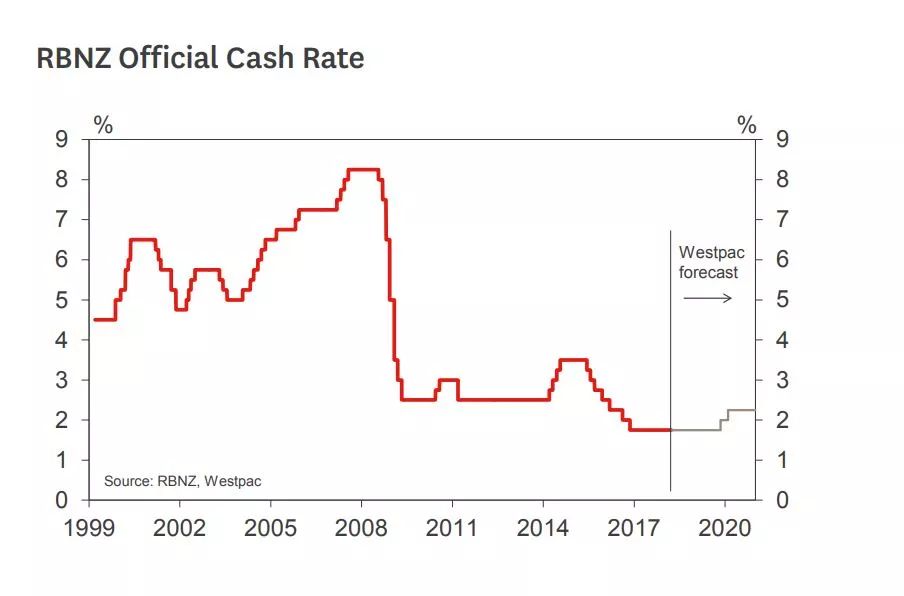
Once the new Governor formally takes office and signs the relevant policy agreement, employment conditions will become one of the factors considered in future decisions on New Zealand's Official Cash Rate.
Before the financial crisis, the OCR strongly influenced floating mortgage rates
Historically, the Official Cash Rate was generally regarded, with good reason, as a measure of banks' short-term funding costs. The relationship between the OCR and retail mortgage rates was therefore relatively stable.
Changes in the Official Cash Rate would usually lead to proportionate movements in mortgage rates.
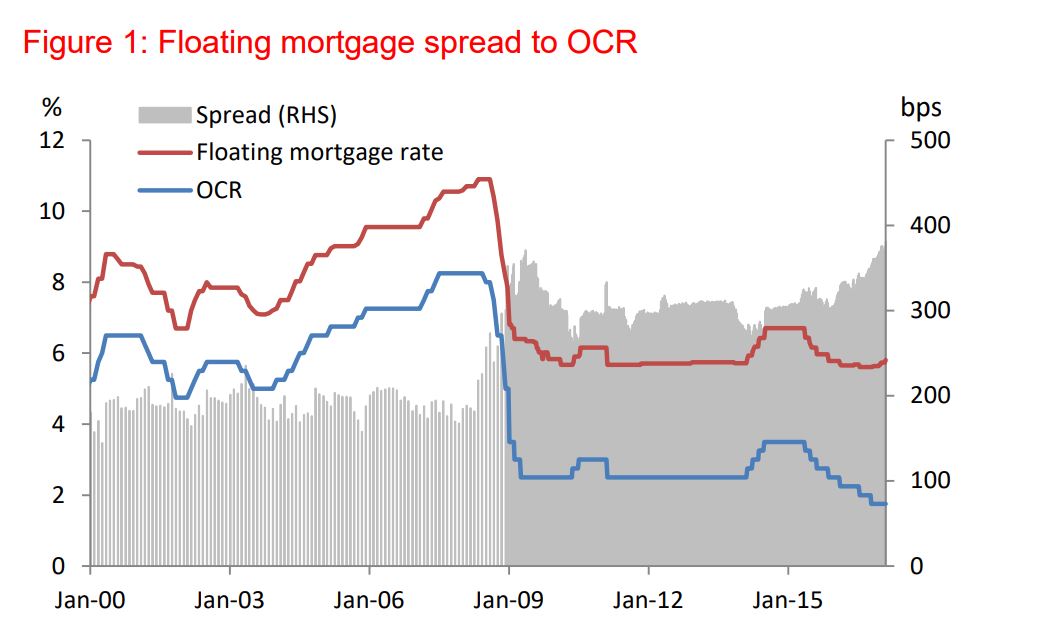
A Reserve Bank of New Zealand report noted that, before the financial crisis, banks' funding costs largely reflected wholesale funding rates.
{Ad}
This was because wholesale funding had long served as a relatively stable primary source of funding for banks.
Banks also relied heavily on short-term wholesale funding. The costs of this funding were strongly influenced by the Official Cash Rate.
As a result, before the financial crisis, the relationship between the Official Cash Rate and floating mortgage rates was relatively stable.
The factors influencing mortgage rates have changed in recent years
The financial crisis exposed the vulnerabilities and risks arising from banks' excessive reliance on short-term wholesale funding markets.
Major investors in funding markets reduced their lending to banks or withdrew their money from the market, weakening liquidity in short-term wholesale funding markets.
After the financial crisis of 2008, banks shifted their funding towards more stable sources, such as retail deposits and long-term wholesale funding markets. The Official Cash Rate alone was no longer a good indicator of banks' funding costs.
A Reserve Bank of New Zealand analysis therefore argued that a different approach to measuring banks' funding costs was now needed to better understand how funding pressures affect mortgage rates.
Banks' funding sources include retail and business deposits, short-term wholesale funding and long-term wholesale funding.
In recent years, rapid growth in demand for credit has driven banks to compete fiercely for a limited pool of domestic deposits.
As a result, the costs of attracting deposits and obtaining long-term wholesale funding have a greater influence on mortgage rates than the Official Cash Rate.