
The market has surged ahead for 5 years, with developers picking up the pace alongside it. Now the market is slowing—even slamming on the brakes—and developers must slow down too.
“The moment the market pulls back is the bottleneck, and the point at which developers are put to the test,” says MAXIOM head Jianzhong Lu. He previously worked for Chinese property giant Vanke and has more than a decade of experience in property development.
MAXIOM entered the property industry through land subdivision in 2008, weathered the financial crisis of 2008, and shifted into apartment development in 2010. Although apartments were not yet mainstream at the time, the company achieved a strong result, selling all 33 residential apartments in its first project within 3 months. Now that apartments have gained wider acceptance, the company faces a different set of challenges.
New Zealand banks have tightened requirements and conditions for development lending, including limits on loan-to-value ratios. In other words, under otherwise comparable circumstances, developers cannot borrow as much as they could in the past. Apartment development requires advance planning at every stage and is more specialised and systematic than house development. Every policy change in the market affects the planning and progress of apartment projects.
“Fortunately, we have enough experience to pull back and adapt,” says Jianzhong Lu. Having come through the bottleneck, he is not worried about tighter bank lending. To control risk, banks have substantially increased the proportions of developer equity and presales they require. In his view, higher regulatory requirements for capital investment will weed out many speculators operating on the brink.
Industry credentials: a passport to property development
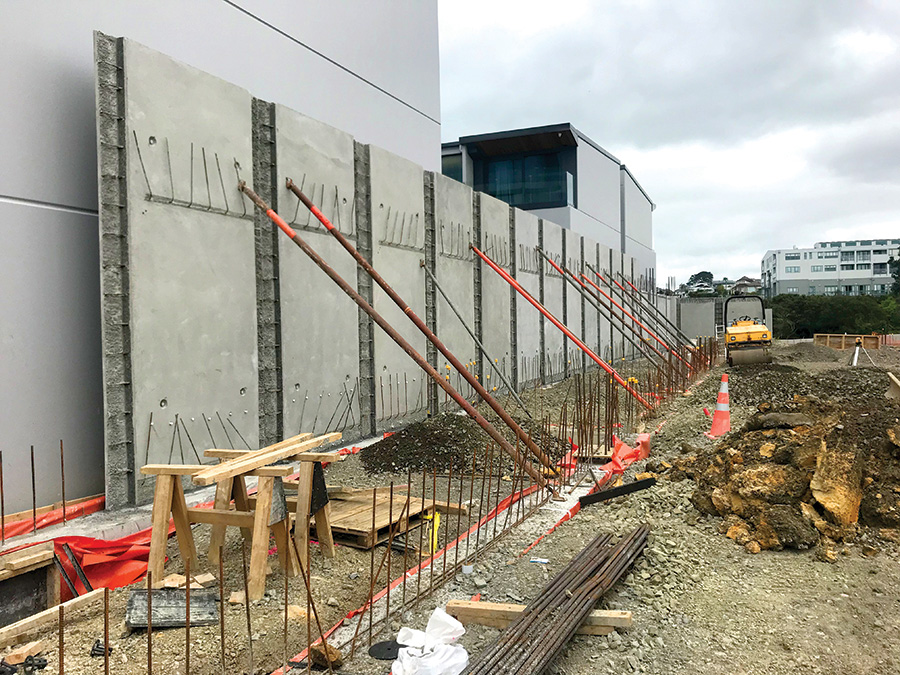
Many apartment developments have been delayed this year. The bank’s recognition of MAXIOM’s credentials built over many years, together with timely funding, allowed its latest boutique apartment project, Chelsea Bay Residences, to begin construction smoothly in early July.
{AD}
According to Jianzhong Lu, Chelsea Bay Residences secured bank lending during a period of tighter credit largely because the developer had a track record of delivering several major projects. The bank also approved the credentials of the project’s planning and design professionals, construction company, project manager and even every subcontractor. Following a year of preparation, full construction began on 1 July 2017, with completion expected in the first half of 2019.
YIJU New Zealand learned from several developers and banking professionals that, regardless of how much equity a developer has, property development in New Zealand requires access to bank lending to reduce capital risk and improve capital efficiency. Banks are most concerned with whether the developer has the experience and credentials gained from developing multiple projects in New Zealand.
“These credentials are not a certificate, but a reputation built through contracts with banks and subcontractors. There are no shortcuts to a good reputation; it takes a long time to build,” says Jianzhong Lu.
When Australia tightened credit in April, Jianzhong Lu anticipated that the effects would reach New Zealand. Yet he supports the approach: “If banks did not tighten lending, the market could become disorderly.” Under the higher standards, developers must contribute 10% more equity before they can develop new projects. This helps weed out companies with poor risk management, limited professional expertise or insufficient funds, as well as speculators lacking credentials and experience. Policy adjustments that remove these negative factors support the market’s healthy, sustained development.
The rules of a small, slow-moving market
From affordable apartments to boutique developments, and from 2010 to 2017, MAXIOM has witnessed the apartment market grow from its infancy into a flourishing sector. Rising market activity has also attracted substantial overseas capital to New Zealand. According to a developer who asked not to be named, inflows of speculative capital have driven up land prices. This has left some apartment projects in a difficult position, with development halted at a later stage because costs became too high.
“New Zealand’s market may be small, but the rules of property development are clear and do not change easily,” the developer says. New entrants from China have brought substantial funding and transplanted Chinese property development methods. Yet money cannot solve every problem in the New Zealand market. “For example, using a designer of sports stadiums to design residential developments in New Zealand is not the best fit. New Zealand does not need fancy things; many traditional ideas remain practical and popular.”
The concentrated inflow of funds has indeed prompted some subcontractors and building material suppliers to raise their prices, leaving clients vulnerable to being controlled by their contractors. “Without industry experience, the client can be left with little room to manoeuvre. This is a distinctive feature of New Zealand,” Jianzhong Lu explains. Local partners, including experienced subcontractors, place great importance on professional ethics and their clients’ reputations. Even when newcomers offer more money, they prioritise longstanding clients and offer them reasonable prices. They take a longer view and will not damage lasting working relationships for immediate gains.
Jianzhong Lu says MAXIOM has stable, longstanding relationships with subcontractors and building material suppliers. This was a key factor in Chelsea Bay Residences securing a loan from one of the four major local banks in such a difficult credit market. Even amid this funding freeze, the project has the financial strength to proceed on schedule.
Another distinctive feature of the New Zealand market is that project size does not equate to returns: a larger project is not necessarily more profitable. Jianzhong Lu advises against undertaking very large developments in small towns or bringing Asia’s large-scale development mindset to New Zealand. Commercial centres in individual towns are currently not dense enough, so very large developments may be unsuitable for New Zealand.
For enquiries about the project, please contact:
Rynco Guan | P 093681887 E rynco@maxiom.co.nz
Lona Lin | P 093681887 E chelseabaylona@gmail.com