
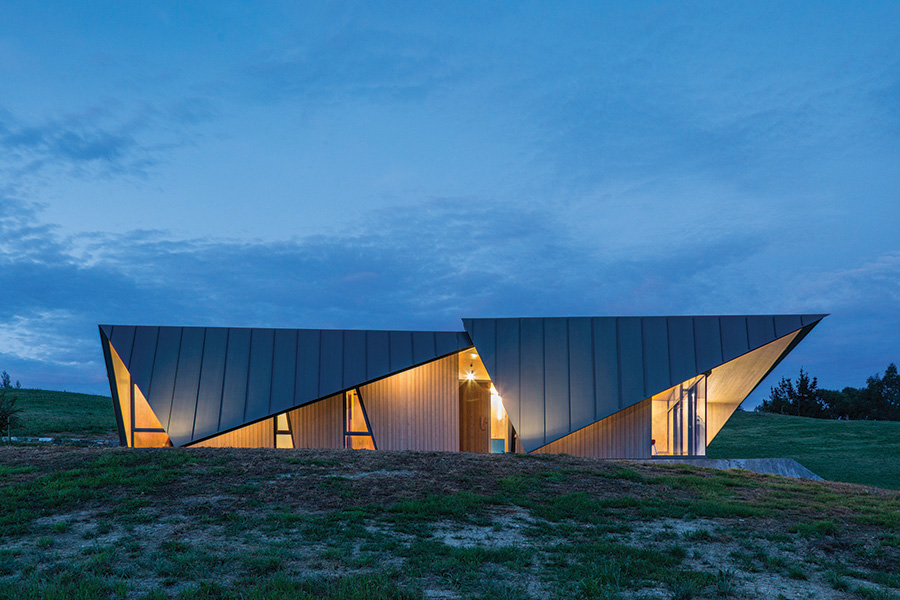
As house prices rise and population growth and environmental issues become global concerns, New Zealand is looking for alternative housing solutions to reduce costs, space requirements and energy consumption.
As they enter the property market, many New Zealanders are becoming more open to different housing options and more realistic about how much living space they need. An approach centred on sustainability and the idea that “less is more” is gaining popularity. Cleverly designed small homes, for example, have proved popular with owners, tenants and buyers.
Small in size, big on benefits
Of course, a key reason for choosing a small home is the short construction time. Many Kiwi property companies make the most of this advantage, promising buyers that their homes can be completed within four weeks of an order being placed.
House it is a company offering this kind of service in the New Zealand market. Its homes use PIR panels, with galvanised steel reinforcement inside and a 70 mm insulation layer on the exterior panels. PIR panels are a building material originating in South Korea that has been used in overseas markets for more than 40 years and can effectively prevent methamphetamine contamination. If a home is intended for rental, PIR panels can be a sensible choice. This means contamination of the investment property by methamphetamine should be minimal.
These units are generally relatively affordable, with prices ranging from NZ$8,000 for a 9-square-metre cabin to NZ$145,000 for a three-bedroom home. These prices include carpet, curtains, a kitchen, a bathroom, flooring, appliances, bathroom fittings and a hot-water system.
Government support
{AD}
In New Zealand, where housing is in short supply, the government has long supported the concept of small homes. It has recognised the need to provide low-cost housing in the country’s less developed areas. More importantly, most homes of this kind can be fully relocated and installed elsewhere. This means owners can move their homes to a new address.
This feature makes them an especially valuable part of an investor’s portfolio, particularly in Canterbury, where earthquakes have caused severe damage to homes and infrastructure. BUILTsmart, for example, supplies relocatable homes that exceed New Zealand’s seismic performance requirements, with strong, crack-resistant walls and roofs.
When properly built, small relocatable homes offer an affordable housing alternative. This does not, however, mean compromising on quality, appearance or essential living space.
Investment options shaped by the trend
Wealth education specialist and property investment expert David Leon says: “Cabins under 10 square metres are very popular because they can be placed on land without building consent. They can readily generate cash flow and add value to your property overall.
Sleepouts are small buildings added to a property’s grounds. They have a bathroom and laundry but no cooking facilities. David Leon notes that once cooking facilities are provided, they are considered granny flats—what are commonly called minor dwelling units. A completely different set of regulatory standards applies to this type of housing.
Another alternative is a garage conversion. David Leon says most garages can be converted into habitable spaces and can add considerable cash flow to a property. Conversion costs range from about NZ$40,000 to NZ$100,000, or even more, depending on the fit-out.
David Leon says a subtle shift is quietly taking place in the New Zealand mindset, from dreaming of living in large houses to gradually accepting reality and choosing small homes or apartments. In his view, this process has already begun, although he estimates it will take 5 to 10 years before the change becomes truly visible.