
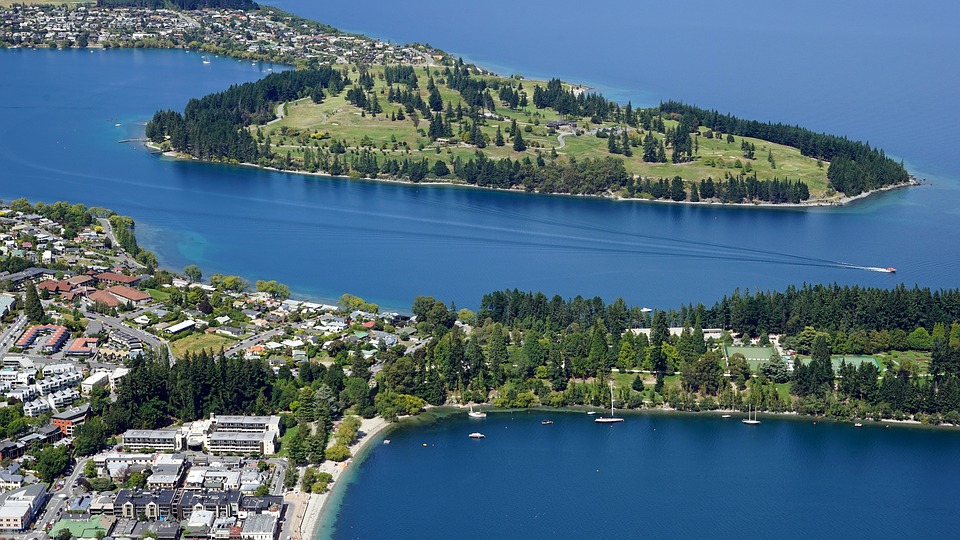
Global home-sharing website Airbnb has recently clashed with Queenstown’s council over their differing views.
While the housing shortage remains difficult to resolve, local homeowners are offering their properties as accommodation for visitors. Queenstown’s district council will vote on whether to further restrict how long Airbnb operators can let their properties. Under current council rules, homeowners can rent their homes to short-term guests for up to 90 days a year. Although the rules are in place, the council believes awareness among homeowners is very low and oversight is inadequate. Council figures show that 14% of short-term accommodation in the district is booked through Airbnb. Queenstown is one of New Zealand’s most popular tourist destinations.
The council now intends to limit homes in predominantly residential areas to 28 days of short-term visitor accommodation a year. It hopes the change will reduce Airbnb listings and increase supply in Queenstown’s local rental market. Brent Thomas, Airbnb’s head of public policy for Australia and New Zealand, responded bluntly to the local authority’s move. According to RNZ, Thomas believes this policy direction infringes private property rights. “The council is trying to blame Airbnb for its failed housing policies. If they want to find who is responsible for high house prices, they only need to look in the mirror.”
How does Airbnb push up house prices and rents?
Queenstown is not the first city to clash with Airbnb. Over the past few years, cities, particularly popular tourist destinations, have begun regulating the platform. According to the BBC, Berlin introduced rules in May last year making it illegal to rent out an entire home for short stays through accommodation websites. Landlords who breach the rules could face fines of up to 100,000 euros.
Countries restrict landlords’ use of Airbnb because policymakers believe it reduces the supply of long-term rentals. These homes could otherwise meet the needs of tenants seeking somewhere to live long term. But because Airbnb can generate substantial income for landlords over short periods, more owners are choosing to turn their properties into short-term accommodation for tourists and other temporary visitors. This reduces long-term rental supply, pushing up rents for long-term tenants. House prices then rise with rents. Beyond this straightforward relationship, the income homeowners earn through Airbnb also increases property values.
{AD}
According to a Wall Street Journal report on 22 October, Edward Kung, an assistant professor of economics at the University of California, Los Angeles, Davide Proserpio, an assistant professor at the University of Southern California’s business school, and Kyle Barron, a research assistant at the National Bureau of Economic Research, studied how Airbnb affects house prices and rents. From 2012 to 2016, they tracked urban areas across 100 different US postcodes. They found that every 10% increase in Airbnb short-term rental listings drove a 0.39% rise in rents and a 0.64% rise in house sale prices.
“These increases may sound negligible, but from 2012 to 2016, annual rent growth across these 100 areas averaged 2.2%. In that context, an increase of 0.39% is far from small. The same applies to house prices, which rose by an average of 4.8%,” Edward Kung said. As housing affordability increasingly becomes a global challenge, any factor that could affect rents and house prices will attract close attention. Airbnb is likely to face more criticism and regulation in New Zealand.
Queenstown: operating visitor accommodation for more than 28 days may require resource consent
According to Newsroom, Queenstown’s council commissioned a study from Infometrics which found that nearly half of the district’s 3458 Airbnb listings—1700 properties—were in low-density residential areas. In the 11 months to August this year, Queenstown homeowners earned NZ$68,600,000. Each guest paid an average of NZ$19,886, or 2.5 times the national average.
In any event, Queenstown’s council acknowledges that it has received numerous complaints about Airbnb and is therefore proposing action. Council policy planning manager Ian Bayliss said the council would initially take an educational approach to any new rules. He also said homeowners wanting to let their properties for more than 28 days a year would need to apply for resource consent.
Homes used for short-term visitor accommodation would also be restricted to certain areas, such as town centres and mixed-use, high-density residential areas. The council said consent for longer letting periods was unlikely to be granted in low-density areas. Most homes currently used for visitor accommodation are in low-density residential areas. John MacDonal, head of Queenstown’s housing affordability taskforce, supports similar regulatory measures but believes restrictions are meaningless without enforcement.
Economic consultancy Rationale Ltd expects Queenstown’s peak daily visitor numbers to rise from 79,300 next year to 100,000 in 2028.