
Here is our interview with Roger Billington.
Q: First, I'm curious: why did you originally decide to develop your career in China?
I initially studied spatial and interior design in the UK, then spent some time in both New Zealand and Australia. At the time, a business partner recognised my potential in commercial design and suggested we explore the Chinese market together. She said it would make me a well-known designer. She delivered!
I designed my first project in China in 2000: a Japanese restaurant in Dalian. In 2007, Aodi Design approached me for advice on internationalising its business. That opportunity led us to establish a studio in Chengdu, followed by branches in Shenzhen, Beijing, Qingdao and elsewhere.
Those studios are precisely what enable us to offer faster, more affordable services in New Zealand today.
Q: What have been the most challenging and most rewarding aspects of working in China?
The number of cities we have worked in, along with the number and scale of our projects in China, has given me a great sense of achievement. I have visited 150 Chinese cities, probably more than most people who live there.
{Ad}
As for challenges, we occasionally encounter difficult clients. Partners also tend to focus too heavily on budgets in the early stages of a project, although that improves later on. Government projects can be difficult too, but they are also difficult in New Zealand, so there is not much difference between the two countries in that respect.
Q: Which of your projects in China are you proudest of? Do you have a preferred style?
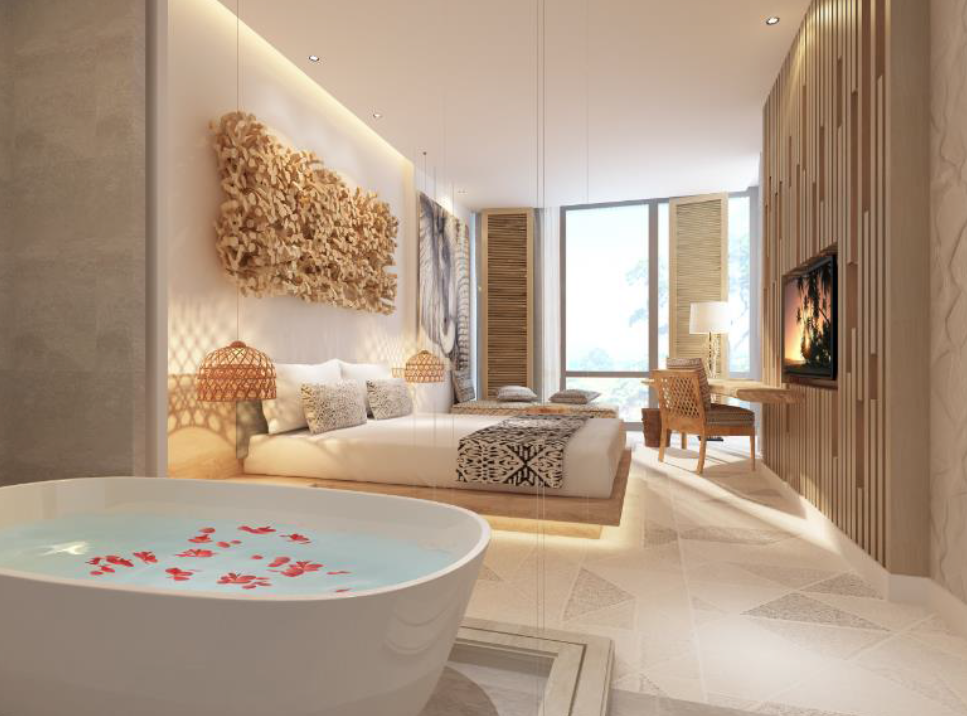
One project I am particularly proud of is a neoclassical design: SanLi Hotel. What made it both challenging and distinctive was converting an industrial building into a hotel. It ultimately became a top-end hotel with a distinctive character that is rare even in China.
In terms of style, I personally prefer simplicity, because simplicity is harder to achieve than complexity. You can use all sorts of devices to make a project look complex, but creating a space that looks simple without feeling cheap is very difficult. I love Zen philosophy, and simple design can evoke a sense of peace and tranquillity.
Q: What prompted you to return to New Zealand and join Pacific Environments?
My years working in China were a wonderful experience. At this stage, though, I feel that living in New Zealand while continuing to run the studios in China is a better choice for my life and health.
I joined Pacific Environments because it has a 60-year history in architecture and is both well known and highly competitive. The company wanted to develop its interior design business. I had interior design resources and needed the support of a strong company to realise my design ideas, so we immediately clicked.
Although I am now mainly based in New Zealand and only return to China four or five times a year, I have no intention of cutting my ties with China. I believe this is an excellent time to work with China. Both I and local New Zealand developers can gain a great deal from that collaboration.
Q: What is your vision for the future of the interior design business?
Our vision is to become the most competitive and internationally focused hotel design company. We have a top international team, and whether a project is in New Zealand, China, Australia or Dubai, we can easily bring everyone together to work through WeChat.
New Zealand is also a very slow-paced place. When it comes to design decisions and implementation, I prefer China's faster pace. I often feel I have been spoilt by the quality and speed of service in China. So, while maintaining quality, I hope to bring that faster, better ‘China speed’ to New Zealand.
Written by Jane Yan
Edited by Lilly Deng
Images supplied by the interviewee