

Home sales will weaken further in 2019, with transaction values barely satisfactory. Most homes will have asking prices but no buyers, and investors may struggle to recover their funds, suffering heavy losses.” — Extract from Annual Forecast for 2019
Now, half a year later, conditions in New Zealand’s property market closely match JOJO’s predictions from the end of 2018.
What lies ahead for New Zealand’s housing market in the second half of the year? Do falling prices make this a good time to buy? What kinds of homes are worth buying? How can feng shui help you choose a suitable home? Our reporter sat down with JOJO for an in-depth interview.
YIJU New Zealand: As you predicted, New Zealand’s property market has declined this year, particularly residential sales. What do you expect in the second half of the year?
The property downturn is not confined to New Zealand. Markets in other countries around the world are showing broadly similar conditions. In recent years, some well-known wealthy individuals have also begun selling off property and moving into other investments.
Xuan Kong feng shui follows three cycles and nine periods. Over the past decade or so, we have been in Period Eight (2003–2023), when the Eighth Star of Gen Earth is dominant. The Gen trigram represents houses and land. Period Eight brings extensive land development and substantial earnings through property.
However, the final five years of each period are a transition to the next. From 2019, the energy of Period Eight gradually recedes as that of Period Nine begins to enter. This explains why property has begun entering a downturn this year.
Viewed through the world’s backbone and its six great dragon veins, New Zealand’s property sector has a slight advantage over those of other countries. The fundamental reason is that New Zealand’s dragon vein belongs to the southern dragon of the Himalayas.
The Nine Purple Star of Li Fire corresponds to the south, so the auspicious energy of the major cycle will activate the southern dragon vein, bringing a substantial increase in New Zealand’s national strength and development. As more global resources flow in, trade cooperation expands across countries and demand for talent grows, large numbers of migrants will come to New Zealand, stimulating the local property industry.
This suggests that there is still room for property transactions in New Zealand, although the pace will gradually slow. I advise investors developing or trading property to watch market demand and saturation closely, assess carefully before acting and avoid becoming trapped with properties that have asking prices but no buyers.
YIJU New Zealand: Do you think property remains a viable investment? What should investors pay attention to?
In Period Nine, the Nine Purple Star of Li Fire is dominant, so industries associated with fire, such as energy, technology and culture, will become leading sectors. For the property industry to continue developing, aligning with the industries flourishing in Period Nine is an essential direction.
For future property development, I therefore recommend incorporating technological and smart systems, or developing property projects related to fire-associated industries such as culture and education.
The choice of area also requires careful consideration. Analysing dragon veins in feng shui can help assess the character of a location: for example, whether it is suitable for commercial premises, homes or cemeteries.
{Ad}
I believe that, besides ensuring flourishing families and stable wealth for occupants, incorporating feng shui can increase a development’s value and make transactions more efficient.
YIJU New Zealand: Homeowners and prospective buyers may be interested in more than changes in the property market; they also want to know how their homes rate in feng shui terms. With more people paying attention to feng shui, could you explain some of the principles?
I discussed feng shui considerations when choosing a home in earlier instalments of How to Assess Feng Shui in New Zealand. Let me summarise some of them here:
1. Examine the surroundings and the shapes of nearby buildings for “form sha”, or harmful energy created by physical forms, such as a “heavenly cleft”, a “wall blade” or a “sharp corner”.
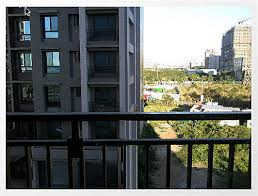
Pictured: wall-blade sha
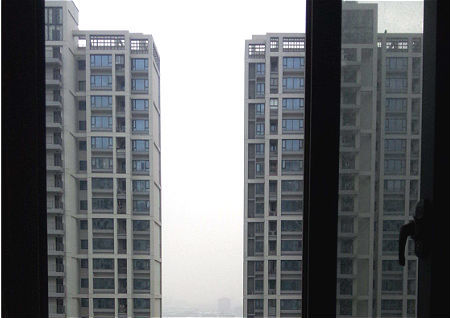
Pictured: heavenly-cleft sha
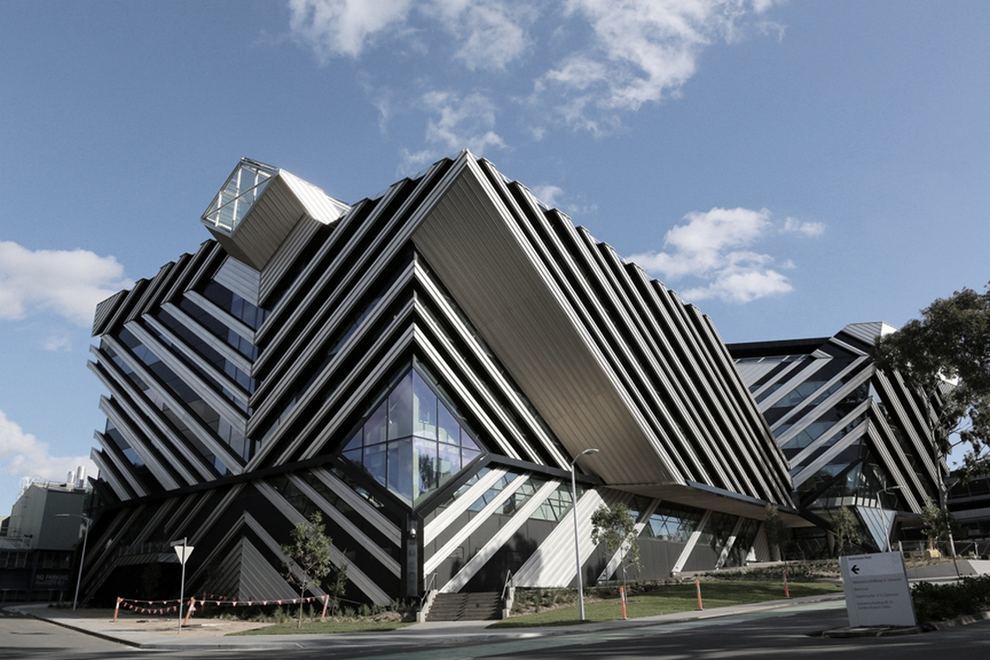
Pictured: sharp-corner sha
2. Examine nearby roads, water outlets, rivers and passageways for form sha, such as “reverse bow”, “scissors” or “road impact”.
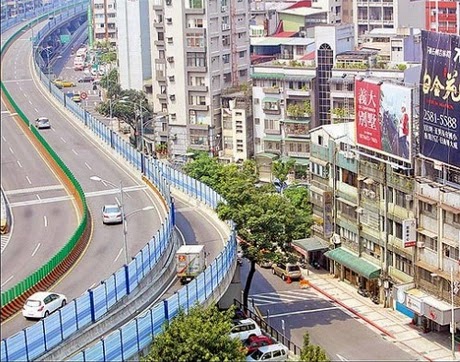
Pictured: reverse-bow sha
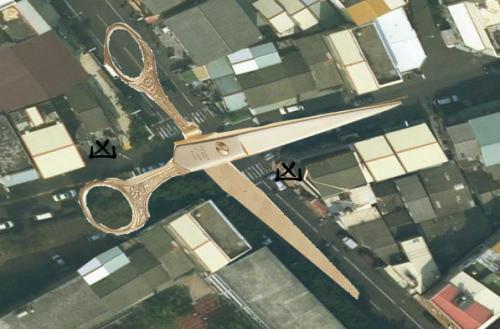
Pictured: scissors sha
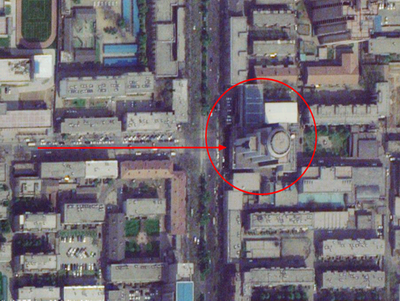
Pictured: road-impact sha
3. Check whether surrounding roads form an embracing shape. Generally, places that gather qi well have two-way roads around the home, with slow-moving traffic.
4. Look for power poles, power stations, pointed objects and similar features around the home. A residence generally benefits from pure, calm qi. Disruptive objects nearby, particularly outside an inauspicious sector, will further activate its harmful qualities.
5. Check for intrusive smells around the home. Odours from rubbish dumps, factories or foul drains can also affect its feng shui.
The home’s orientation, the dragon configuration at water outlets, and its internal structure and layout are also closely connected with the quality of its feng shui. I will discuss these topics in turn in the feng shui column on YIJU New Zealand’s official WeChat account. Interested readers are welcome to follow it.
Readers with feng shui questions are also welcome to write in, and I will answer them in the column.
A look back at the previous issue:
Several major events marked China–New Zealand relations at the start of this year:
- New Zealand Prime Minister Jacinda Ardern’s planned visit to China was repeatedly delayed.
- The opening event for the 2019 China–New Zealand Year of Tourism at Te Papa was postponed, with no new date set.
Meanwhile, the China–US trade war was at an impasse. US President Trump announced import tariffs on a range of Chinese goods, amounting to as much as US$60,000,000,000 annually. Both China’s stock market and New Zealand’s economy were affected.
Through her analysis of Zi Wei Dou Shu and Xuan Kong feng shui, JOJO concluded:
- In 2019, China’s domestic circumstances require further expansion into overseas markets, making stronger China–New Zealand trade relations imperative.
- China–New Zealand trade will continue to grow steadily, with a breakthrough in the second half of this year.
- New Zealand’s political parties will continue to show a conciliatory, supportive attitude towards China, with a major improvement ultimately following a thaw in the China–US trade war.
These views all appeared in the previous issue’s article, New Zealand–China Trade Forecast for 2019: Change Amid Crisis, Development Amid Challenges. JOJO also predicted that the difficulties would pass and that the second half of the year would mark a turning point. Events ultimately confirmed the accuracy of her predictions.
About the author
Nuoji (Jojo), life planner and environmental structure consultant
Bachelor’s degree in clinical psychology, Victoria University of Wellington, New Zealand / Master’s degree in clinical psychology, Massey University, New Zealand
Founder of the Nuoji JOJO Life Planning Office, specialising in research into Zi Wei Dou Shu psychology, feng shui design and environmental energy