
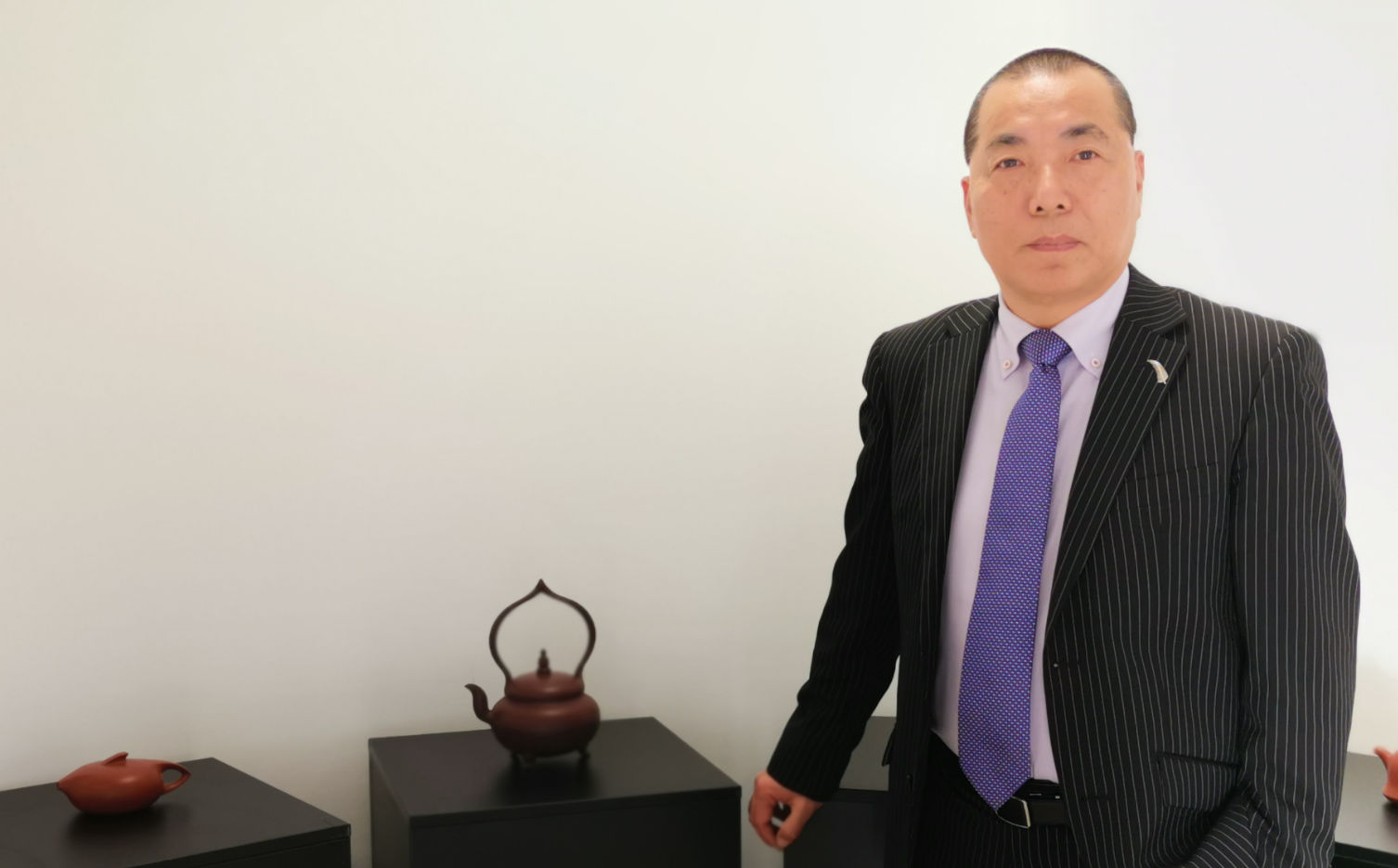
Hong Chengchen (John HONG), who turns 55 this year, is originally from Fujian, China. He immigrated to Auckland, New Zealand, in 2003, and has now lived here for 16 years.
Over those 16 years, Hong has built an impressive career, holding more than ten positions. These include Asia-Pacific investment adviser for Auckland’s waterfront development area, director of investment and international relations at Waterfront Auckland, member of Auckland Council’s investment coordination steering group, executive committee member of the New Zealand China Trade Association, and director of investment and international relations at Auckland Council’s development agency.
During those 16 years, Hong gained extensive experience through nearly a decade working in Auckland local government. Two achievements have remained particular sources of pride:
The first was being the first to propose the concept of establishing a waterfront development area in Auckland. That concept has now become reality: Auckland’s waterfront development area became New Zealand’s first large-scale development area, a model that locals take pride in and a benchmark for similar projects nationwide. At the time, the New Zealand Government also produced its first Chinese-language video introducing Auckland, with Hong providing the voiceover.
His other outstanding achievement is Auckland’s luxury Park Hyatt hotel, positioned above five-star standard. With a total investment exceeding RMB 3,000,000,000, it is the largest Chinese investment in public infrastructure in New Zealand. Hong brought the project to New Zealand and was involved throughout, from its inception to the foundation ceremony and the start of construction. He travelled repeatedly between Beijing and New Zealand, coordinating and negotiating with local communities, Māori groups, local boards and other bodies to bring this new Auckland landmark into being.
It is no exaggeration to say that Hong led Auckland’s hotel industry into a new era.
What memorable stories and useful lessons emerged along the way? As an industry insider, how does he view the future of Auckland’s hotel industry? What objective, practical advice would he offer overseas investors looking to invest in Auckland? With these questions in mind, a reporter from YIJU New Zealand interviewed Hong.
Bringing in a hotel above five-star standard: tireless effort and negotiations full of twists and turns
Y: The Park Hyatt project began in 2012. What were the circumstances at the time?
H:The period when I was attracting investment was completely different from today. The overall environment, politics, economy and culture all differed to some extent. In fact, my becoming the first person to propose a waterfront development area in Auckland was also connected with attracting investment for the Park Hyatt.
We originally wanted to upgrade an old industrial wharf and build a hotel, but the site was actually very small and looked rather rundown before development. I was part of a team at Waterfront Auckland. Before securing the RMB 3,000,000,000 investment from China, we had tried attracting investors worldwide ourselves and had also engaged a well-known real estate agency to do so, but no one came.
It was 2012, and the New Zealand Government had just released its China Strategy. Before 2012, New Zealand’s national promotional strategy had focused on Europe; it had not yet opened up its market to the wider world or Asia. Chinese investors also knew little about New Zealand. Chinese developers preferred large projects, while the project we were seeking investment for covered only a little over 5000 square metres. Its small size put many developers off because the costs of investing overseas made it uneconomic. For example, I approached Shimao Group, and its chairman, Hui Wing Mau, told me directly: ‘Our investments are at least 10,000,000,000. A project as small as yours would not even justify sending our team over.’
Against that backdrop, when I visited Asian countries, mainly mainland China, to attract investment, I packaged the whole project as a ‘waterfront development area’ when approaching local governments. Many new waterfront development areas were being developed in mainland China at the time. Cities with rivers, lakes or coastlines, such as Wuhan, Tianjin and Shanghai, were all developing waterfront areas. This made people interested in continuing discussions: so Auckland had a waterfront development area too! That was how I became the first person in New Zealand’s history to introduce this concept.
Y: With Chinese investors knowing little about New Zealand at the time, attracting investment must have been difficult. Were there any particularly memorable experiences?
H:Attracting investment is actually a two-way selection process. Many developers did not want to come because the project was small; they were choosing projects. We were also very demanding in choosing investors. Having money alone was not enough. We wanted investors who understood New Zealand’s environment, respected its culture and accepted that hotels require substantial investment and have long payback periods. That was far from easy.
Even after we selected an investor, negotiations were full of twists and turns because the two sides had completely different expectations.
As I understand it, hotel investments in China generally make little money initially, but governments offer special incentives to attract investors to build hotels and stimulate development in the surrounding area. For example, the hotel land is essentially free, and additional nearby land is allocated for commercial buildings or housing. Profits from those developments can offset the cost of building the hotel. New Zealand does not work that way. Whenever I promoted New Zealand and Auckland, my opening line was always: ‘New Zealand is a very beautiful country, its people are straightforward and unpretentious, and everyone is treated equally.’ When potential investors asked whether there were special policies such as tax refunds or tax exemptions and reductions, I could only answer: ‘No.’ Ultimately, no special incentives whatsoever were offered to secure investment for this project. It was entirely through my personal connections and powers of persuasion that I won people over.
Once Fu Wah International Group’s RMB 3,000,000,000 investment was finally confirmed, I was involved throughout, from the hotel’s foundation ceremony to the start of construction. We held at least ten rounds of negotiations with Fu Wah, covering everything from disagreements over the construction timetable to the number of storeys. Once, in Beijing, we entered the meeting room at 8h in the morning and did not leave until 11h at night. They had ten experts and we had only two people. It was an intense test of both physical stamina and mental ability.
Y: What positive effects has the project’s success brought?
The project has had positive effects on both urban development and New Zealand’s tourism industry. Auckland currently faces a severe hotel shortage, and the Park Hyatt can provide 195 rooms, easing the problem to some extent. The arrival of a hotel above five-star standard has also greatly enhanced Auckland’s high-end hotel offering.
The benefits extend beyond the city and tourism industry. Once completed, the hotel also increased the value of the whole area, benefiting its neighbours. Previously, because the hotel was relatively tall, neighbours complained that its shadow would block light from their homes. Now everyone is very happy with the outcome because properties in the community have also increased in value.
For the investor, Fu Wah, the Park Hyatt is probably also part of its wider strategy. Initially, they simply wanted to test the waters and did not have a complete project in place. Now Fu Wah has increased its investment and is preparing to build more hotels and apartments, and even a railway line specifically offering a five-star tourist route. That would also greatly benefit New Zealand tourism.
Because the project has been so successful, it has also made a very positive impression on New Zealand society as a whole. It has opened a new door for future investors from Asian countries, because Chinese investors have made an excellent start and paved the way.
Y: The Park Hyatt is due to open next year, and the waterfront development area is flourishing. How have you planned its future direction?
H:I have a goal in mind: to establish a multifunctional public facility at New Zealand’s ‘Tank Farm’ waterfront that represents New Zealand, Auckland and the South Pacific, connects with Westhaven Marina and surpasses Sydney’s Darling Harbour. In my view, Darling Harbour was not particularly well planned, because some apartment buildings obstruct beautiful views. Our plan is to preserve Auckland’s unique scenery, allowing people to see the hills from the waterfront and the sea from the hills.
The future of the hotel industry: demand outstrips room supply, with staff shortages the biggest bottleneck
Y: Auckland still has a shortage of boutique hotels, particularly with a series of major international events coming to the city centre in 2021. How do you think the shortage of city hotels will be addressed?
H:It is not just Auckland. Tourism infrastructure is severely lacking throughout New Zealand. Many tourists arrive with bookings yet end up sleeping in lobbies. The country’s infrastructure, especially tourism infrastructure, is unquestionably ageing and cannot be upgraded. Today’s international visitors, particularly those from Asian countries, come from places where every city has several or even dozens of five-star hotels. Auckland may have only three to five, and they have not been refurbished for a long time. They simply have not kept pace with the times. International visitors are accustomed to impressive, high-end hotels. Suddenly arriving in New Zealand and staying in such basic hotels is something they really struggle to get used to or put up with.
In fact, soaring construction costs, capacity constraints and tighter financing conditions make a large-scale increase in hotels unrealistic in the short term. I believe Auckland needs new planning and an upgrade, including landmark buildings and an expanded waterfront. It also needs to attract both capital and talent internationally. That is Auckland’s main way forward. Local talent and capital alone are quite limited and would struggle to solve the problem. New Zealand has changed. We cannot keep using old ways of thinking. We need fresh thinking, broader horizons, more exposure to the outside world and a willingness to learn from what other countries do well.
Y: What do you see as the main problems in commercial property development in New Zealand today?
H:I see several main problems. First, hotel investments have long payback periods and therefore relatively high risks, so many people are unwilling to undertake them. Second, government approval processes are complex and slow, as is communication and coordination between government agencies. Good project managers are needed to coordinate the various parties and avoid construction delays. Third, construction costs keep rising, making the payback period even longer. In addition, many new materials are being used internationally, but Auckland continues to apply older standards, so new materials may not comply with Auckland or New Zealand standards. Using them can lengthen the approval process and delay construction.
I have also seen many reports of projects falling through. I think the biggest reason is that New Zealand lacks everything: money, technology and materials, and especially talent and skilled workers. Fitting out a five-star hotel, for example, requires skilled tradespeople. Because they are in short supply, once one hotel is under construction, it becomes difficult to build others. In New Zealand, more than 86% of companies consist of two people. They have very few staff yet take on several projects at once. One project is not enough to sustain them, but several leave them overstretched. This inevitably causes delays and, in the worst cases, projects may collapse.
Overseas investors: Understand the market thoroughly: opportunities always outweigh challenges
Y: What advice would you give investors who want to invest in Auckland’s hotel industry but do not know where to start?
H:New Zealand offers a great many investment opportunities. Now is also a good time for overseas investors. Infrastructure throughout the country needs investment. Of course, there are many bottlenecks: projects must fit local geography, culture and history, and construction costs are very high. But I believe the opportunities far outweigh the challenges. In reality, challenges exist wherever you invest. Provided the opportunities and profits are large enough, bottlenecks and obstacles become minor issues.
My advice is that successful investment in New Zealand requires a sound understanding of the country, including familiarity with its policies, laws, culture and customs. Opportunities are always there, but to find a good entry point, you must find the right people to help you: people who are capable and willing to get things done. Investors, local government and partner businesses also need to place considerable trust in one another.
Y: What is the process for overseas investors, or investors from elsewhere in New Zealand, wanting to invest in an Auckland hotel?
H:There are two kinds of investment process. Investment in public infrastructure may take a little longer because the government is very cautious about land use and must seek views from all sides. For purely commercial investments and market transactions, provided the price is reasonable and there is a willing buyer and seller, the process can be somewhat quicker, followed by planning, design, approvals and so on.
Although the process is complicated, New Zealand has very good lawyers, accountants and planners. Finding the right people should make it relatively straightforward. People are the most important factor. Excellent people, excellent organisations and a sound project together make it work. All three are essential.
If you are interested in investing in New Zealand, as well as contacting relevant official and professional bodies, you can contact me through YIJU New Zealand magazine. I believe I am the only person in New Zealand to have participated in the entire hotel development process, starting with attracting investment. I am also well known and trusted in the wider community, so I can freely recommend the best teams in New Zealand and around the world to future investors. Together, we can help New Zealand’s hotel industry, tourism industry and society as a whole develop better and faster.
If you are interested in investing in New Zealand, as well as contacting relevant official and professional bodies, you can contact me through YIJU New Zealand magazine. I believe I am the only person in New Zealand to have participated in the entire hotel development process, starting with attracting investment. I am also well known and trusted in the wider community, so I can freely recommend the best teams in New Zealand and around the world to future investors. Together, we can help New Zealand’s hotel industry, tourism industry and society as a whole develop better and faster.
Y: Thank you for speaking with us.
Hong Chengchen (John HONG)
www.johnhong4mayor.com
He achieved Fuqing’s highest English score in the national university entrance examination in 1981, and later studied under Professor Lin Jitao, a descendant of Lin Zexu. He taught English at tertiary institutions for ten years and also worked for well-known foreign companies including adidas.
Since immigrating to New Zealand 16 years ago, he has held numerous roles: communications and media manager at Auckland Regional Council; adviser to Auckland Regional Council chairman Mike Lee; Asian community liaison officer at Statistics New Zealand; inaugural ethnic affairs adviser to the amalgamated Auckland Council, heading the Ethnic Peoples Advisory Panel’s economic committee; inaugural member of Auckland Council’s Southern Initiative steering group; Asia-Pacific investment adviser for Auckland’s waterfront development area; special adviser to Waterfront Auckland; director of investment and international relations for Auckland’s waterfront development area; member of Auckland Council’s investment coordination steering group; executive committee member of the New Zealand China Trade Association; member of the New Zealand local government sector’s China engagement steering group; Asian affairs adviser to the Samoa Trade and Investment Commission; director of investment and international relations at Auckland Council’s development agency; executive committee member of the Half Moon Bay–Heights Park community in Auckland; and board member of Pigeon Mountain School, among others.
His latest role was as an independent candidate for Mayor of Auckland. He finished fourth in the election with 15965 votes. Preliminary results released on 13 October showed that, of this year’s 21 mayoral candidates, only 5 received more than ten thousand votes.